Kim Hayeon, Park Doyoung, Yoon Sukhwan
Department of Civil and Environmental Engineering, Korea Advanced Institute of Science and TechnologyDaejeon, South Korea.
Front Microbiol. 2017 Sep 20;8:1820. doi: 10.3389/fmicb.2017.01820. eCollection 2017.
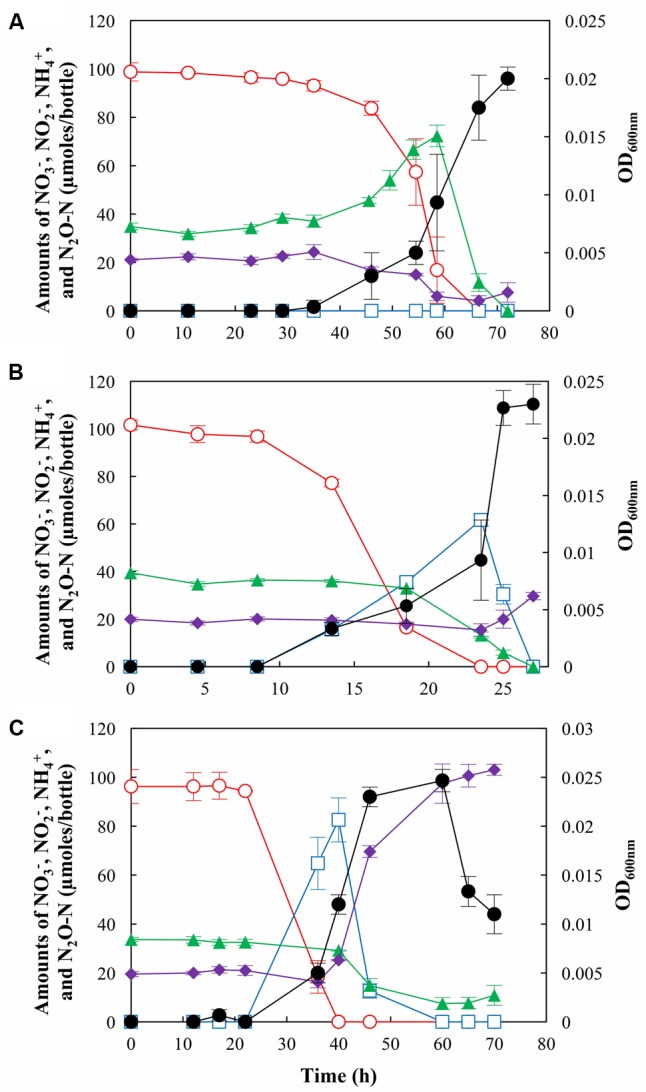
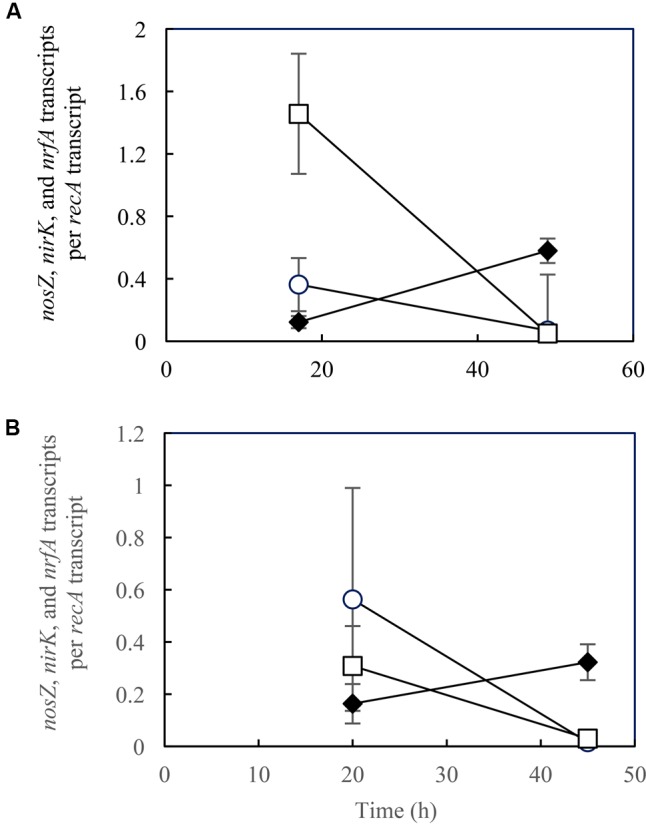
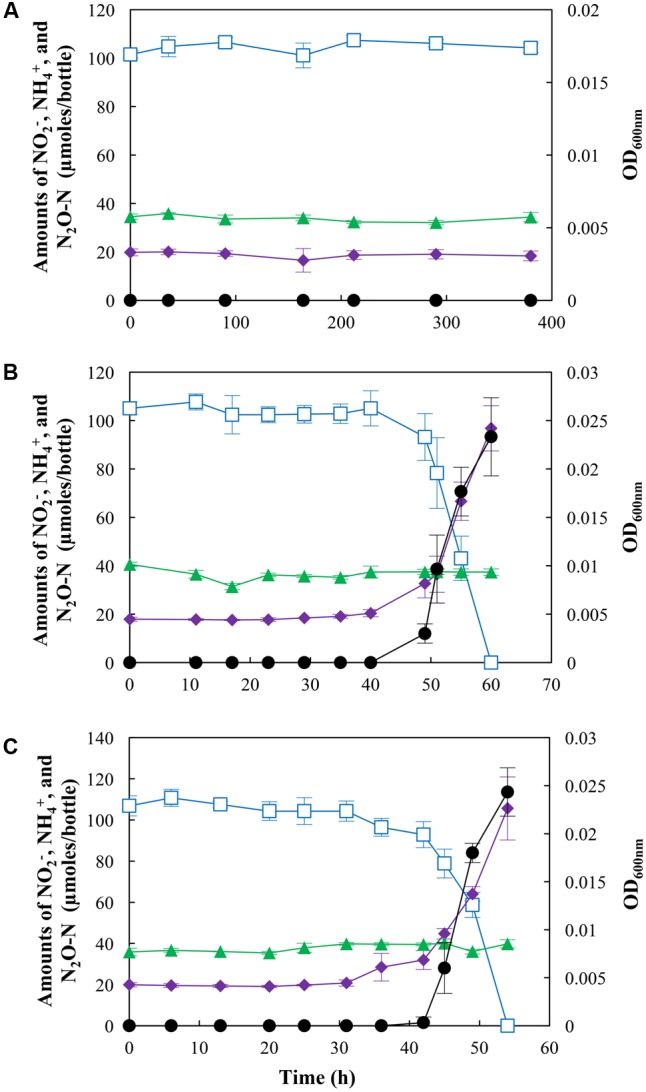
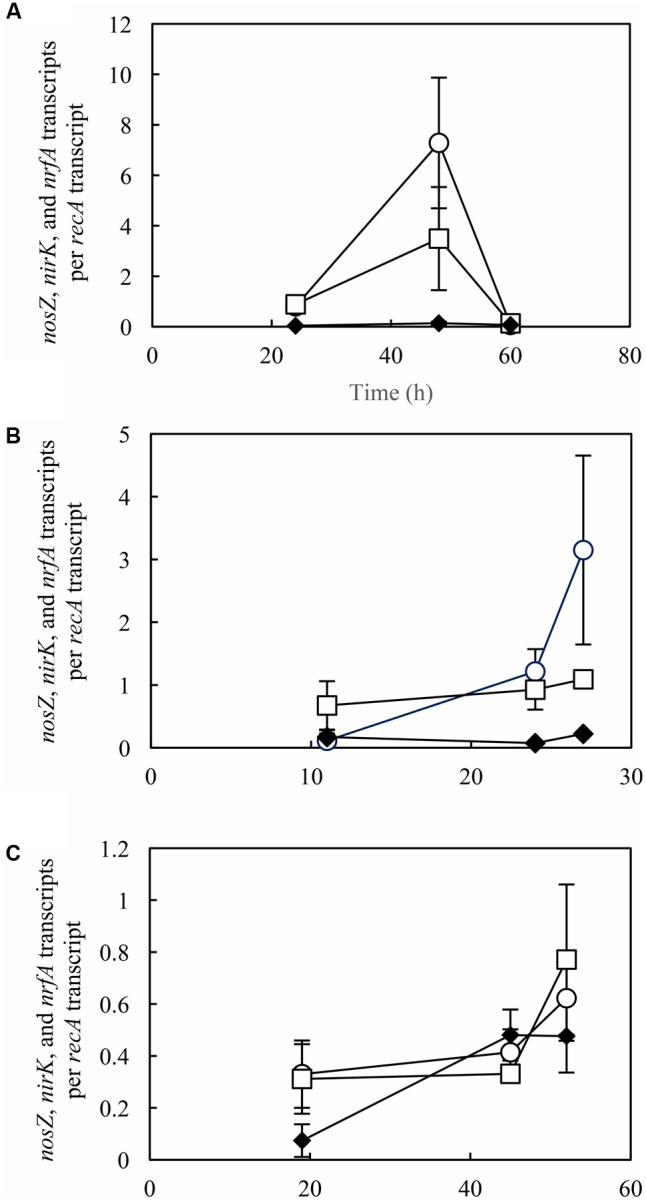
pH has been recognized as one of the key environmental parameters with significant impacts on the nitrogen cycle in the environment. In this study, the effects of pH on NO/NO fate and NO emission were examined with strain PV-4, an organism with complete denitrification and respiratory ammonification pathways. Strain PV-4 was incubated at varying pH with lactate as the electron donor and NO/NO and NO as the electron acceptors. When incubated with NO and NO at pH 6.0, transient accumulation of NO was observed and no significant NH production was observed. At pH 7.0 and 8.0, strain PV-4 served as a NO sink, as NO concentration decreased consistently without accumulation. Respiratory ammonification was upregulated in the experiments performed at these higher pH values. When NO was used in place of NO, neither growth nor NO reduction was observed at pH 6.0. NH was the exclusive product from NO reduction at both pH 7.0 and 8.0 and neither production nor consumption of NO was observed, suggesting that NO regulation superseded pH effects on the nitrogen-oxide dissimilation reactions. When NO was the electron acceptor, transcription was significantly upregulated upon cultivation at pH 6.0, while transcription was significantly upregulated at pH 8.0. The highest level of transcription was observed at pH 6.0 and the lowest at pH 8.0. With NO as the electron acceptor, transcription profiles of , and were statistically indistinguishable between pH 7.0 and 8.0. The transcriptions of and were severely downregulated regardless of pH. These observations suggested that the kinetic imbalance between NO production and consumption, but neither decrease in expression nor activity of NosZ, was the major cause of NO accumulation at pH 6.0. The findings also suggest that simultaneous enhancement of nitrogen retention and NO emission reduction may be feasible through pH modulation, but only in environments where C:N or NO:NO ratio does not exhibit overarching control over the NO/NO reduction pathways.
pH已被公认为是对环境中氮循环有重大影响的关键环境参数之一。在本研究中,以具有完整反硝化和呼吸性氨化途径的菌株PV-4研究了pH对NO/NO归宿及NO排放的影响。以乳酸作为电子供体,NO/NO和NO作为电子受体,在不同pH条件下培养菌株PV-4。当在pH 6.0条件下与NO和NO一起培养时,观察到NO的短暂积累,未观察到显著的NH产生。在pH 7.0和8.0时,菌株PV-4充当NO汇,因为NO浓度持续下降且无积累。在这些较高pH值下进行的实验中,呼吸性氨化作用上调。当用NO代替NO时,在pH 6.0时既未观察到生长也未观察到NO还原。在pH 7.0和8.0时,NH是NO还原的唯一产物,未观察到NO的产生或消耗,这表明NO调节作用取代了pH对氮氧化物异化反应的影响。当以NO作为电子受体时,在pH 6.0培养时转录显著上调,而在pH 8.0时转录显著上调。在pH 6.0时观察到转录的最高水平,在pH 8.0时最低。以NO作为电子受体时,在pH 7.0和8.0之间,、和的转录谱在统计学上无显著差异。无论pH如何,和的转录均严重下调。这些观察结果表明,在pH 6.0时,NO产生与消耗之间的动力学失衡而非NosZ表达或活性的降低是NO积累的主要原因。研究结果还表明,通过调节pH可能同时增强氮保留和减少NO排放,但仅在C:N或NO:NO比率对NO/NO还原途径没有总体控制作用的环境中可行。