Sun Jie-Jie, Xu Sen, He Zhong-Hua, Shi Xiu-Zhen, Zhao Xiao-Fan, Wang Jin-Xing
Shandong Provincial Key Laboratory of Animal Cells and Developmental Biology, School of Life Sciences, Shandong University, Jinan, China.
Front Immunol. 2017 Sep 20;8:1151. doi: 10.3389/fimmu.2017.01151. eCollection 2017.
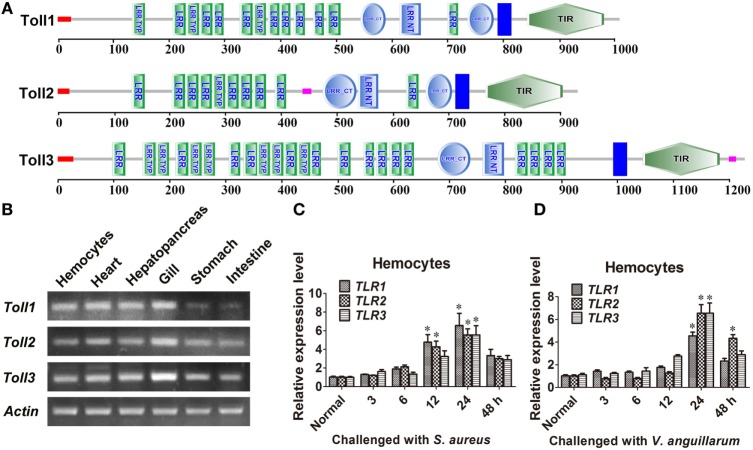
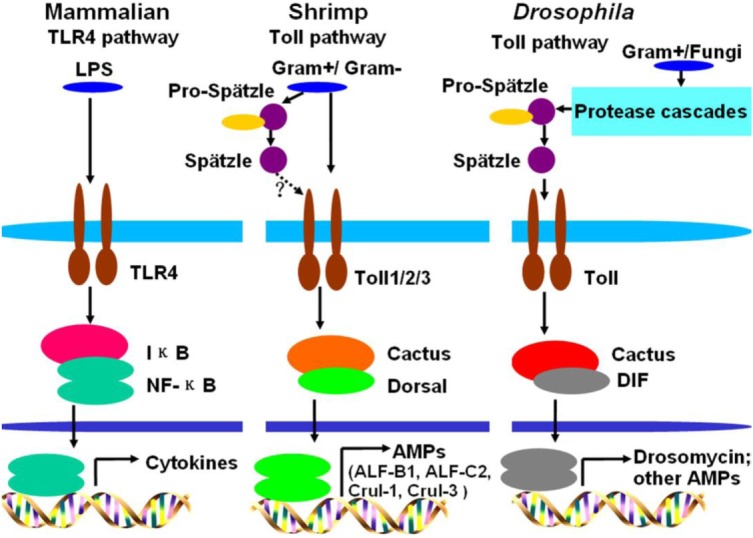
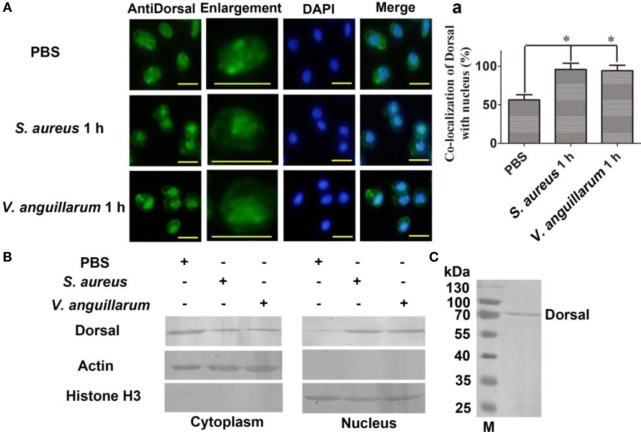
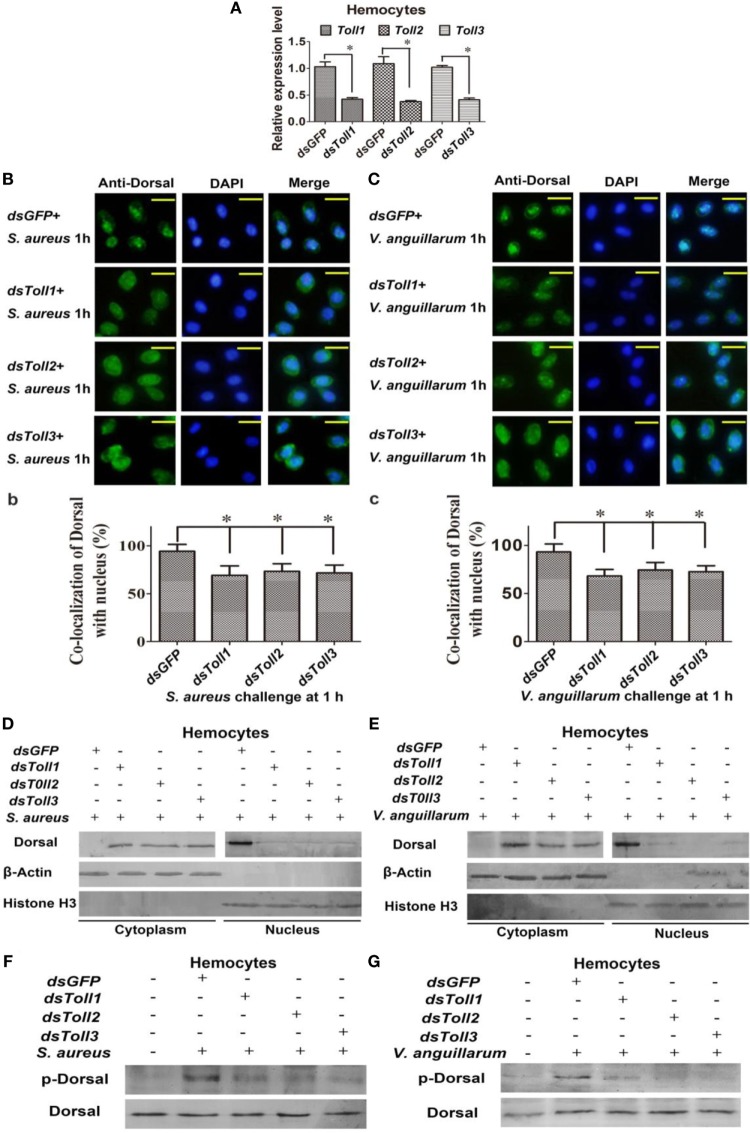
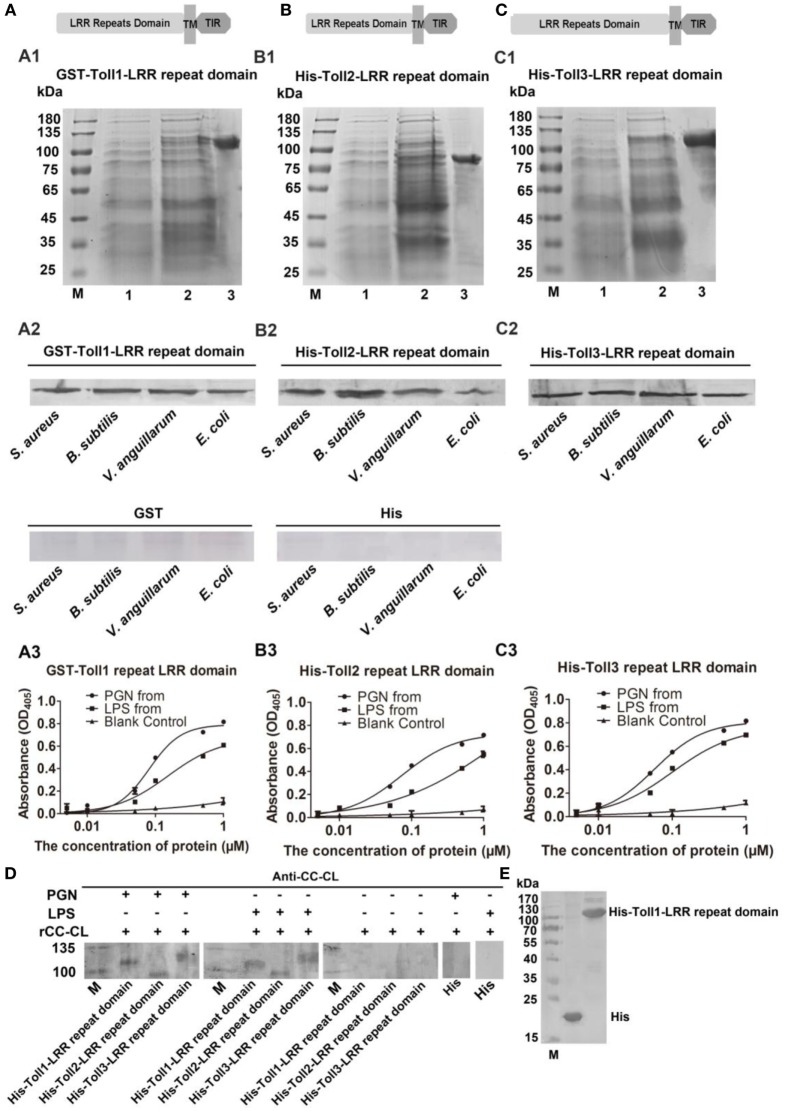
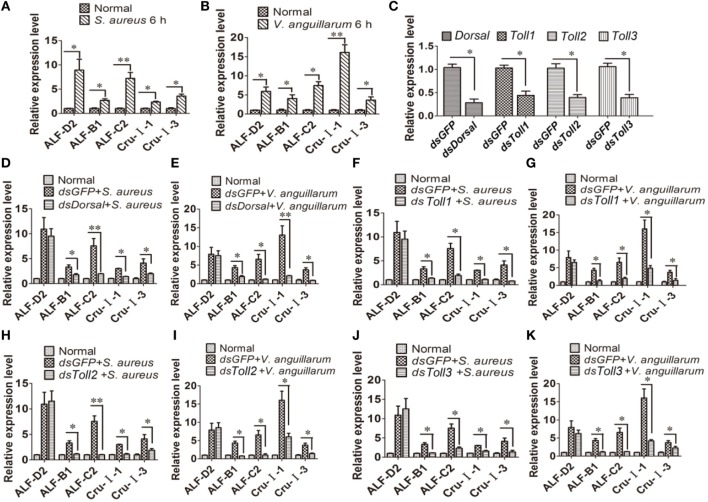
The Toll pathway is essential for inducing an immune response to defend against bacterial invasion in vertebrates and invertebrates. Although Toll receptors and the transcription factor Dorsal were identified in different shrimp, relatively little is known about how the Toll pathway is activated or the function of the pathway in shrimp antibacterial immunity. In this study, three Tolls (Toll1-3) and the Dorsal were identified in . The Toll pathway can be activated by Gram-positive (G) and Gram-negative (G) bacterial infection. Unlike Toll binding to Spätzle in , shrimp Tolls could directly bind to pathogen-associated molecular patterns from G and G bacteria, resulting in Dorsal translocation into nucleus to regulate the expression of different antibacterial peptides (AMPs) in the clearance of infected bacteria. These findings suggest that shrimp Tolls are pattern recognition receptors and the Toll pathway in shrimp is different from the Toll pathway but identical with the mammalian Toll-like receptor pathway in its activation and antibacterial functions.
Toll通路对于诱导免疫反应以抵御脊椎动物和无脊椎动物中的细菌入侵至关重要。尽管在不同的虾类中已鉴定出Toll受体和转录因子Dorsal,但对于Toll通路如何被激活或该通路在虾类抗菌免疫中的功能却知之甚少。在本研究中,在……中鉴定出了三种Toll(Toll1 - 3)和Dorsal。Toll通路可被革兰氏阳性(G⁺)和革兰氏阴性(G⁻)细菌感染激活。与……中Toll与Spätzle结合不同,虾类Toll可直接结合G⁺和G⁻细菌的病原体相关分子模式,导致Dorsal易位至细胞核,以调节不同抗菌肽(AMPs)在清除感染细菌中的表达。这些发现表明,虾类Toll是模式识别受体,虾类中的Toll通路不同于……中的Toll通路,但在其激活和抗菌功能方面与哺乳动物的Toll样受体通路相同。