Department of Biological Sciences, Laboratory of Immunology and Infectious Disease Biology, Indian Institute of Science Education and Research (IISER) Bhopal, Bhopal 462066, India.
Laboratory of Innate Immunity, National Institute of Immunology (NII), New Delhi 110067, India.
Cell Death Dis. 2017 Oct 5;8(10):e3078. doi: 10.1038/cddis.2017.461.
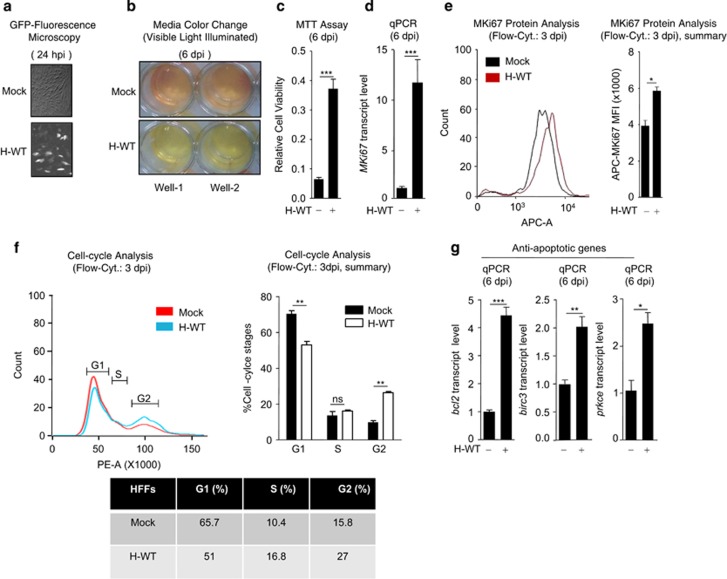
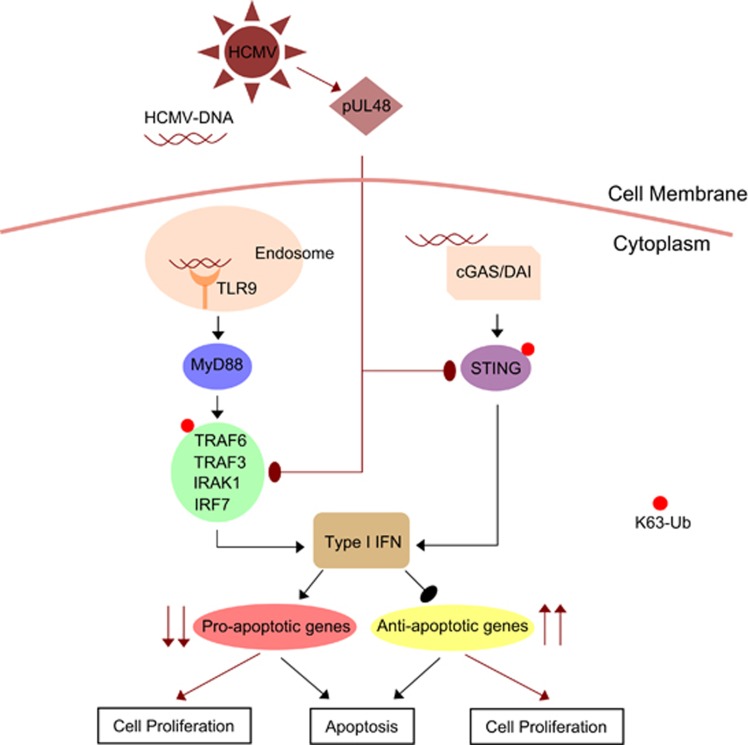
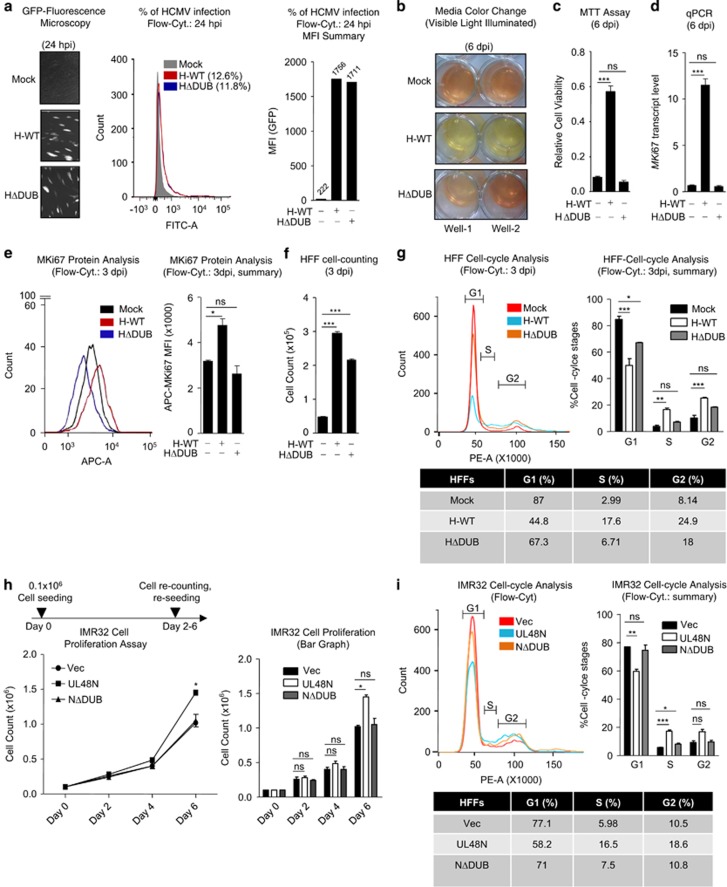
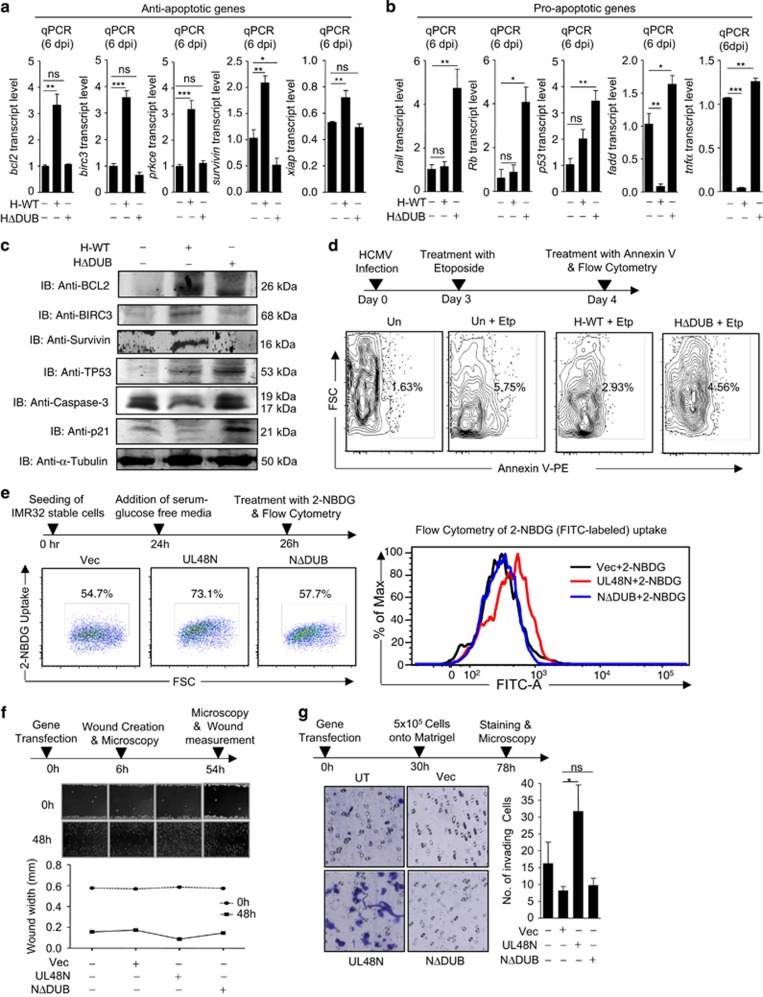
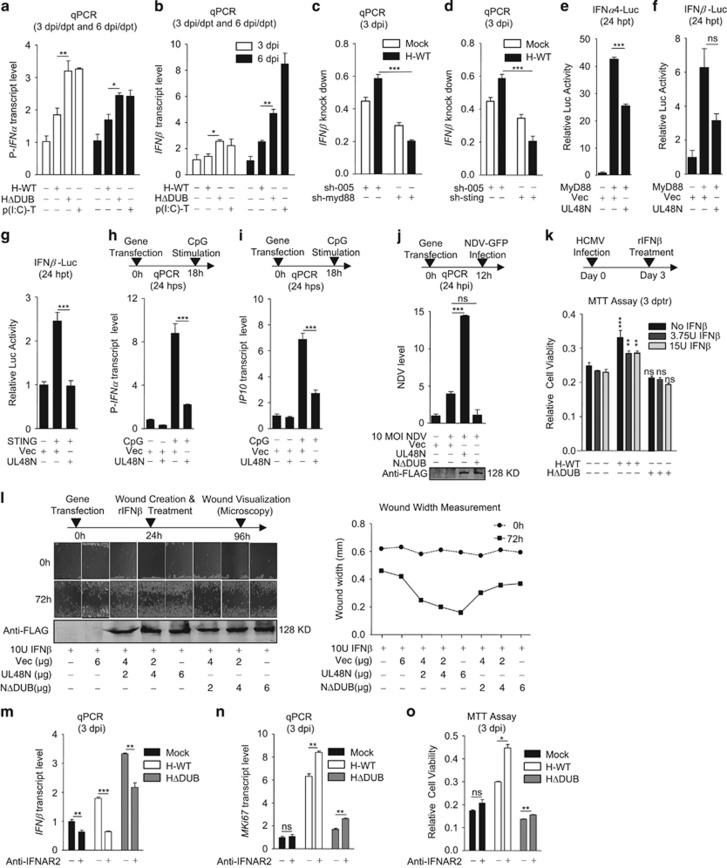
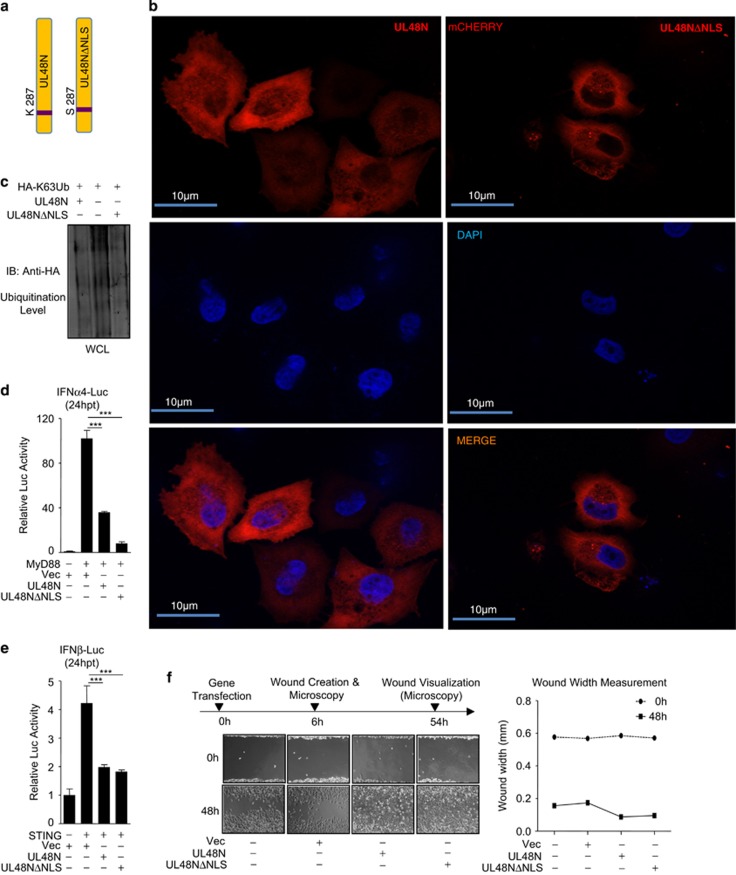
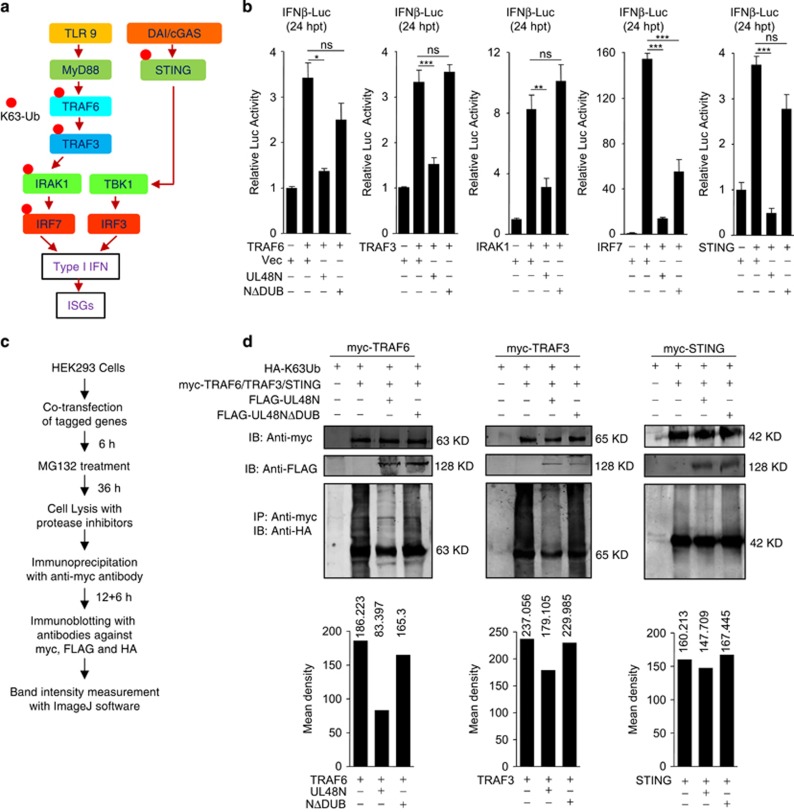
Cancer is a multifactorial disease and virus-mediated carcinogenesis is one of the crucial factors, which is poorly understood. Human cytomegalovirus (HCMV) is a herpesvirus and its components have been evidenced to be associated with cancer of different tissue origin. However, its role in cancer remains unknown. Here, we identified a conserved herpesviral tegument protein known as pUL48 of HCMV, encoding deubiquitinase enzyme, as having a key role in carcinogenesis. We show using deubiquitinase sufficient- and deficient-HCMV that HCMV deubiquitinase is a key in inducing enhanced cellular metabolic activity through upregulation of several anti-apoptotic genes and downregulation of several pro-apoptotic genes expression. Furthermore, HCMV deubiquitinase acquires pro-tumor functions by inhibiting PRR-mediated type I interferon via deubiquitination of TRAF6, TRAF3, IRAK1, IRF7 and STING. Taken together, our results suggest that HCMV infection may promote oncogenesis by inhibiting innate immunity of the host.
癌症是一种多因素疾病,病毒介导的致癌作用是其中一个关键因素,但目前对此了解甚少。人巨细胞病毒(HCMV)是一种疱疹病毒,其成分已被证实与不同组织来源的癌症有关。然而,其在癌症中的作用仍不清楚。在这里,我们鉴定出一种保守的疱疹病毒被膜蛋白,即 HCMV 的 pUL48,其编码去泛素化酶,在致癌作用中具有关键作用。我们通过使用去泛素化酶充分和缺乏的 HCMV 表明,HCMV 的去泛素化酶是通过上调几种抗细胞凋亡基因和下调几种促细胞凋亡基因的表达来诱导增强细胞代谢活性的关键。此外,HCMV 的去泛素化酶通过去泛素化 TRAF6、TRAF3、IRAK1、IRF7 和 STING,抑制 PRR 介导的 I 型干扰素,获得促肿瘤功能。总之,我们的研究结果表明,HCMV 感染可能通过抑制宿主固有免疫来促进肿瘤发生。