Kumar S, Ingle H, Mishra S, Mahla R S, Kumar A, Kawai T, Akira S, Takaoka A, Raut A A, Kumar H
Laboratory of Immunology, Department of Biological Sciences, Indian Institute of Science Education and Research, Bhopal, India.
Laboratory of Molecular Immunobiology, Graduate School of Biological Sciences, Nara Institute of Science and Technology, Nara, Japan.
Cell Death Dis. 2015 May 7;6(5):e1758. doi: 10.1038/cddis.2015.122.
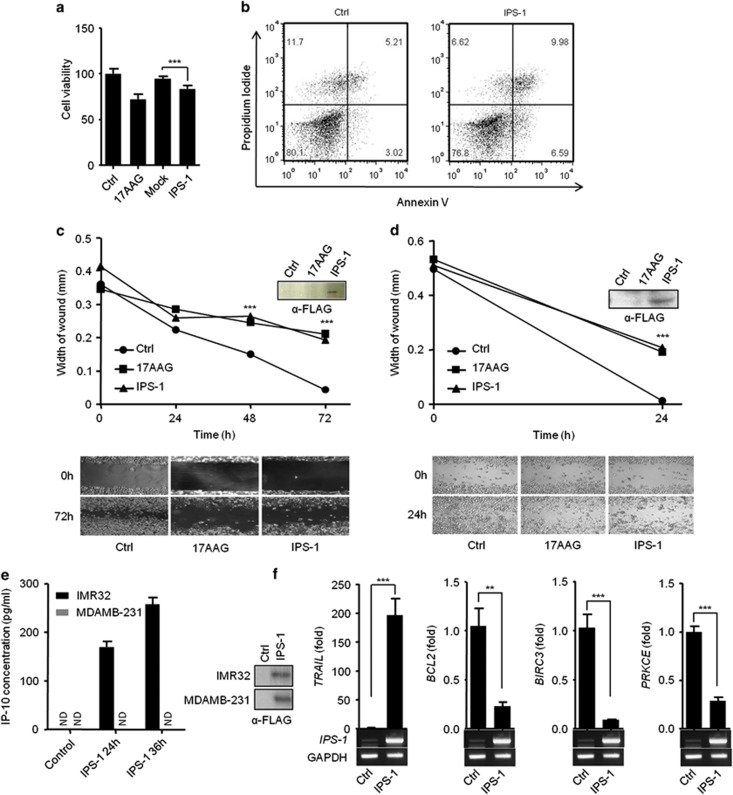
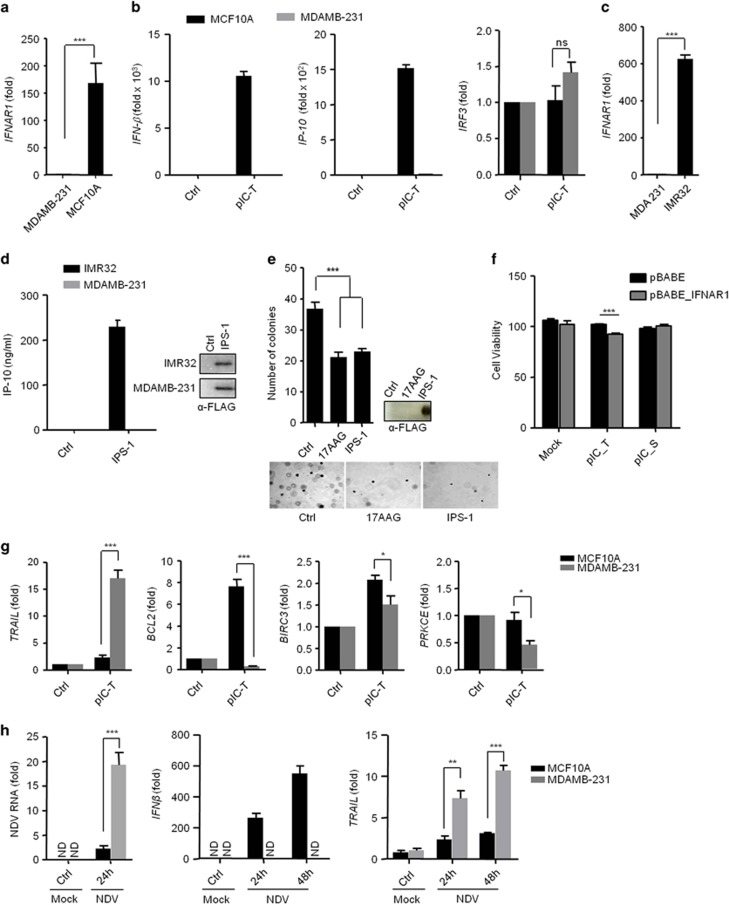
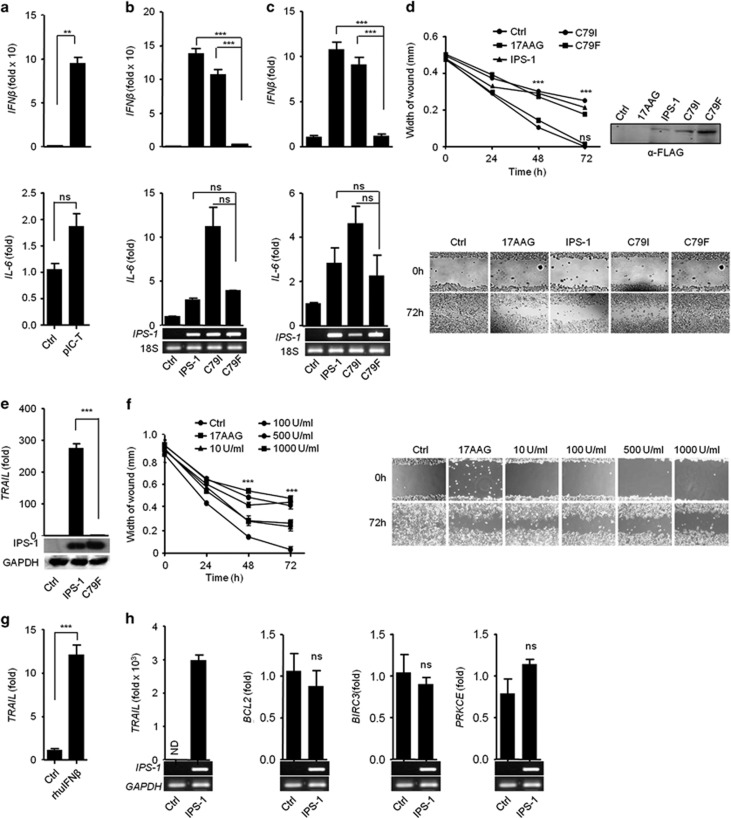
RIG-I-like receptors are the key cytosolic sensors for RNA viruses and induce the production of type I interferons (IFN) and pro-inflammatory cytokines through a sole adaptor IFN-β promoter stimulator-1 (IPS-1) (also known as Cardif, MAVS and VISA) in antiviral innate immunity. These sensors also have a pivotal role in anticancer activity through induction of apoptosis. However, the mechanism for their anticancer activity is poorly understood. Here, we show that anticancer vaccine adjuvant, PolyIC (primarily sensed by MDA5) and the oncolytic virus, Newcastle disease virus (NDV) (sensed by RIG-I), induce anticancer activity. The ectopic expression of IPS-1 into type I IFN-responsive and non-responsive cancer cells induces anticancer activity. PolyIC transfection and NDV infection upregulate pro-apoptotic gene TRAIL and downregulate the anti-apoptotic genes BCL2, BIRC3 and PRKCE. Furthermore, stable knockdown of IPS-1, IRF3 or IRF7 in IFN-non-responsive cancer cells show reduced anticancer activity by suppressing apoptosis via TRAIL and anti-apoptotic genes. Collectively, our study shows that IPS-1 induces anticancer activity through upregulation of pro-apoptotic gene TRAIL and downregulation of the anti-apoptotic genes BCL2, BIRC3 and PRKCE via IRF3 and IRF7 in type I IFN-dependent and -independent manners.
视黄酸诱导基因I样受体是RNA病毒的关键胞质传感器,在抗病毒固有免疫中通过单一衔接蛋白IFN-β启动子刺激因子1(IPS-1,也称为Cardif、MAVS和VISA)诱导I型干扰素(IFN)和促炎细胞因子的产生。这些传感器在通过诱导凋亡的抗癌活性中也起着关键作用。然而,它们的抗癌活性机制尚不清楚。在此,我们表明抗癌疫苗佐剂聚肌胞苷酸(主要由MDA5感知)和溶瘤病毒新城疫病毒(NDV,由RIG-I感知)可诱导抗癌活性。将IPS-1异位表达于I型IFN反应性和非反应性癌细胞中可诱导抗癌活性。聚肌胞苷酸转染和NDV感染上调促凋亡基因TRAIL并下调抗凋亡基因BCL2、BIRC3和PRKCE。此外,在IFN非反应性癌细胞中稳定敲低IPS-1、IRF3或IRF7可通过抑制TRAIL和抗凋亡基因介导的凋亡而降低抗癌活性。总的来说,我们的研究表明,IPS-1通过I型IFN依赖性和非依赖性方式,经由IRF3和IRF7上调促凋亡基因TRAIL并下调抗凋亡基因BCL2、BIRC3和PRKCE,从而诱导抗癌活性。