Merchant Mark, Moffat John, Schaefer Gabriele, Chan Jocelyn, Wang Xi, Orr Christine, Cheng Jason, Hunsaker Thomas, Shao Lily, Wang Stephanie J, Wagle Marie-Claire, Lin Eva, Haverty Peter M, Shahidi-Latham Sheerin, Ngu Hai, Solon Margaret, Eastham-Anderson Jeffrey, Koeppen Hartmut, Huang Shih-Min A, Schwarz Jacob, Belvin Marcia, Kirouac Daniel, Junttila Melissa R
Department of Translational Oncology, Genentech, Inc., South San Francisco, California, United States of America.
Department of Biochemical and Cellular Pharmacology, Genentech, Inc., South San Francisco, California, United States of America.
PLoS One. 2017 Oct 5;12(10):e0185862. doi: 10.1371/journal.pone.0185862. eCollection 2017.
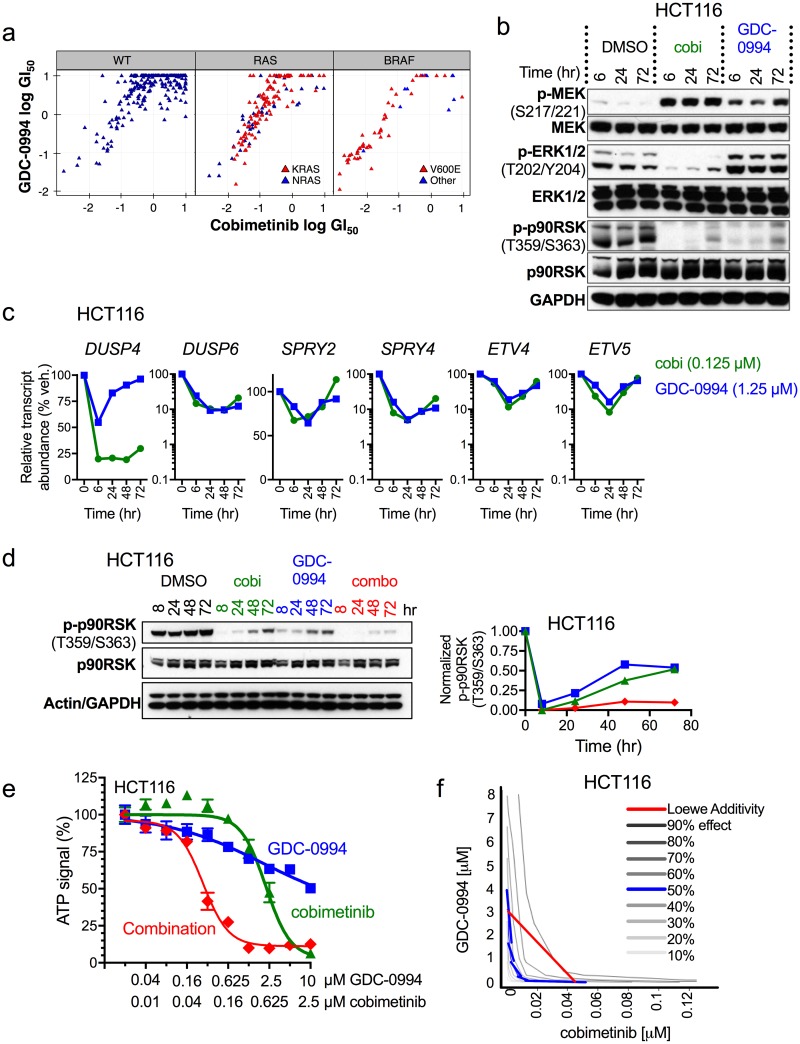
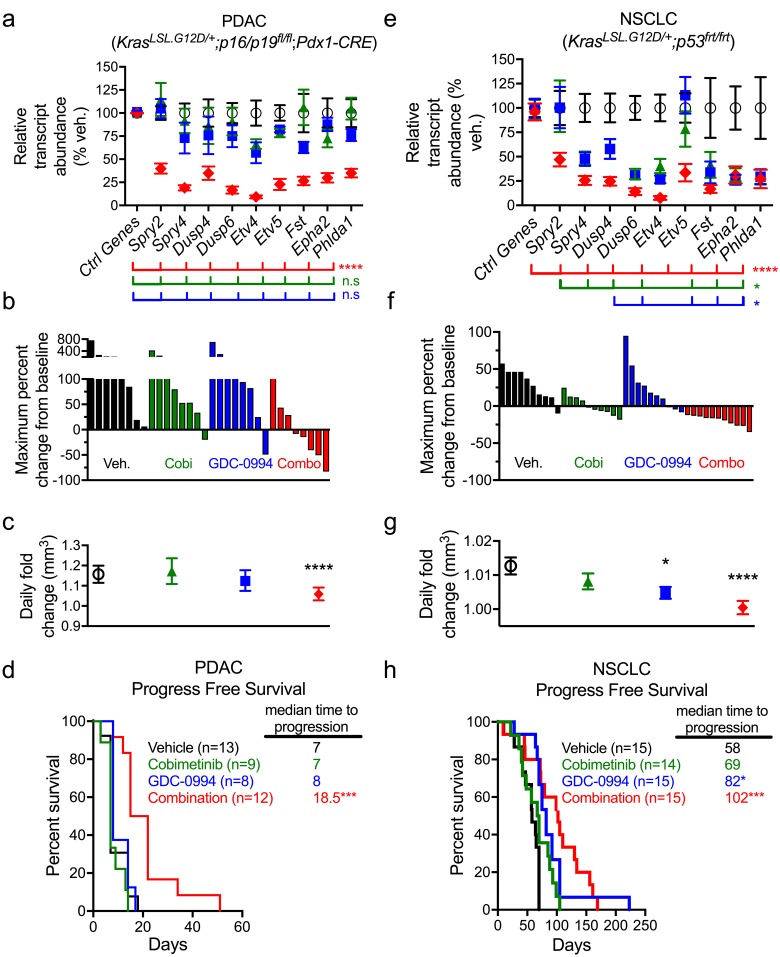
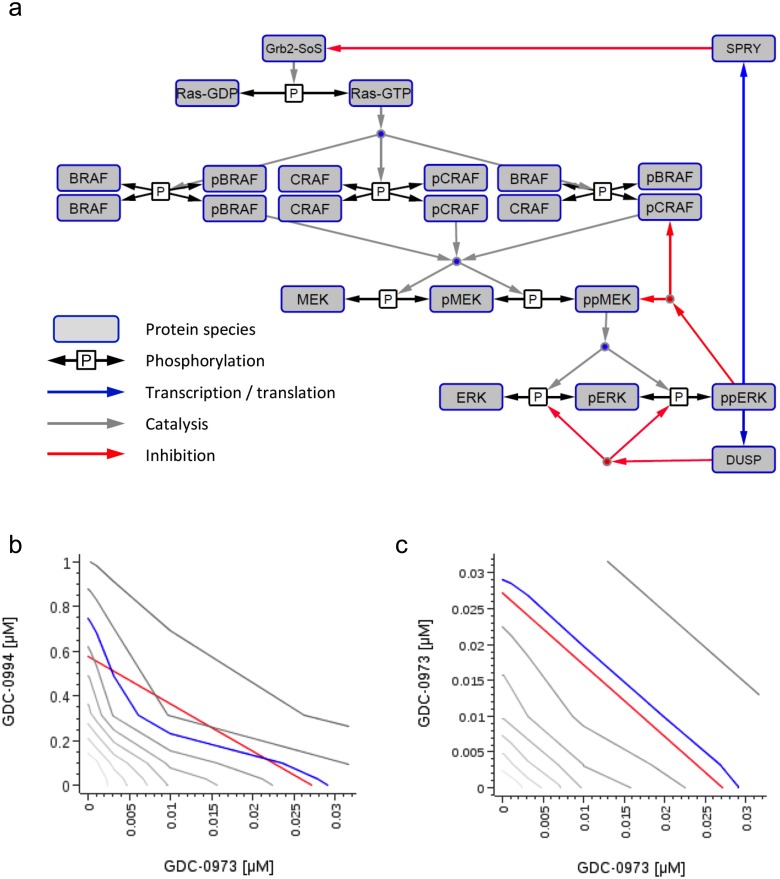
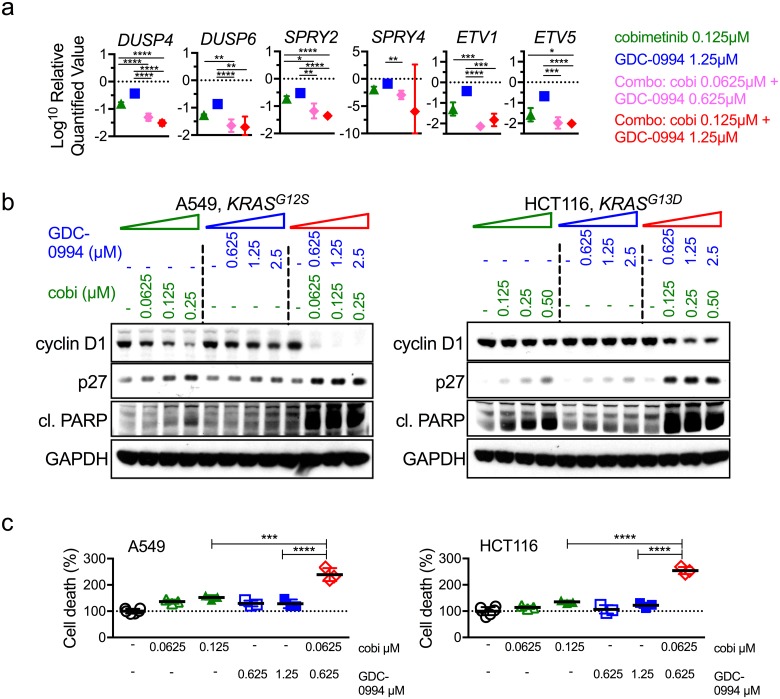
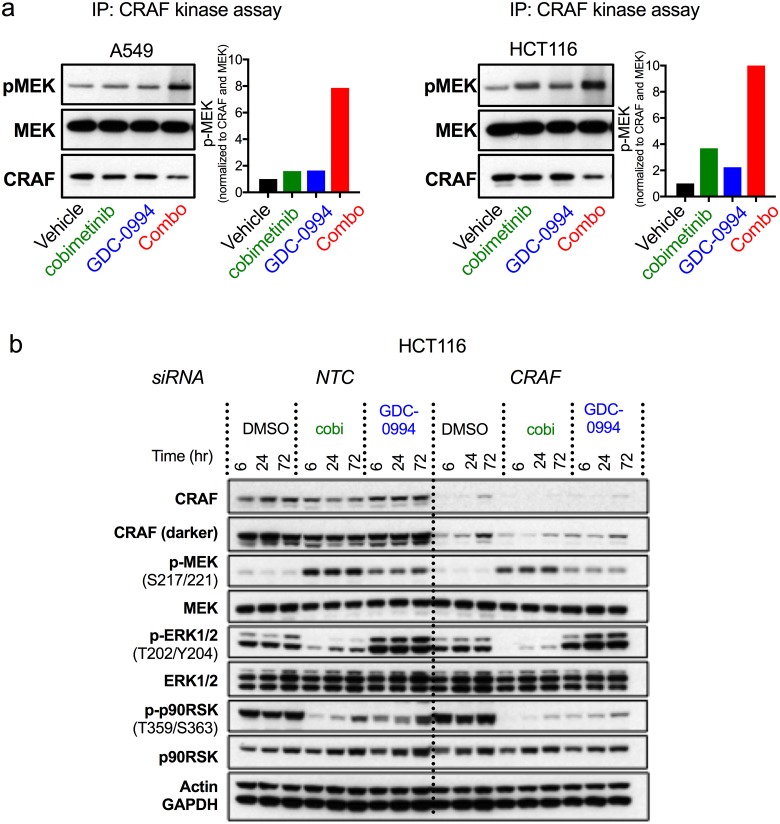
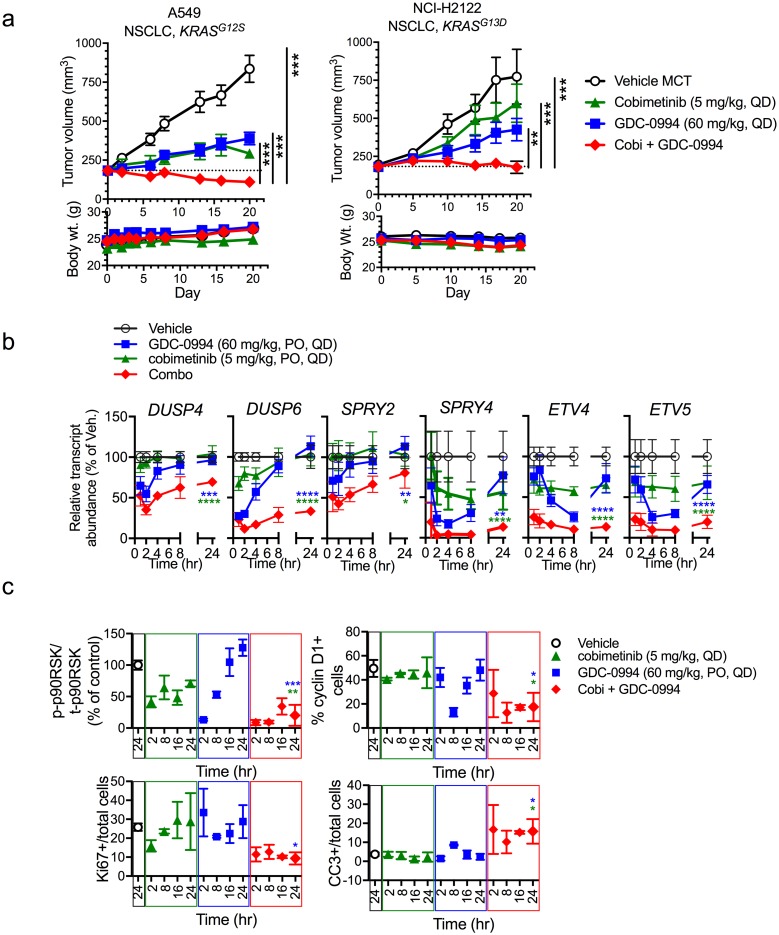
Mitogen-activated protein kinase (MAPK) pathway dysregulation is implicated in >30% of all cancers, rationalizing the development of RAF, MEK and ERK inhibitors. While BRAF and MEK inhibitors improve BRAF mutant melanoma patient outcomes, these inhibitors had limited success in other MAPK dysregulated tumors, with insufficient pathway suppression and likely pathway reactivation. In this study we show that inhibition of either MEK or ERK alone only transiently inhibits the MAPK pathway due to feedback reactivation. Simultaneous targeting of both MEK and ERK nodes results in deeper and more durable suppression of MAPK signaling that is not achievable with any dose of single agent, in tumors where feedback reactivation occurs. Strikingly, combined MEK and ERK inhibition is synergistic in RAS mutant models but only additive in BRAF mutant models where the RAF complex is dissociated from RAS and thus feedback productivity is disabled. We discovered that pathway reactivation in RAS mutant models occurs at the level of CRAF with combination treatment resulting in a markedly more active pool of CRAF. However, distinct from single node targeting, combining MEK and ERK inhibitor treatment effectively blocks the downstream signaling as assessed by transcriptional signatures and phospho-p90RSK. Importantly, these data reveal that MAPK pathway inhibitors whose activity is attenuated due to feedback reactivation can be rescued with sufficient inhibition by using a combination of MEK and ERK inhibitors. The MEK and ERK combination significantly suppresses MAPK pathway output and tumor growth in vivo to a greater extent than the maximum tolerated doses of single agents, and results in improved anti-tumor activity in multiple xenografts as well as in two Kras mutant genetically engineered mouse (GEM) models. Collectively, these data demonstrate that combined MEK and ERK inhibition is functionally unique, yielding greater than additive anti-tumor effects and elucidates a highly effective combination strategy in MAPK-dependent cancer, such as KRAS mutant tumors.
丝裂原活化蛋白激酶(MAPK)信号通路失调与超过30%的癌症相关,这使得RAF、MEK和ERK抑制剂的研发具有合理性。虽然BRAF和MEK抑制剂改善了BRAF突变型黑色素瘤患者的预后,但这些抑制剂在其他MAPK信号通路失调的肿瘤中成效有限,原因是对该信号通路的抑制不足且可能出现信号通路的重新激活。在本研究中,我们发现单独抑制MEK或ERK仅会因反馈性重新激活而短暂抑制MAPK信号通路。在会发生反馈性重新激活的肿瘤中,同时靶向MEK和ERK节点可更深入、持久地抑制MAPK信号传导,这是任何剂量的单一药物都无法实现的。令人惊讶的是,联合抑制MEK和ERK在RAS突变模型中具有协同作用,但在BRAF突变模型中只是相加作用,因为在BRAF突变模型中RAF复合物与RAS解离,因此反馈性激活被阻断。我们发现,在RAS突变模型中,联合治疗导致CRAF活性显著增强,信号通路在CRAF水平发生重新激活。然而,与单一节点靶向不同,联合使用MEK和ERK抑制剂治疗可通过转录特征和磷酸化p90RSK有效阻断下游信号传导。重要的是,这些数据表明,因反馈性重新激活而活性减弱的MAPK信号通路抑制剂,可通过联合使用MEK和ERK抑制剂进行充分抑制而得到挽救。MEK和ERK联合用药在体内比单一药物的最大耐受剂量更能显著抑制MAPK信号通路输出和肿瘤生长,并在多个异种移植模型以及两个Kras突变基因工程小鼠(GEM)模型中提高抗肿瘤活性。总的来说,这些数据表明联合抑制MEK和ERK在功能上具有独特性,可产生大于相加的抗肿瘤作用,并阐明了在MAPK依赖性癌症(如KRAS突变肿瘤)中的一种高效联合策略。