Jost Marco, Chen Yuwen, Gilbert Luke A, Horlbeck Max A, Krenning Lenno, Menchon Grégory, Rai Ankit, Cho Min Y, Stern Jacob J, Prota Andrea E, Kampmann Martin, Akhmanova Anna, Steinmetz Michel O, Tanenbaum Marvin E, Weissman Jonathan S
Department of Cellular and Molecular Pharmacology, University of California, San Francisco, San Francisco, CA 94158, USA; Howard Hughes Medical Institute, University of California, San Francisco, San Francisco, CA 94158, USA; Center for RNA Systems Biology, University of California, San Francisco, San Francisco, CA 94158, USA; Department of Microbiology and Immunology, University of California, San Francisco, San Francisco, CA 94158, USA.
Department of Cellular and Molecular Pharmacology, University of California, San Francisco, San Francisco, CA 94158, USA; Howard Hughes Medical Institute, University of California, San Francisco, San Francisco, CA 94158, USA; Center for RNA Systems Biology, University of California, San Francisco, San Francisco, CA 94158, USA.
Mol Cell. 2017 Oct 5;68(1):210-223.e6. doi: 10.1016/j.molcel.2017.09.012.
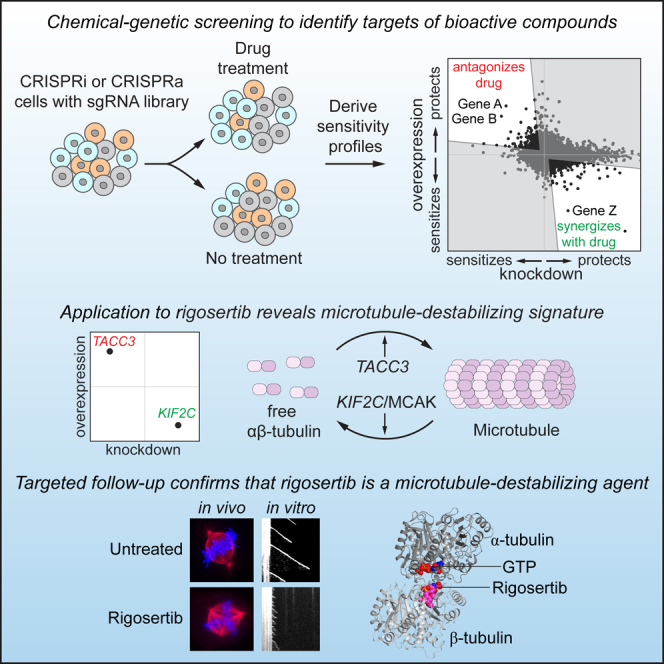
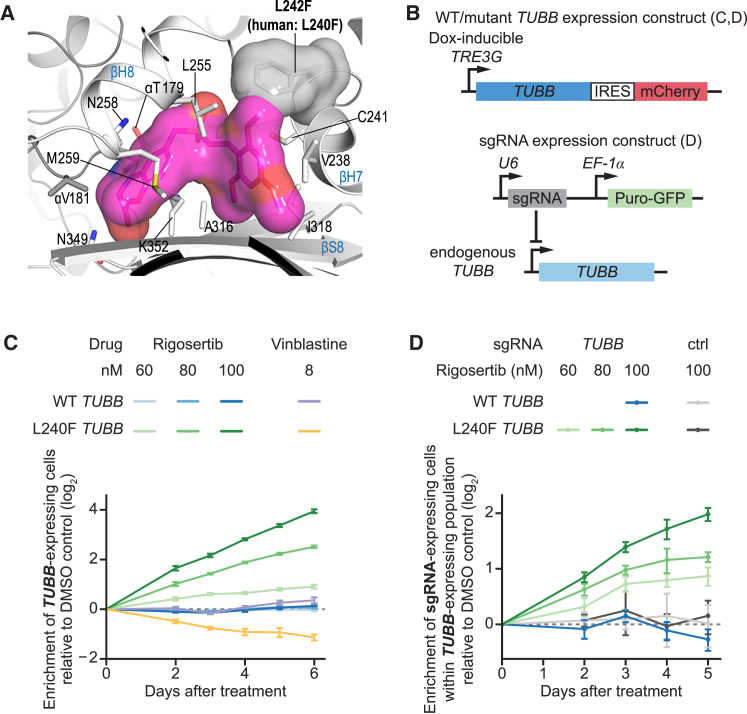
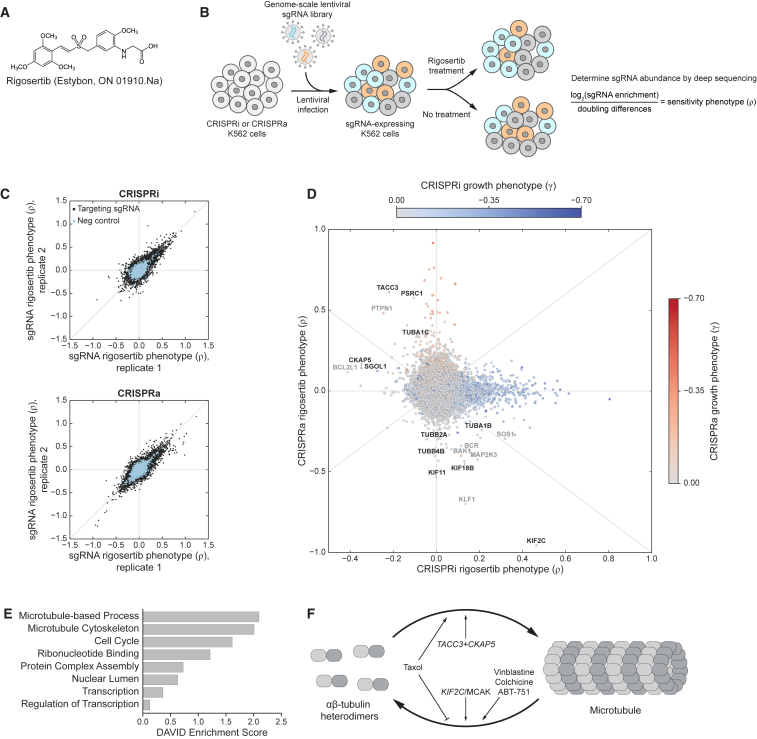
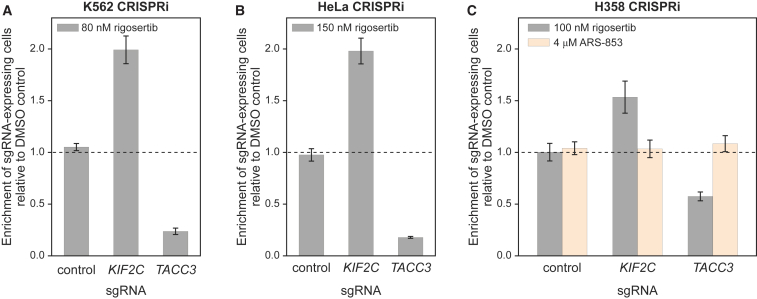
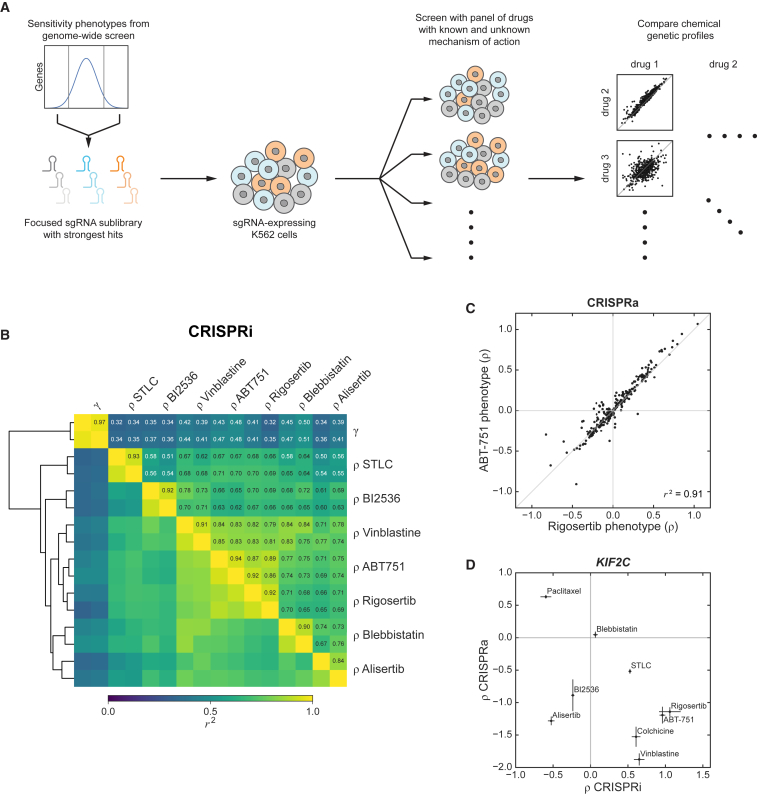
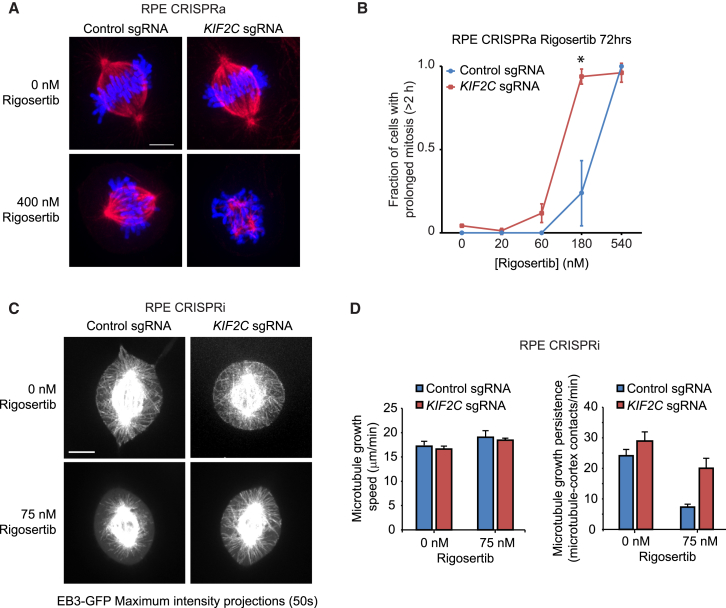
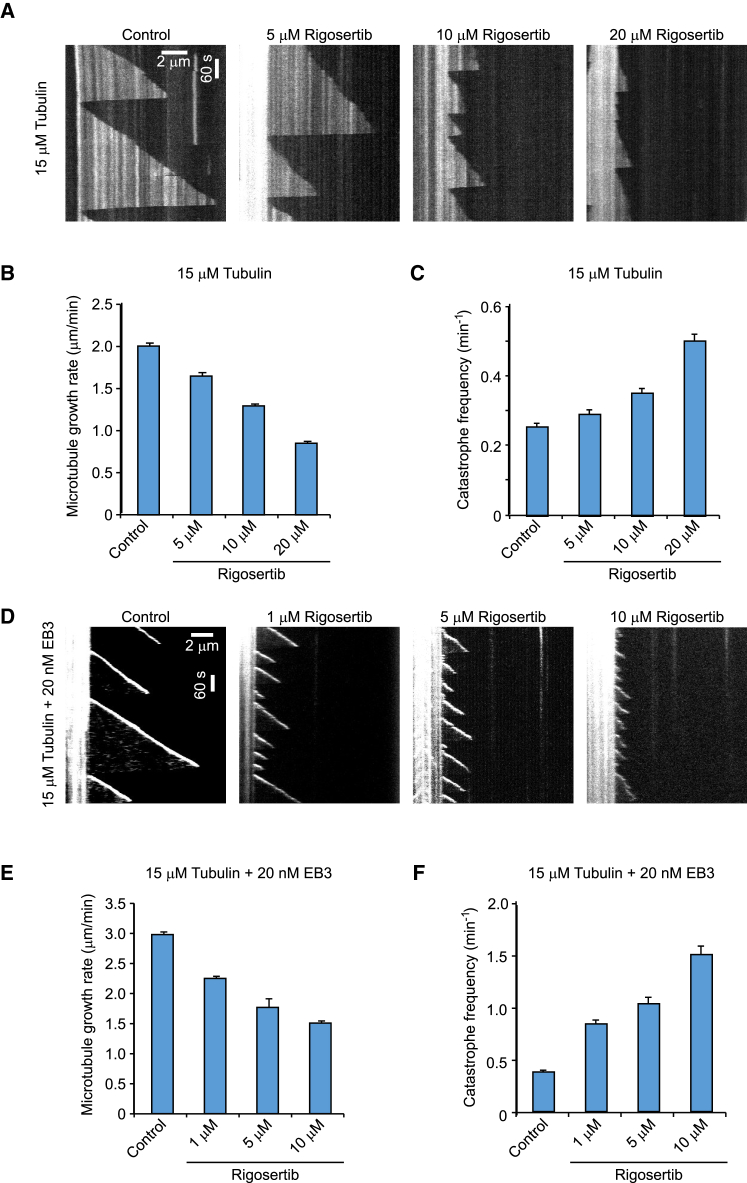
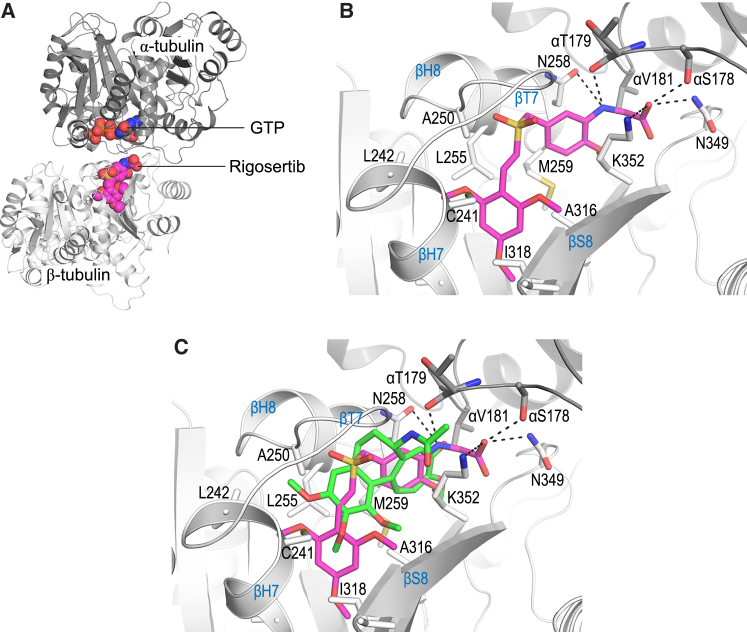
Chemical libraries paired with phenotypic screens can now readily identify compounds with therapeutic potential. A central limitation to exploiting these compounds, however, has been in identifying their relevant cellular targets. Here, we present a two-tiered CRISPR-mediated chemical-genetic strategy for target identification: combined genome-wide knockdown and overexpression screening as well as focused, comparative chemical-genetic profiling. Application of these strategies to rigosertib, a drug in phase 3 clinical trials for high-risk myelodysplastic syndrome whose molecular target had remained controversial, pointed singularly to microtubules as rigosertib's target. We showed that rigosertib indeed directly binds to and destabilizes microtubules using cell biological, in vitro, and structural approaches. Finally, expression of tubulin with a structure-guided mutation in the rigosertib-binding pocket conferred resistance to rigosertib, establishing that rigosertib kills cancer cells by destabilizing microtubules. These results demonstrate the power of our chemical-genetic screening strategies for pinpointing the physiologically relevant targets of chemical agents.
与表型筛选相结合的化学文库现在能够轻松识别具有治疗潜力的化合物。然而,利用这些化合物的一个主要限制在于确定其相关的细胞靶点。在此,我们提出一种用于靶点识别的两层CRISPR介导的化学遗传学策略:全基因组敲低和过表达联合筛选以及聚焦的、比较性化学遗传学分析。将这些策略应用于处于高危骨髓增生异常综合征3期临床试验的药物瑞戈非尼(其分子靶点一直存在争议),明确指出微管是瑞戈非尼的靶点。我们使用细胞生物学、体外和结构方法表明,瑞戈非尼确实直接结合并破坏微管的稳定性。最后,在瑞戈非尼结合口袋中具有结构导向突变的微管蛋白的表达赋予了对瑞戈非尼的抗性,证实瑞戈非尼通过破坏微管的稳定性杀死癌细胞。这些结果证明了我们的化学遗传学筛选策略在确定化学试剂的生理相关靶点方面的强大作用。