Department of Biomedical Science, Institute of Regenerative Medicine and Biofunction, Graduate School of Medical Science, Tottori University, 86 Nishi-cho, Yonago, Tottori, 683-8503, Japan.
Chromosome Engineering Research Center, Tottori University, 86 Nishi-cho, Yonago, Tottori, 683-8503, Japan.
Sci Rep. 2017 Oct 6;7(1):12739. doi: 10.1038/s41598-017-10418-7.
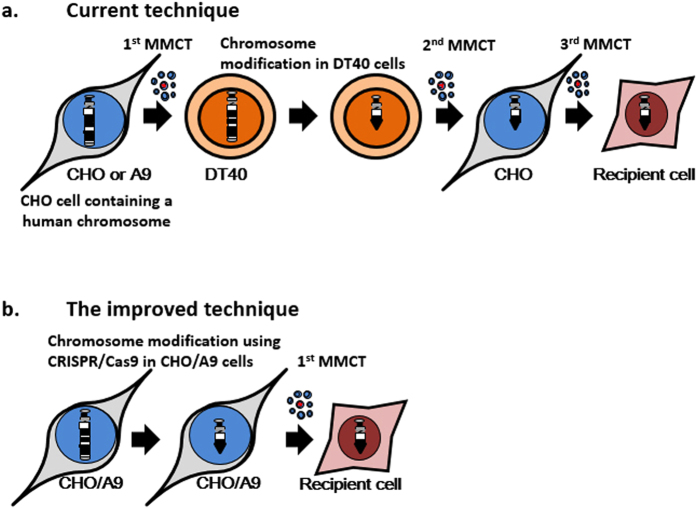
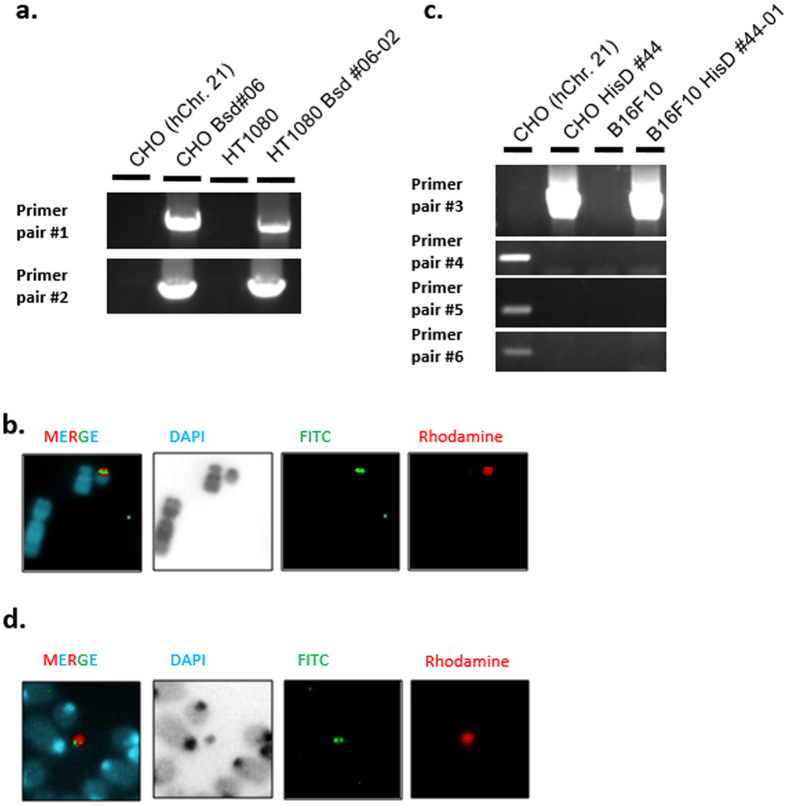
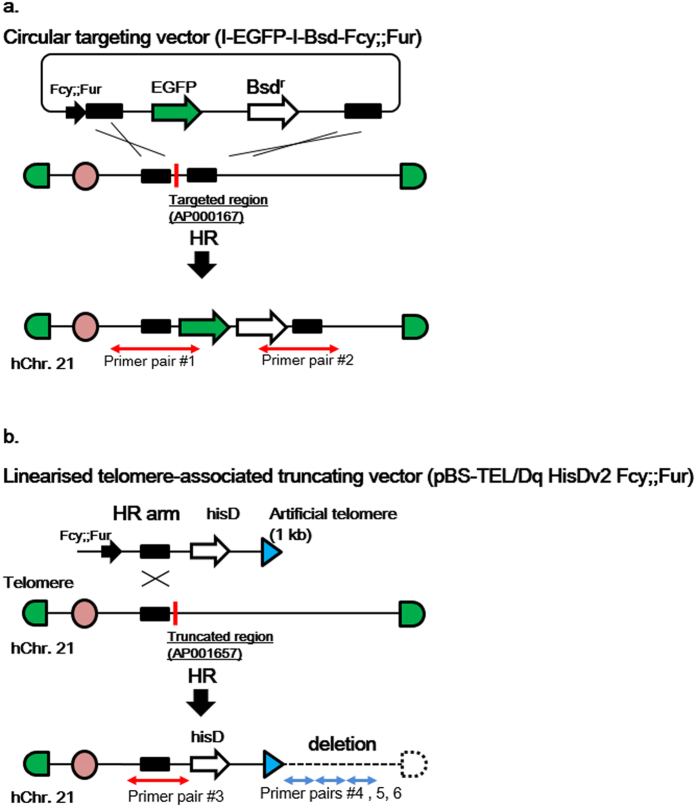
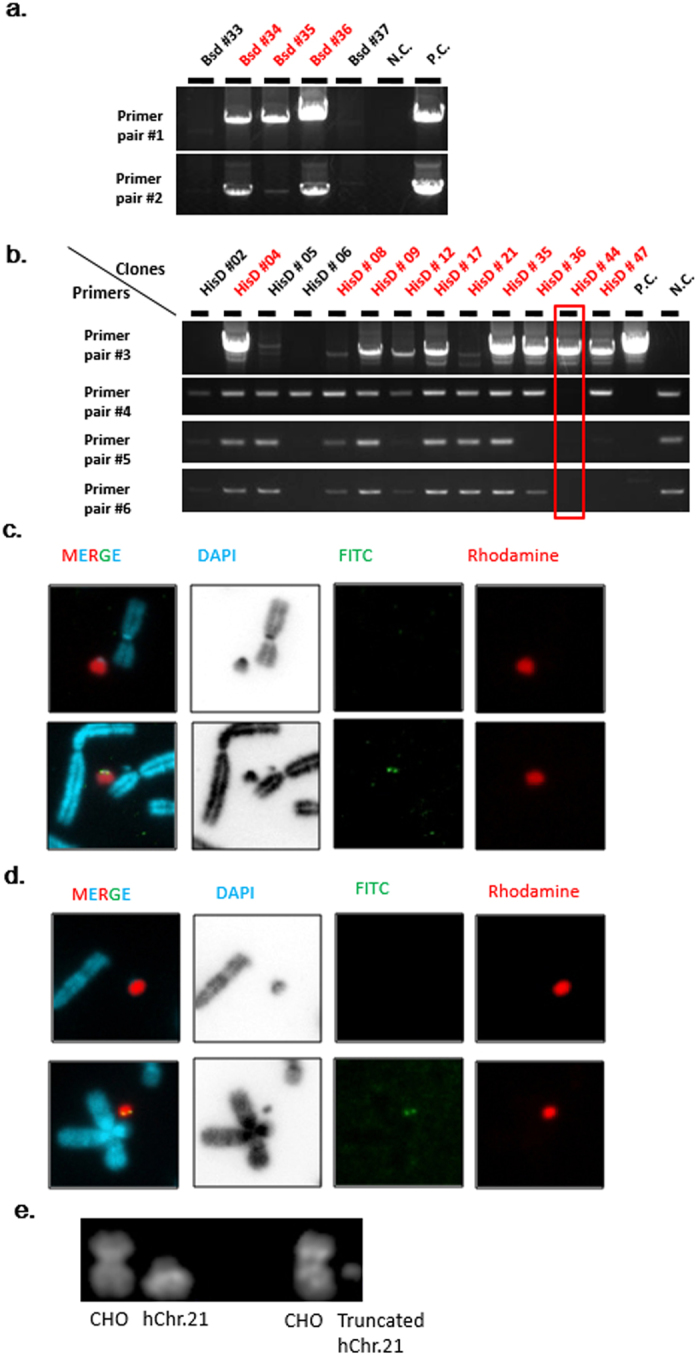
Chromosome engineering techniques including gene insertion, telomere-associated truncation and microcell-mediated chromosome transfer (MMCT) are powerful tools for generation of humanised model animal, containing megabase-sized genomic fragments. However, these techniques require two cell lines: homologous recombination (HR)-proficient DT40 cells for chromosome modification, and CHO cells for transfer to recipient cells. Here we show an improved technique using a combination of CRISPR/Cas9-induced HR in CHO and mouse A9 cells without DT40 cells following MMCT to recipient cells. Transgene insertion was performed in CHO cells with the insertion of enhanced green fluorescence protein (EGFP) using CRISPR/Cas9 and a circular targeting vector containing two 3 kb HR arms. Telomere-associated truncation was performed in CHO cells using CRISPR/Cas9 and a linearised truncation vector containing a single 7 kb HR arm at the 5' end, a 1 kb artificial telomere at the 3' end. At least 11% and 6% of the targeting efficiency were achieved for transgene insertion and telomere-associated truncation, respectively. The transgene insertion was also confirmed in A9 cells (29%). The modified chromosomes were transferrable to other cells. Thus, this CHO and A9 cell-mediated chromosome engineering using the CRISPR/Cas9 for direct transfer of the modified chromosome is a rapid technique that will facilitate chromosome manipulation.
染色体工程技术包括基因插入、端粒相关截断和微细胞介导的染色体转移(MMCT),是生成含有兆碱基大小基因组片段的人源化模型动物的有力工具。然而,这些技术需要两种细胞系:用于染色体修饰的同源重组(HR)高效 DT40 细胞,以及用于转移到受体细胞的 CHO 细胞。在这里,我们展示了一种改进的技术,该技术结合了 CRISPR/Cas9 诱导的 CHO 和小鼠 A9 细胞中的 HR,而无需在 MMCT 到受体细胞后使用 DT40 细胞。通过 CRISPR/Cas9 和包含两个 3kb HR 臂的环状靶向载体,在 CHO 细胞中进行了转基因插入,插入了增强型绿色荧光蛋白(EGFP)。在 CHO 细胞中使用 CRISPR/Cas9 和包含 5'端单个 7kb HR 臂、3'端 1kb 人工端粒的线性化截断载体进行了端粒相关截断。转基因插入和端粒相关截断的靶向效率分别至少达到 11%和 6%。转基因插入也在 A9 细胞中得到了证实(29%)。修饰后的染色体可转移到其他细胞中。因此,这种使用 CRISPR/Cas9 直接转移修饰染色体的 CHO 和 A9 细胞介导的染色体工程是一种快速技术,将促进染色体操作。