Mulipukwa Carolyn Patricia, Mudenda Boyd, Mbewe Allan Rabson
University of Zambia School of Medicine, Department of Public Health, Lusaka, Zambia.
PLoS Negl Trop Dis. 2017 Oct 9;11(10):e0005946. doi: 10.1371/journal.pntd.0005946. eCollection 2017 Oct.
The current rabies control strategy in Zambia is based on dog vaccination, dog population control and dog movement restrictions. In Nyimba district of Zambia, dog vaccination coverage is low but the incidence of dog bites is high which places the community at risk of rabies infection. The renewed global interest eliminating rabies in developing countries has spurred interest to identify determinants and barriers of dog vaccination in an effort to reduce the overall disease burden.
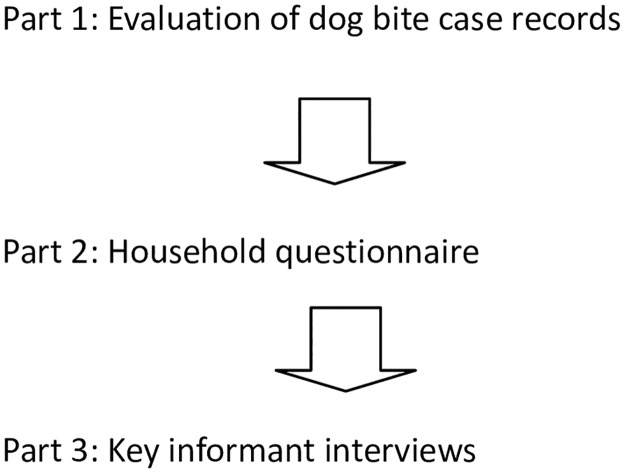
A mixed methods cross sectional design was used in the study. This consisted of three parts: Evaluation of medical records regarding dog bite injuries, implementation and analysis of a household survey and in-depth review of key informant interviews. Data was collected into a Microsoft Excel database and subsequently transferred to STATA for descriptive, inferential and thematic analysis.
Dog vaccination coverage overall was 8.7% (57/655), with 3.4% (22/655) in urban areas, 1.8% (12/655) in peri-urban and 3.5 (23/655) in the rural regions. Financially stable households were more likely to have their dogs vaccinated. Only 10.3% (31/300) of the respondents had vaccinated their dogs and these had a reliable source of income as 6% (18/300) were peasant farmers, 2% (6/300) were dependants whose guardians were financially stable and 2.3% (7/300) were in steady employment. Important barriers to dog vaccination included cost, limited awareness of vaccination program and access.
Current rabies control strategies in Nyimba district, Zambia, appear quite limited. Improvements in the regional dog vaccination program may provide benefits. Enhancement of educational efforts targeting behavioural factors may also prove useful. Finally, the cost of dog vaccination can be reduced with scaled up production of a local vaccine.
赞比亚目前的狂犬病防控策略基于犬类疫苗接种、犬类数量控制和犬类移动限制。在赞比亚的尼姆巴区,犬类疫苗接种覆盖率较低,但犬咬伤发生率较高,这使社区面临狂犬病感染风险。全球对在发展中国家消除狂犬病重新产生的兴趣激发了人们确定犬类疫苗接种的决定因素和障碍的兴趣,以努力减轻总体疾病负担。
本研究采用混合方法横断面设计。该设计包括三个部分:评估犬咬伤伤害的医疗记录、实施和分析家庭调查以及深入审查关键信息访谈。数据收集到Microsoft Excel数据库中,随后转移到STATA进行描述性、推断性和主题分析。
总体犬类疫苗接种覆盖率为8.7%(57/655),城市地区为3.4%(22/655),城郊地区为1.8%(12/655),农村地区为3.5%(23/655)。经济稳定的家庭更有可能为其犬类接种疫苗。只有10.3%(31/300)的受访者为其犬类接种了疫苗,这些受访者有可靠的收入来源,因为6%(18/300)是农民,2%(6/300)是受抚养人,其监护人经济稳定,2.3%(7/300)有稳定工作。犬类疫苗接种的重要障碍包括成本、对疫苗接种计划的认识有限和获取途径。
赞比亚尼姆巴区目前的狂犬病防控策略似乎相当有限。改进区域犬类疫苗接种计划可能会带来益处。针对行为因素加强教育努力也可能证明是有用的。最后,扩大当地疫苗的生产可以降低犬类疫苗接种的成本。