Aranaz Andrés Jesus Maria, Limón Ramírez Ramon, Aibar Remón Carlos, Gea-Velázquez de Castro Maria Teresa, Bolúmar Francisco, Hernández-Aguado Ildefonso, López Fresneña Nieves, Díaz-Agero Pérez Cristina, Terol García Enrique, Michel Philippe, Sousa Paulo, Larizgoitia Jauregui Itziar
Department of Preventive Medicine and Public Health, Hospital Universitario Ramón y Cajal, Madrid, Spain.
Center of Biomedical Network Research in Epidemiology and Public Health (CIBERESP), Madrid, Spain.
BMJ Open. 2017 Oct 8;7(10):e016546. doi: 10.1136/bmjopen-2017-016546.
Adverse events (AEs) epidemiology is the first step to improve practice in the healthcare system. Usually, the preferred method used to estimate the magnitude of the problem is the retrospective cohort study design, with retrospective reviews of the medical records. However this data collection involves a sophisticated sampling plan, and a process of intensive review of sometimes very heavy and complex medical records. Cross-sectional survey is also a valid and feasible methodology to study AEs.
The aim of this study is to compare AEs detection using two different methodologies: cross-sectional versus retrospective cohort design.
Secondary and tertiary hospitals in five countries: Argentina, Colombia, Costa Rica, Mexico and Peru.
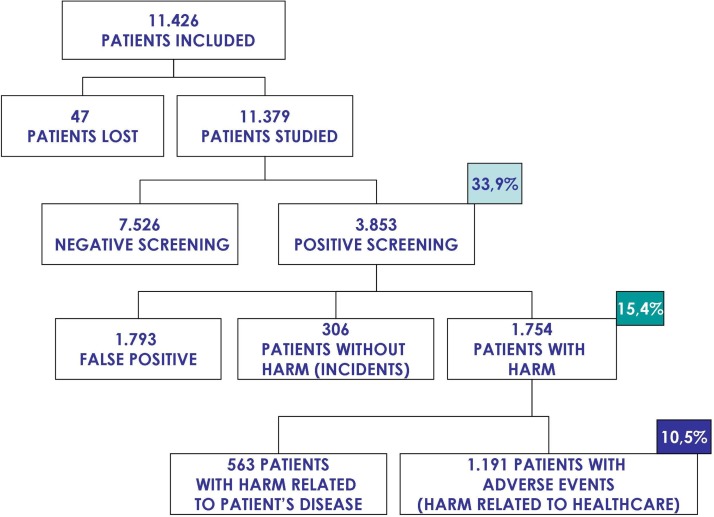
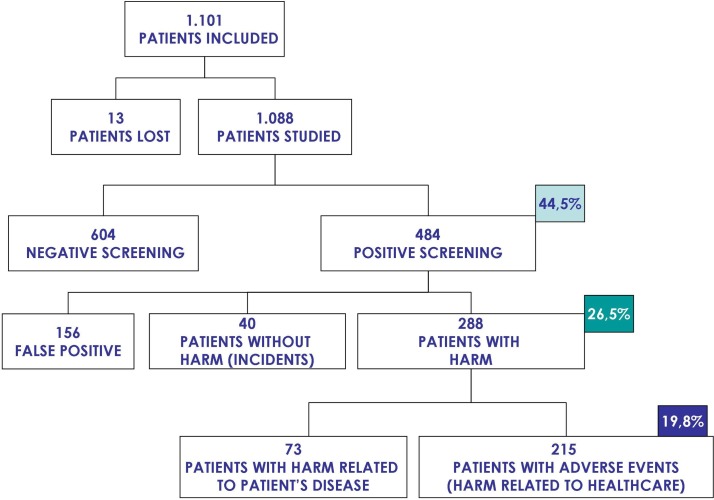
The IBEAS Study is a cross-sectional survey with a sample size of 11 379 patients. The retrospective cohort study was obtained from a 10% random sample proportional to hospital size from the entire IBEAS Study population.
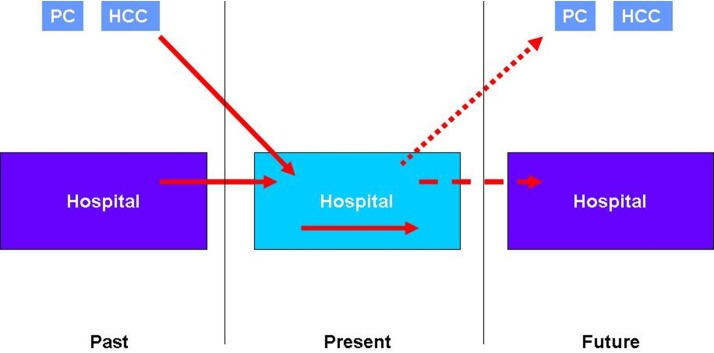
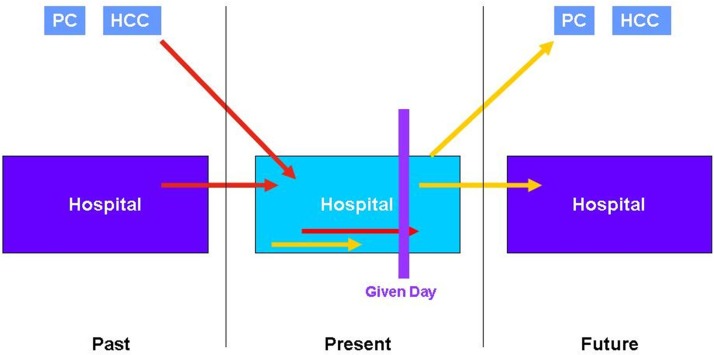
This study compares the 1-day prevalence of the AEs obtained in the IBEAS Study with the incidence obtained through the retrospective cohort study.
The prevalence of patients with AEs was 10.47% (95% CI 9.90 to 11.03) (1191/11 379), while the cumulative incidence of the retrospective cohort study was 19.76% (95% CI 17.35% to 22.17%) (215/1088). In both studies the highest risk of suffering AEs was seen in Intensive Care Unit (ICU) patients. Comorbid patients and patients with medical devices showed higher risk.
The retrospective cohort design, although requires more resources, allows to detect more AEs than the cross-sectional design.
不良事件(AE)流行病学是改善医疗保健系统实践的第一步。通常,用于估计问题严重程度的首选方法是回顾性队列研究设计,并对病历进行回顾性审查。然而,这种数据收集涉及复杂的抽样计划,以及对有时非常繁重和复杂的病历进行深入审查的过程。横断面调查也是研究不良事件的一种有效且可行的方法。
本研究的目的是比较使用两种不同方法检测不良事件:横断面设计与回顾性队列设计。
五个国家的二级和三级医院:阿根廷、哥伦比亚、哥斯达黎加、墨西哥和秘鲁。
IBEAS研究是一项横断面调查,样本量为11379名患者。回顾性队列研究是从整个IBEAS研究人群中按医院规模抽取的10%随机样本。
本研究比较了IBEAS研究中获得的不良事件1天患病率与通过回顾性队列研究获得的发病率。
不良事件患者的患病率为10.47%(95%CI 9.90至11.03)(1191/11379),而回顾性队列研究的累积发病率为19.76%(95%CI 17.35%至22.17%)(215/1088)。在两项研究中,重症监护病房(ICU)患者发生不良事件的风险最高。合并症患者和使用医疗设备的患者风险更高。
回顾性队列设计虽然需要更多资源,但比横断面设计能检测到更多的不良事件。