Low Lian Leng, Maulod Adlina, Lee Kheng Hock
Department of Family Medicine and Continuing Care, Singapore General Hospital, Singapore.
Department of Family Medicine, Duke-NUS Medical School, Singapore.
BMJ Open. 2017 Oct 8;7(10):e017839. doi: 10.1136/bmjopen-2017-017839.
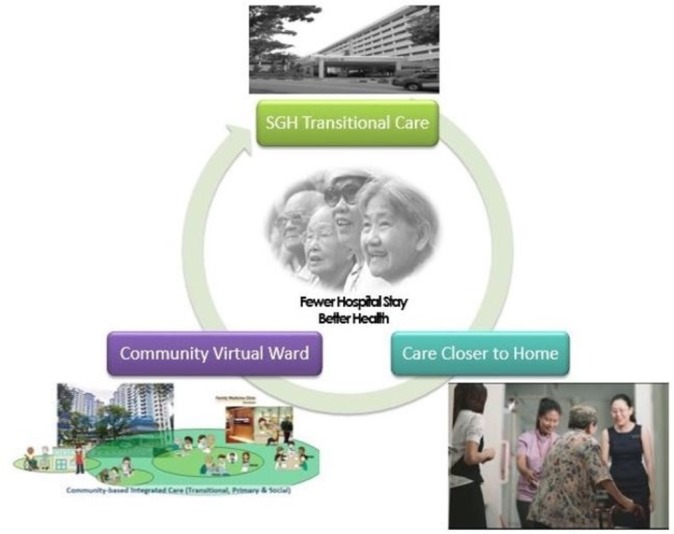
Poorer health outcomes and disproportionate healthcare use in socioeconomically disadvantaged patients is well established. However, there is sparse literature on effective integrated care interventions that specifically target these high-risk individuals. The Integrated Community of Care (ICoC) is a novel care model that integrates hospital-based transitional care with health and social care in the community for high-risk individuals living in socially deprived communities. This study aims to evaluate the effectiveness of the ICoC in reducing acute hospital use and investigate the implementation process and its effects on clinical outcomes using a mixed-methods participatory action research (PAR) approach.
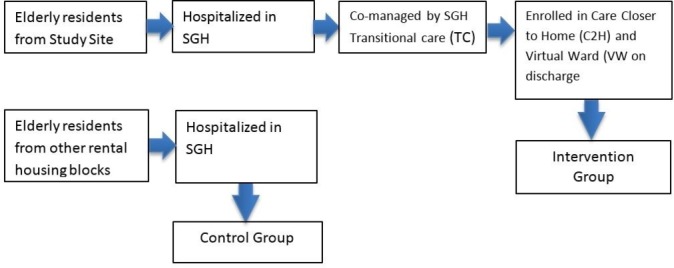
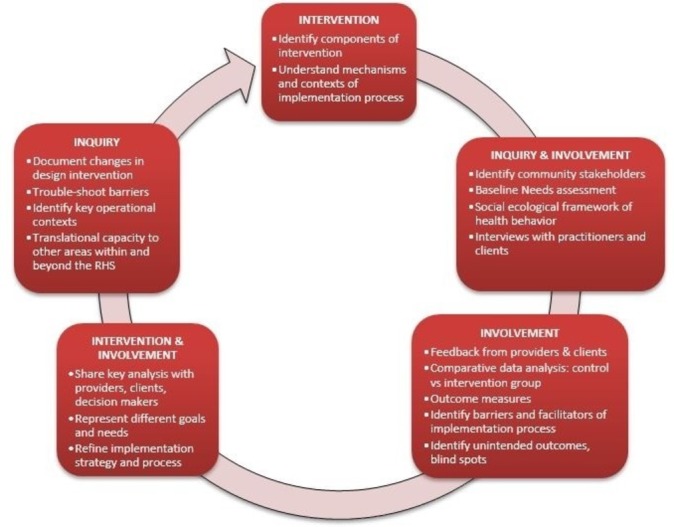
This is a single-centre prospective, controlled, observational study performed in the SingHealth Regional Health System. A total of 250 eligible patients from an urbanised low-income community in Singapore will be enrolled during their index hospitalisation. Our PAR model combines two research components: quantitative and qualitative, at different phases of the intervention. Outcomes of acute hospital use and health-related quality of life are compared with controls, at 30 days and 1 year. The qualitative study aims at developing a more context-specific social ecological model of health behaviour. This model will identify how influences within one's social environment: individual, interpersonal, organisational, community and policy factors affect people's experiences and behaviours during care transitions from hospital to home. Knowledge on the operational aspects of ICoC will enrich our evidence-based strategies to understand the impact of the ICoC. The blending of qualitative and quantitative mixed methods recognises the dynamic implementation processes as well as the complex and evolving needs of community stakeholders in shaping outcomes.
Ethics approval was granted by the SingHealth Centralised Institutional Review Board (CIRB 2015/2277). The findings from this study will be disseminated by publications in peer-reviewed journals, scientific meetings and presentations to government policy-makers.
NCT02678273.
社会经济地位不利的患者健康状况较差且医疗保健使用不均衡,这一点已得到充分证实。然而,针对这些高危个体的有效综合护理干预措施的文献却很少。综合护理社区(ICoC)是一种新型护理模式,它将基于医院的过渡性护理与社区的健康和社会护理相结合,为生活在社会贫困社区的高危个体提供服务。本研究旨在评估ICoC在减少急性医院使用方面的有效性,并使用混合方法参与式行动研究(PAR)方法调查其实施过程及其对临床结果的影响。
这是一项在新加坡健康集团区域卫生系统进行的单中心前瞻性对照观察研究。在其首次住院期间,将从新加坡一个城市化低收入社区招募总共250名符合条件的患者。我们的PAR模型在干预的不同阶段结合了两个研究组成部分:定量和定性。在30天和1年时,将急性医院使用情况和与健康相关的生活质量结果与对照组进行比较。定性研究旨在建立一个更具背景特异性的健康行为社会生态模型。该模型将确定一个人社会环境中的影响因素:个人、人际、组织、社区和政策因素如何影响人们在从医院到家庭的护理过渡期间的经历和行为。关于ICoC运作方面的知识将丰富我们基于证据的策略,以了解ICoC的影响。定性和定量混合方法的结合认识到动态实施过程以及社区利益相关者在塑造结果方面复杂且不断变化的需求。
新加坡健康集团中央机构审查委员会(CIRB 2015/2277)已批准伦理许可。本研究的结果将通过在同行评审期刊上发表、参加科学会议以及向政府政策制定者进行汇报等方式进行传播。
NCT02678273。