State Key Laboratory of Pig Genetic Improvement and Production Technology, Jiangxi Agricultural University, Nanchang, China.
Genome Biol Evol. 2017 Oct 1;9(10):2592-2603. doi: 10.1093/gbe/evx186.
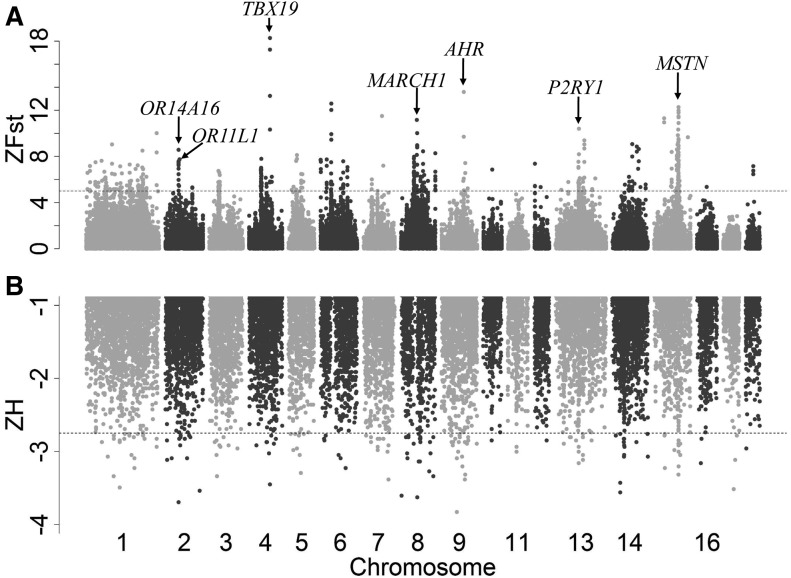
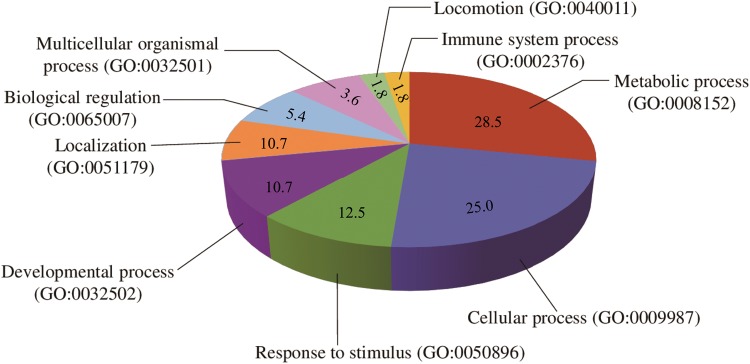
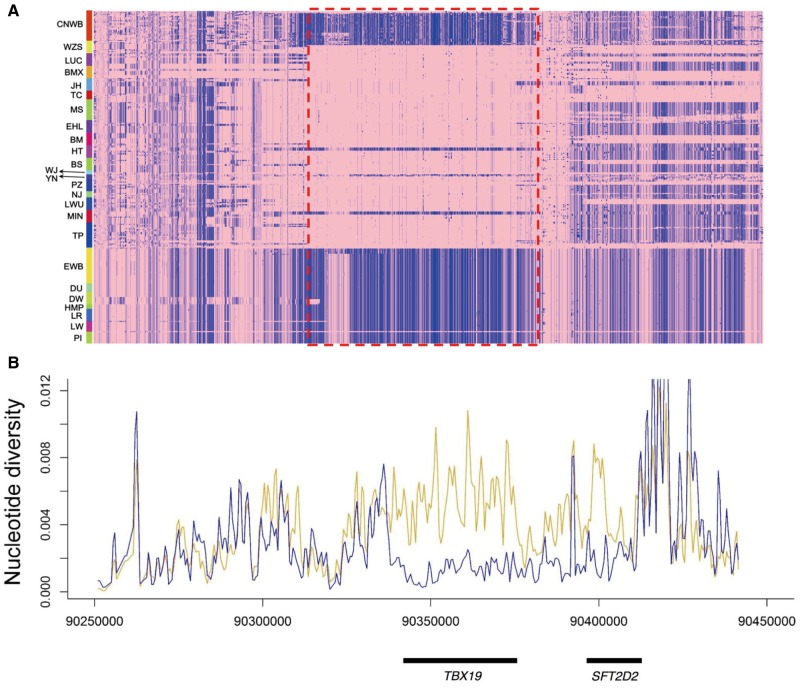
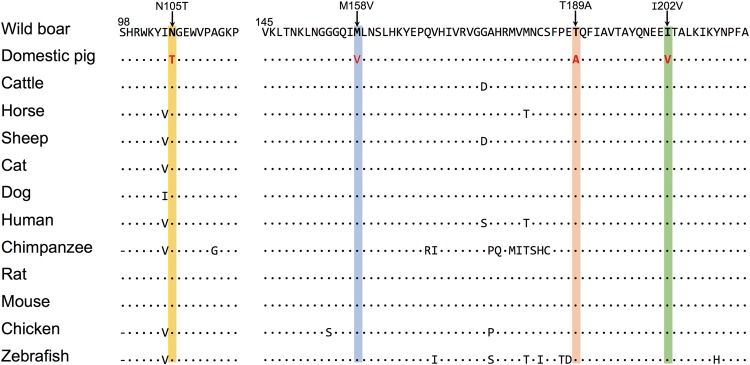
Chinese domestic pigs have experienced strong artificial selection for thousands of years. However, the molecular mechanisms underlying the selection-causing phenotypic changes in Chinese domestic pigs are still largely unknown. Here we used whole-genome resequencing data of 54 pigs from 9 Chinese diverse breeds and 16 wild boars from 7 localities across China to identify genes that show evidence of positive selection in the process of domestication. A total of 14 candidate domestication regions were detected by selective sweep analyses of genetic differentiation and variability, and a set of genes in these candidate domestication regions were found to be related to metabolic process, development, reproduction, olfactory, behavior, and nervous system. The most promising candidate gene under selection - TBX19 - probably underlies the metabolic alteration and developmental traits, and may also associate with timidity of Chinese domestic pigs. Intriguingly, we found that the haplotype at TBX19 locus shared by nearly all Chinese domestic pigs was possibly introgressed from another Sus species. We also revealed the AHR gene associated with female reproduction is under strong positive selection. These results advance our understanding of the evolutionary history of Chinese domestic pigs and shed insights into identifying functionally important genes/mutations contributing to the phenotypic diversity in pigs.
中国的家猪经历了数千年的强烈人工选择。然而,导致中国家猪选择引起表型变化的分子机制在很大程度上仍然未知。在这里,我们使用了来自中国 9 个不同品种的 54 头猪和来自中国 7 个地区的 16 头野猪的全基因组重测序数据,以鉴定在驯化过程中表现出正选择证据的基因。通过遗传分化和变异性的选择扫描分析,共检测到 14 个候选驯化区域,在这些候选驯化区域中的一组基因与代谢过程、发育、繁殖、嗅觉、行为和神经系统有关。最有前途的候选选择基因-TBX19-可能是导致代谢改变和发育特征的原因,也可能与中国家猪的胆小有关。有趣的是,我们发现几乎所有中国家猪共有的 TBX19 基因座的单倍型可能是从另一个 Sus 物种中引入的。我们还揭示了与雌性繁殖有关的 AHR 基因受到强烈的正选择。这些结果增进了我们对中国家猪进化历史的理解,并深入了解了鉴定有助于猪表型多样性的功能重要基因/突变。