Piston Dominik, Alvarez-Erviti Lydia, Bansal Vikas, Gargano Daniela, Yao Zhi, Szabadkai Gyorgy, Odell Mark, Puno M Rhyan, Björkblom Benny, Maple-Grødem Jodi, Breuer Peter, Kaut Oliver, Larsen Jan Petter, Bonn Stefan, Møller Simon Geir, Wüllner Ullrich, Schapira Anthony H V, Gegg Matthew E
Department of Clinical Neuroscience, UCL Institute of Neurology, London, UK.
Norwegian Centre for Movement Disorders, Stavanger University Hospital, Stavanger, Norway.
Hum Mol Genet. 2017 Oct 15;26(20):4028-4041. doi: 10.1093/hmg/ddx294.
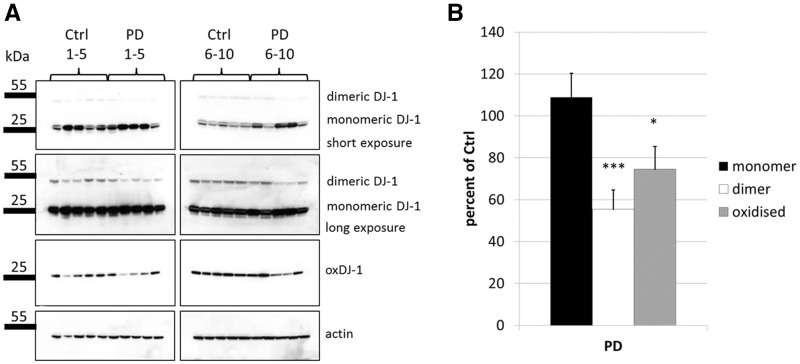
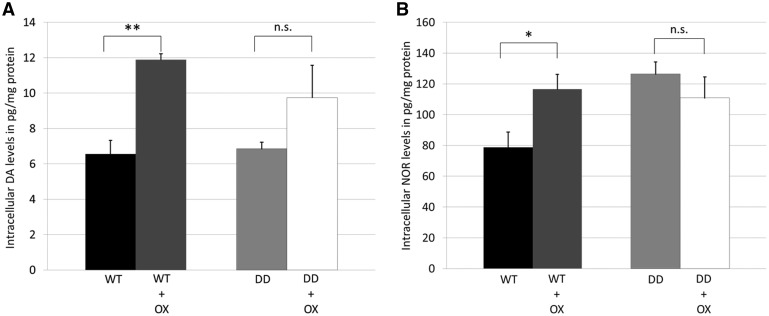
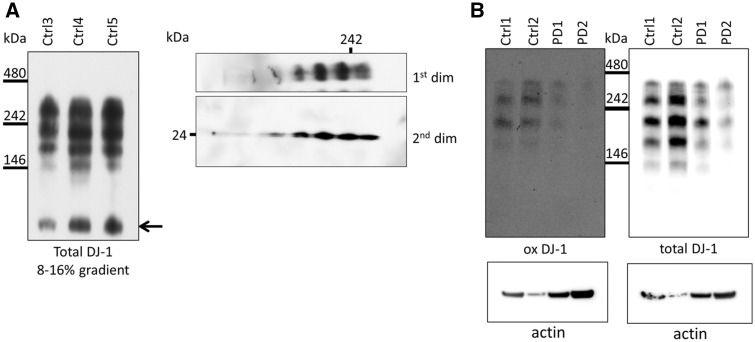
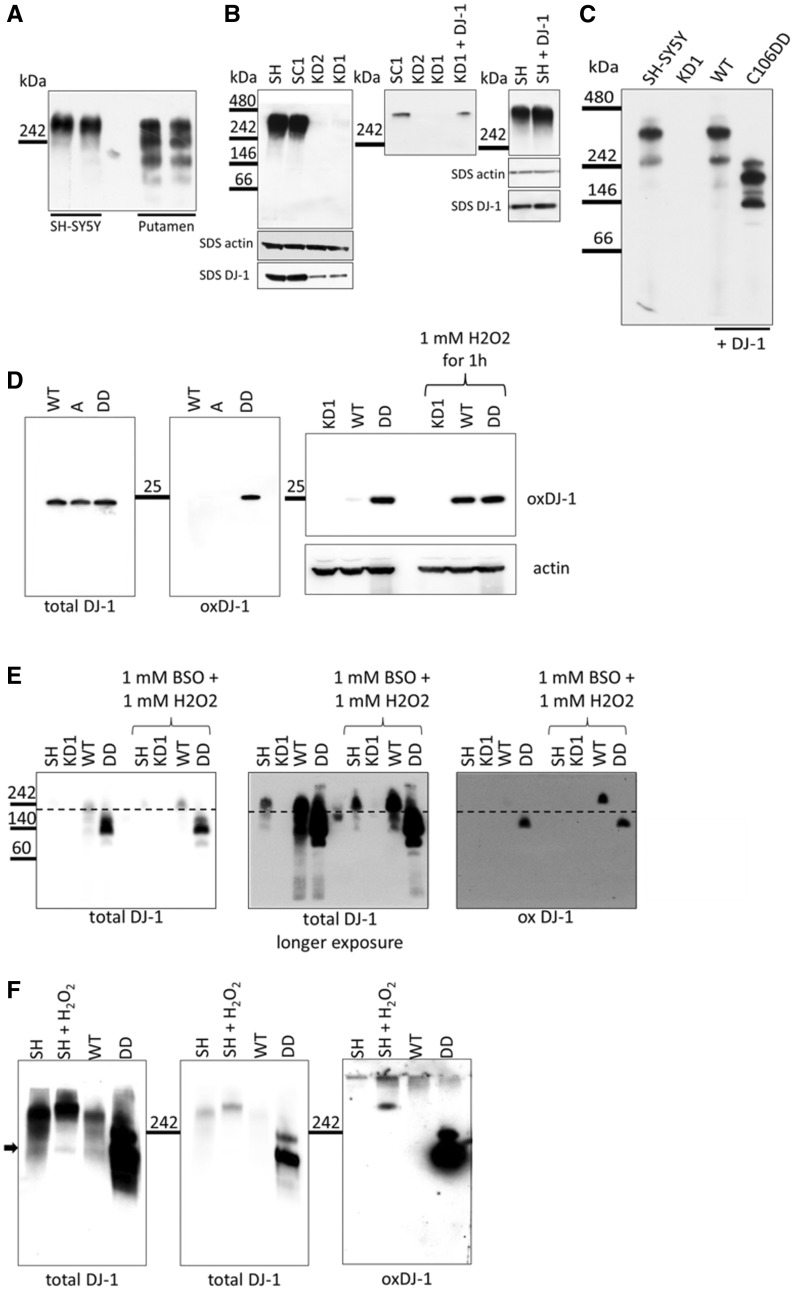
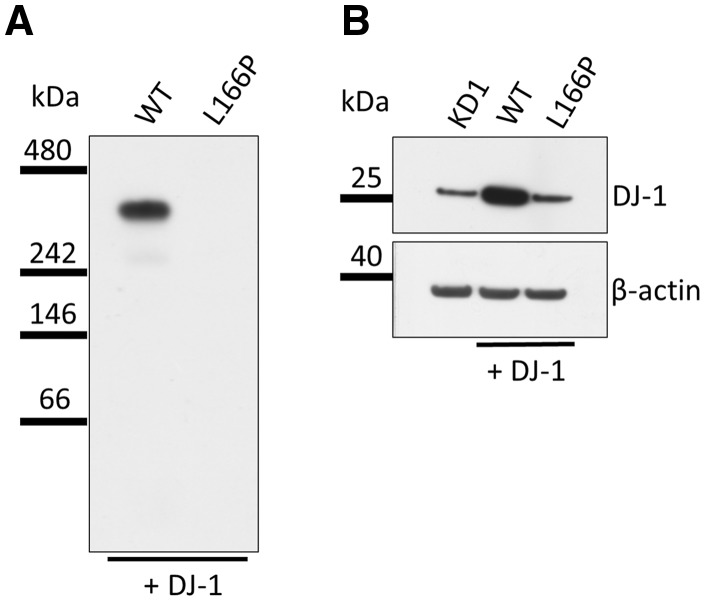
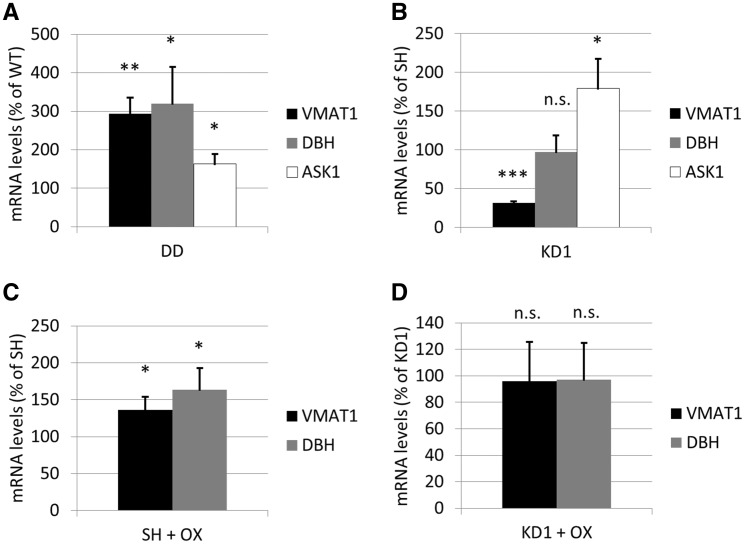
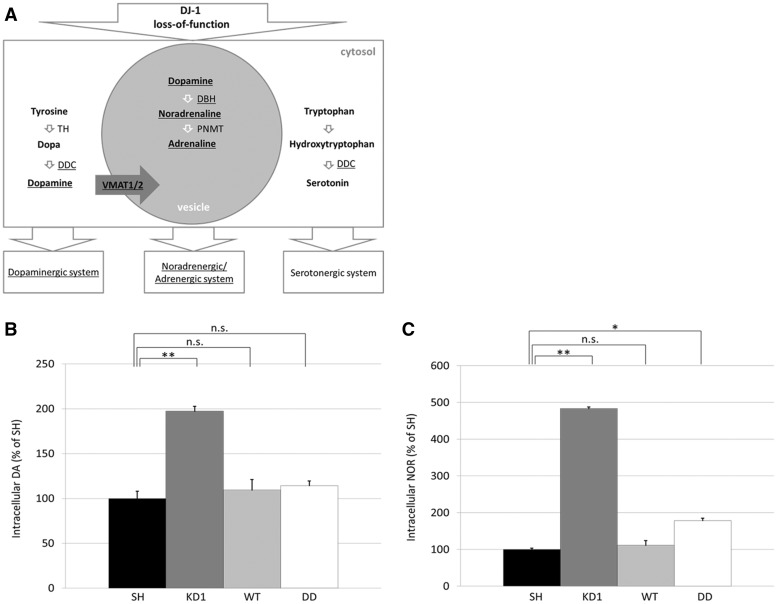
DJ-1 is an oxidation sensitive protein encoded by the PARK7 gene. Mutations in PARK7 are a rare cause of familial recessive Parkinson's disease (PD), but growing evidence suggests involvement of DJ-1 in idiopathic PD. The key clinical features of PD, rigidity and bradykinesia, result from neurotransmitter imbalance, particularly the catecholamines dopamine (DA) and noradrenaline. We report in human brain and human SH-SY5Y neuroblastoma cell lines that DJ-1 predominantly forms high molecular weight (HMW) complexes that included RNA metabolism proteins hnRNPA1 and PABP1 and the glycolysis enzyme GAPDH. In cell culture models the oxidation status of DJ-1 determined the specific complex composition. RNA sequencing indicated that oxidative changes to DJ-1 were concomitant with changes in mRNA transcripts mainly involved in catecholamine metabolism. Importantly, loss of DJ-1 function upon knock down (KD) or expression of the PD associated form L166P resulted in the absence of HMW DJ-1 complexes. In the KD model, the absence of DJ-1 complexes was accompanied by impairment in catecholamine homeostasis, with significant increases in intracellular DA and noraderenaline levels. These changes in catecholamines could be rescued by re-expression of DJ-1. This catecholamine imbalance may contribute to the particular vulnerability of dopaminergic and noradrenergic neurons to neurodegeneration in PARK7-related PD. Notably, oxidised DJ-1 was significantly decreased in idiopathic PD brain, suggesting altered complex function may also play a role in the more common sporadic form of the disease.
DJ-1是一种由PARK7基因编码的对氧化敏感的蛋白质。PARK7基因突变是家族性隐性帕金森病(PD)的罕见病因,但越来越多的证据表明DJ-1参与特发性PD的发病过程。PD的关键临床特征,即僵硬和运动迟缓,是由神经递质失衡导致的,尤其是儿茶酚胺类多巴胺(DA)和去甲肾上腺素。我们在人脑和人SH-SY5Y神经母细胞瘤细胞系中发现,DJ-1主要形成高分子量(HMW)复合物,其中包括RNA代谢蛋白hnRNPA1和PABP1以及糖酵解酶GAPDH。在细胞培养模型中,DJ-1的氧化状态决定了特定复合物的组成。RNA测序表明,DJ-1的氧化变化与主要参与儿茶酚胺代谢的mRNA转录本变化同时发生。重要的是,敲低(KD)或表达与PD相关的L166P形式后DJ-1功能丧失导致HMW DJ-1复合物缺失。在KD模型中,DJ-1复合物的缺失伴随着儿茶酚胺稳态的受损,细胞内DA和去甲肾上腺素水平显著升高。这些儿茶酚胺的变化可以通过重新表达DJ-1来挽救。这种儿茶酚胺失衡可能导致多巴胺能和去甲肾上腺素能神经元在PARK7相关PD中对神经退行性变具有特殊易感性。值得注意的是,特发性PD脑中氧化型DJ-1显著减少,这表明复合物功能改变可能也在这种更常见的散发性疾病形式中起作用。