Department of Animal Medicine, Production and Health, University of Padova, Viale dell'Università, Legnaro, Italy.
Department of Comparative Biomedicine and Food Science, University of Padova, Viale dell'Università, Legnaro, Italy.
Parasit Vectors. 2017 Oct 10;10(1):467. doi: 10.1186/s13071-017-2396-x.
The northern Adriatic Sea represents one of the most important neritic foraging grounds for the loggerhead sea turtle Caretta caretta L. in the Mediterranean Sea. Four genera of blood flukes with variable prevalence and pathogenic impact have been reported worldwide in this species. Hapalotrema Looss, 1899 and Amphiorchis Price, 1934 are the only two genera reported in Mediterranean waters; however, updated data describing spirorchiidiasis in the central and eastern Mediterranean and infection prevalence are still lacking. This work aimed to investigate the presence and pathology of spirorchiidiasis in C. caretta in the Mediterranean Sea.
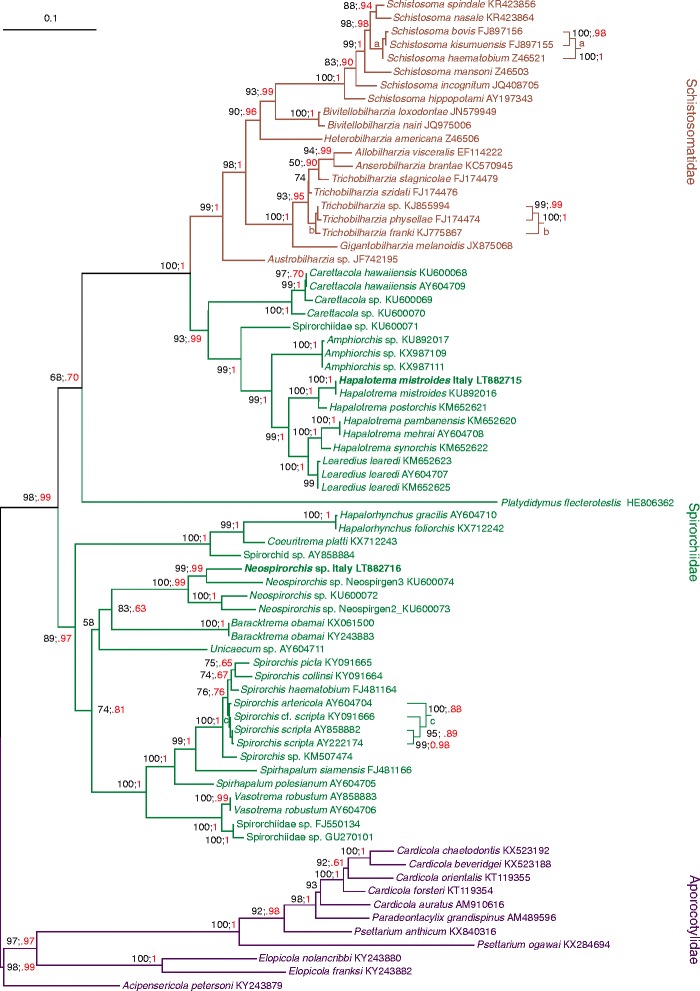
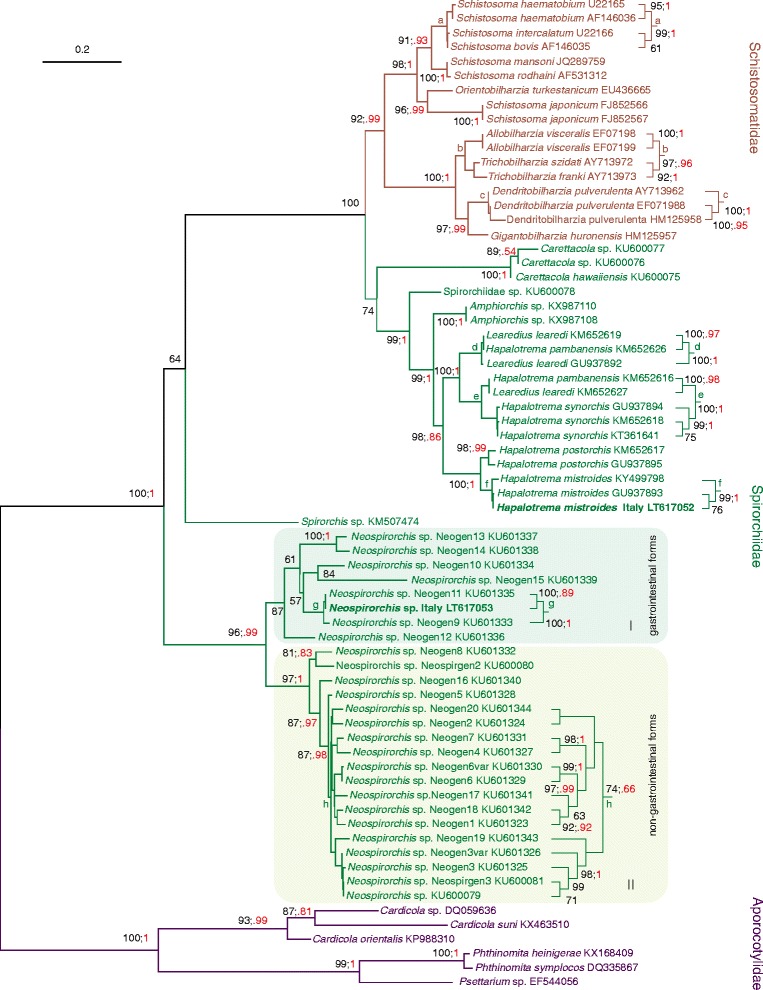
One hundred sixty-eight animals stranded along the northwestern Adriatic coast between 2009 and 2015 were submitted to necropsy and subsequent analyses for the detection of adult flukes, detection of eggs in the faeces and spleen and histopathology. Molecular analyses were carried out on hosts (mitochondrial D-loop) and parasites (28S gene and ITS2 spacer) to trace the turtle origins and identify the fluke phylogenetic relationships.
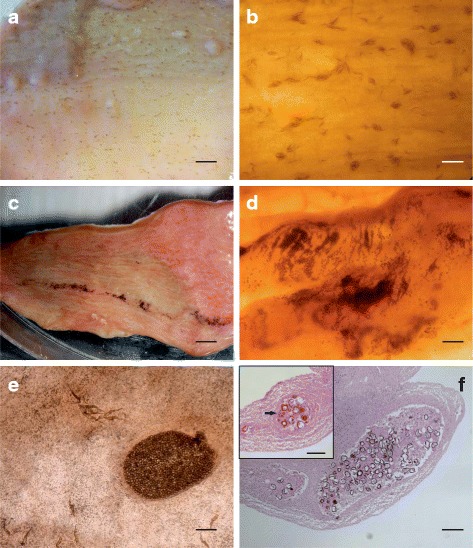
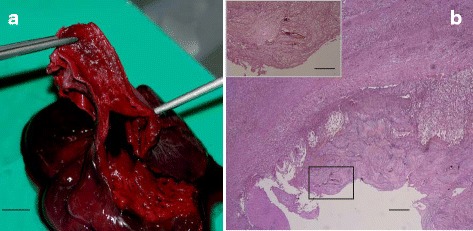
Spirorchiidiasis was detected in 16.7% of the animals. Hapalotrema mistroides (Monticelli, 1899) and Neospirorchis sp. were found in twenty-six and ten cases, respectively. Adult flukes were found in six cases, while eggs were detectable through copromicroscopic examination for all infected turtles, and the results for the detection of eggs in the spleen agreed with the copromicroscopic analysis. Only mild lesions were observed. Eggs of types 1 and 3 were grossly visible in the gastrointestinal mucosa, vasculitis was rarely observed in the heart and great vessels, and multifocal granulomas were widespread in the tissues. Molecular identification unambiguously assigned the spirorchiid samples to H. mistroides and Neospirorchis sp. Genetic characterization of loggerhead mtDNA pointed to a Mediterranean origin of the turtle hosts.
This survey provides new data on the spread of spirorchiidiasis in the Mediterranean loggerhead sea turtle population and reports for the first time the presence of Neospirorchis spp. in this basin. The infections did not have a causal effect on the death nor a strong impact on the general health status of the animals.
亚得里亚海北部是地中海中红海龟 Caretta caretta L 的重要觅食地之一。在该物种中,全世界已报告了四种具有不同流行程度和致病影响的血吸螺科吸虫。Hapalotrema Looss, 1899 和 Amphiorchis Price, 1934 是仅在地中海水域报告的两个属;然而,仍缺乏描述中东部地中海旋尾虫病的最新数据和感染流行率。这项工作旨在调查地中海红海龟中旋尾虫病的存在和病理学。
2009 年至 2015 年间,在西北亚得里亚海岸搁浅的 168 只动物被提交尸检和后续分析,以检测成虫吸虫、粪便和脾脏中虫卵以及组织病理学检查。对宿主(线粒体 D 环)和寄生虫(28S 基因和 ITS2 间隔区)进行分子分析,以追踪海龟的起源并确定吸虫的系统发育关系。
16.7%的动物检测到旋尾虫病。在 26 例和 10 例中分别发现了 Hapalotrema mistroides (Monticelli, 1899) 和 Neospirorchis sp。在 6 例中发现了成虫吸虫,而所有受感染的海龟均可通过粪检镜检检测到虫卵,脾脏中虫卵的检测结果与粪检镜检结果一致。仅观察到轻度病变。胃肠道黏膜中肉眼可见 1 型和 3 型虫卵,心脏和大血管中很少观察到血管炎,组织中广泛存在多发性肉芽肿。旋尾虫样本的分子鉴定明确将其分配给 H. mistroides 和 Neospirorchis sp.。红海龟 mtDNA 的遗传特征表明海龟宿主的起源是地中海。
本调查提供了地中海地区红海龟感染旋尾虫病的传播的新数据,并首次报告了 Neospirorchis spp. 在该盆地的存在。感染对动物的死亡没有因果影响,也没有对其整体健康状况产生重大影响。