National Scientific Center Institute of Experimental and Clinical Veterinary Medicine, Kharkiv, Ukraine.
Parasit Vectors. 2017 Oct 10;10(1):464. doi: 10.1186/s13071-017-2410-3.
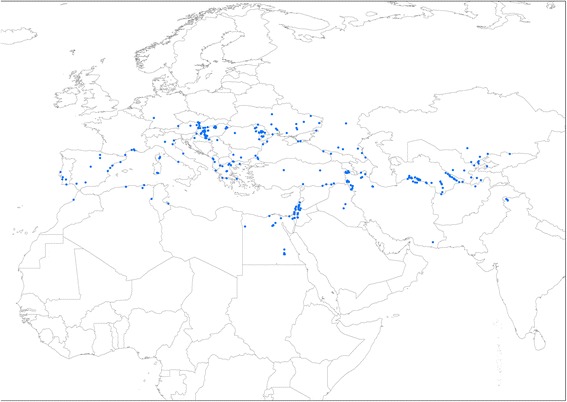
Uranotaenia unguiculata is a Palaearctic mosquito species with poorly known distribution and ecology. This study is aimed at filling the gap in our understanding of the species potential distribution and its environmental requirements through a species distribution modelling (SDM) exercise. Furthermore, aspects of the mosquito ecology that may be relevant to the epidemiology of certain zoonotic vector-borne diseases in Europe are discussed.
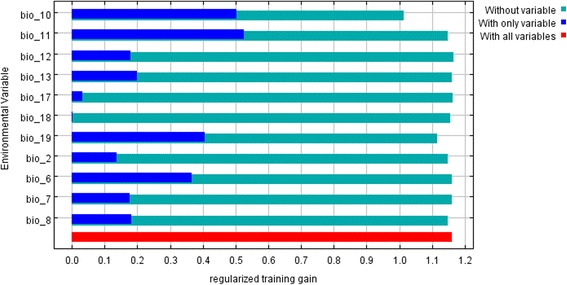
A maximum entropy (Maxent) modelling approach has been applied to predict the potential distribution of Ur. unguiculata in the Western Palaearctic. Along with the high accuracy and predictive power, the model reflects well the known species distribution and predicts as highly suitable some areas where the occurrence of the species is hitherto unknown.
To our knowledge, the potential distribution of a mosquito species from the genus Uranotaenia is modelled for the first time. Provided that Ur. unguiculata is a widely-distributed species, and some pathogens of zoonotic concern have been detected in this mosquito on several occasions, the question regarding its host associations and possible epidemiological role warrants further investigation.
栉角蚊属(Uranotaenia)是一种分布范围和生态特性尚未完全明晰的古北界蚊种。本研究旨在通过物种分布模型(SDM)分析填补该蚊种潜在分布范围及其环境需求的认知空白。此外,本研究还探讨了与某些在欧洲流行的动物源性媒介传播疾病的流行病学相关的蚊种生态学方面的问题。
本研究采用最大熵(Maxent)模型方法对西方古北界栉角蚊属的潜在分布范围进行了预测。该模型具有高精度和强预测能力,能够很好地反映已知的物种分布范围,并预测了一些迄今未知的高度适宜该物种生存的区域。
据我们所知,本研究首次对栉角蚊属的一种蚊种进行了潜在分布建模。鉴于栉角蚊属广泛分布,且已经在该蚊种中多次检测到与人类健康相关的病原体,因此需要进一步研究其宿主相关特性及其可能的流行病学作用。