Quantitative Disease Ecology and Conservation (QDEC) Lab, Department of Geography, University of Florida, Gainesville, FL, 32601, USA.
Emerging Pathogens Institute, University of Florida, Gainesville, FL, 32601, USA.
Parasit Vectors. 2023 Aug 28;16(1):302. doi: 10.1186/s13071-023-05912-z.
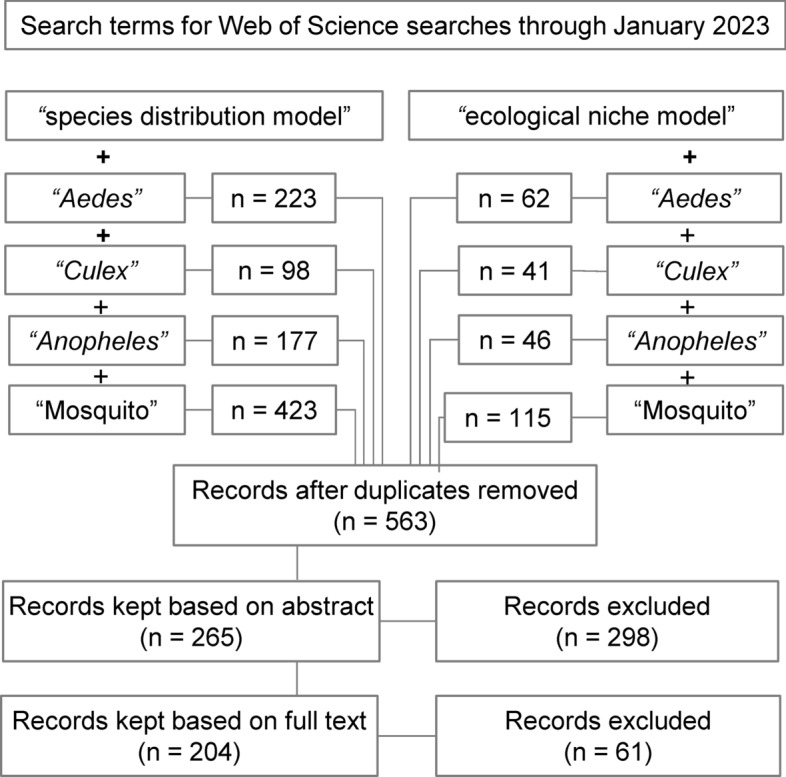
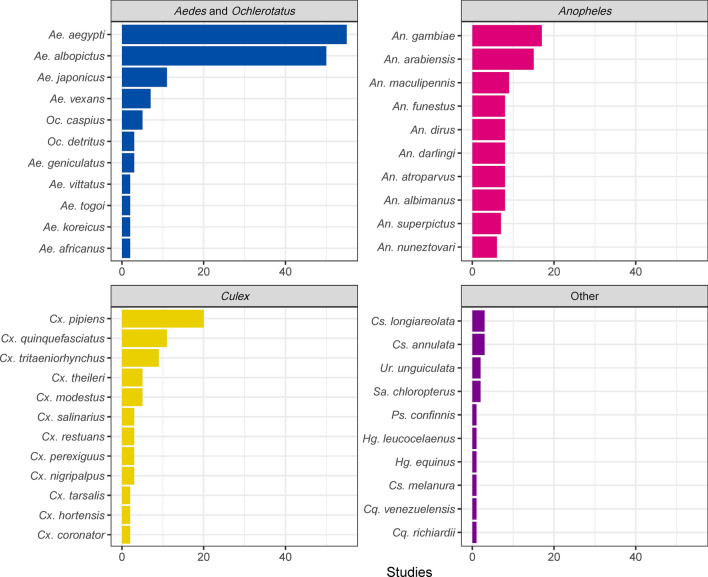
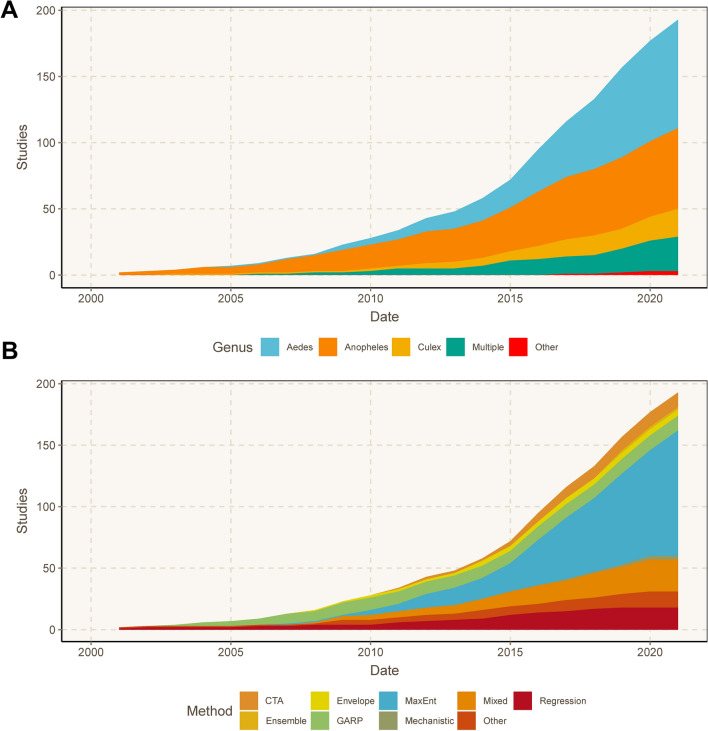
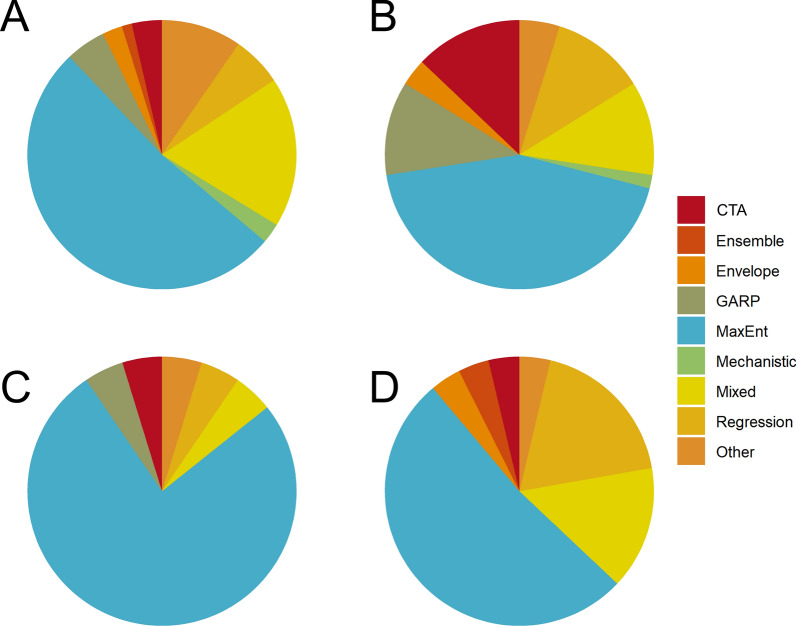
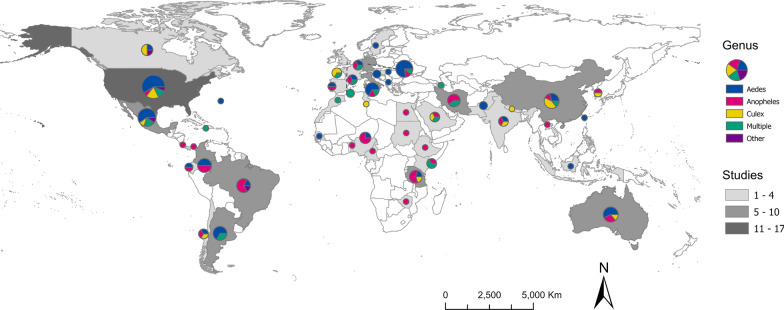
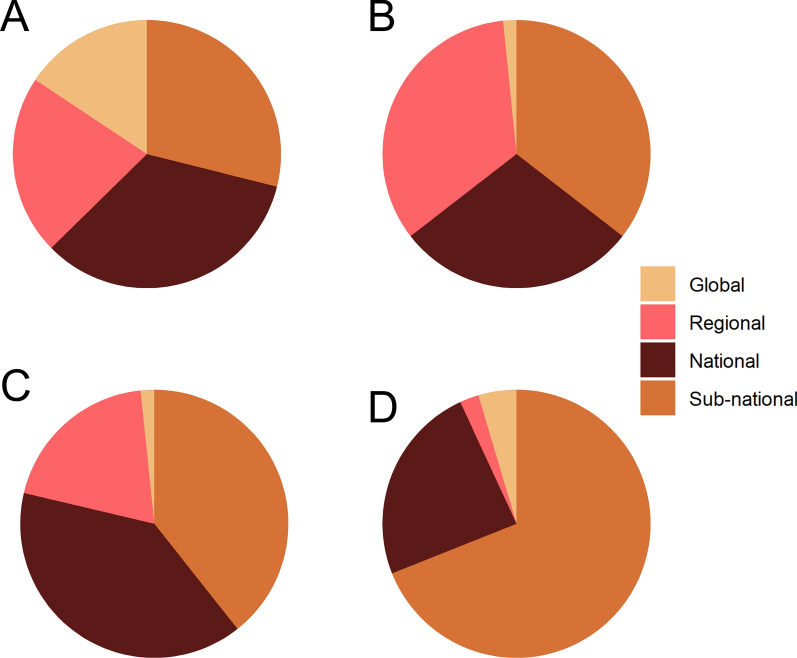
Species distribution modeling (SDM) has become an increasingly common approach to explore questions about ecology, geography, outbreak risk, and global change as they relate to infectious disease vectors. Here, we conducted a systematic review of the scientific literature, screening 563 abstracts and identifying 204 studies that used SDMs to produce distribution estimates for mosquito species. While the number of studies employing SDM methods has increased markedly over the past decade, the overwhelming majority used a single method (maximum entropy modeling; MaxEnt) and focused on human infectious disease vectors or their close relatives. The majority of regional models were developed for areas in Africa and Asia, while more localized modeling efforts were most common for North America and Europe. Findings from this study highlight gaps in taxonomic, geographic, and methodological foci of current SDM literature for mosquitoes that can guide future efforts to study the geography of mosquito-borne disease risk.
物种分布模型(SDM)已成为一种越来越常见的方法,用于探索与传染病媒介有关的生态学、地理学、爆发风险和全球变化等问题。在这里,我们对科学文献进行了系统回顾,筛选了 563 篇摘要,确定了 204 项使用 SDM 来生成蚊子物种分布估计的研究。尽管过去十年中使用 SDM 方法的研究数量显著增加,但绝大多数研究仅使用了一种方法(最大熵模型;MaxEnt),并且侧重于人类传染病媒介或其近亲。大多数区域模型是针对非洲和亚洲地区开发的,而更本地化的建模工作则主要针对北美和欧洲。本研究的结果突出了当前蚊子 SDM 文献在分类学、地理和方法学方面的差距,这可以为未来研究蚊媒疾病风险的地理分布提供指导。