Vivant Anne-Laure, Desneux Jeremy, Pourcher Anne-Marie, Piveteau Pascal
UR OPAALE, IRSTEA, Rennes, France.
Université Bretagne Loire, Rennes, France.
Front Microbiol. 2017 Sep 26;8:1811. doi: 10.3389/fmicb.2017.01811. eCollection 2017.
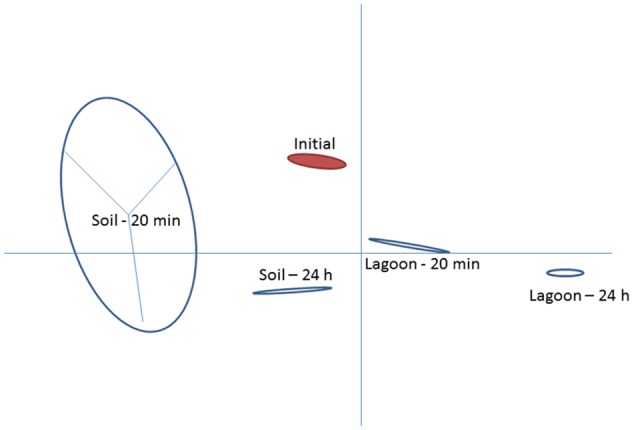
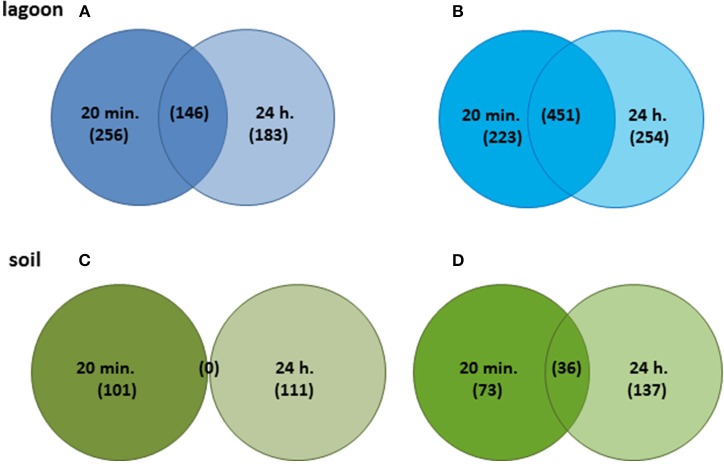
Understanding how , the causative agent of listeriosis, adapts to the environment is crucial. Adaptation to new matrices requires regulation of gene expression. To determine how the pathogen adapts to lagoon effluent and soil, two matrices where has been isolated, we compared the transcriptomes of CIP 110868 20 min and 24 h after its transfer to effluent and soil extract. Results showed major variations in the transcriptome of in the lagoon effluent but only minor modifications in the soil. In both the lagoon effluent and in the soil, genes involved in mobility and chemotaxis and in the transport of carbohydrates were the most frequently represented in the set of genes with higher transcript levels, and genes with phage-related functions were the most represented in the set of genes with lower transcript levels. A modification of the cell envelop was only found in the lagoon environment. Finally, the differential analysis included a large proportion of regulators, regulons, and ncRNAs.
了解李斯特菌病的病原体如何适应环境至关重要。适应新的基质需要调节基因表达。为了确定该病原体如何适应泻湖废水和土壤(已从这两种基质中分离出该病原体),我们比较了单核细胞增生李斯特菌CIP 110868转移至废水和土壤提取物20分钟及24小时后的转录组。结果显示,在泻湖废水中该菌的转录组有重大变化,而在土壤中仅有微小改变。在泻湖废水和土壤中,转录水平较高的基因集中最常出现的是与运动性、趋化性以及碳水化合物转运相关的基因,转录水平较低的基因集中最常出现的是具有噬菌体相关功能的基因。仅在泻湖环境中发现了细胞包膜的改变。最后,差异分析包括了很大比例的调节因子、调控子和非编码RNA。