Münz Christian
Viral Immunobiology, Institute of Experimental Immunology, University of Zürich, Zürich, Switzerland.
Front Immunol. 2017 Sep 22;8:1183. doi: 10.3389/fimmu.2017.01183. eCollection 2017.
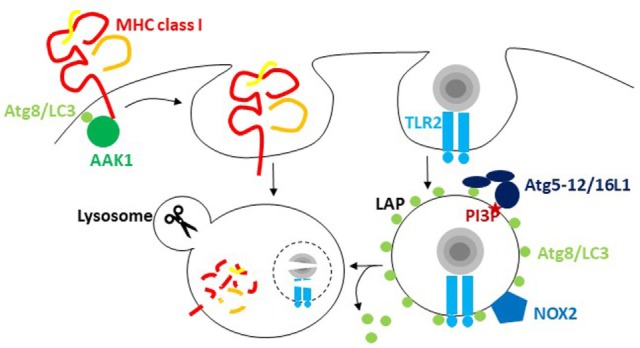
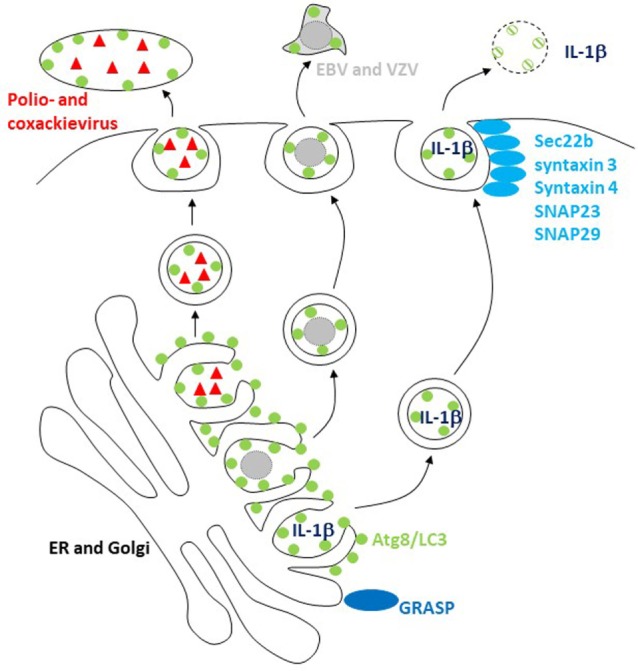
Autophagy was initially described as a catabolic pathway that recycles nutrients of cytoplasmic constituents after lysosomal degradation during starvation. Since the immune system monitors products of lysosomal degradation major histocompatibility complex (MHC) class II restricted antigen presentation, autophagy was found to process intracellular antigens for display on MHC class II molecules. In recent years, however, it has become apparent that the molecular machinery of autophagy serves phagocytes in many more membrane trafficking pathways, thereby regulating immunity to infectious disease agents. In this minireview, we will summarize the recent evidence that autophagy proteins regulate phagocyte endocytosis and exocytosis for myeloid cell activation, pathogen replication, and MHC class I and II restricted antigen presentation. Selective stimulation and inhibition of the respective functional modules of the autophagy machinery might constitute valid therapeutic options in the discussed disease settings.
自噬最初被描述为一种分解代谢途径,在饥饿期间通过溶酶体降解来回收细胞质成分的营养物质。由于免疫系统监测溶酶体降解产物(主要组织相容性复合体(MHC)II类限制性抗原呈递),人们发现自噬可处理细胞内抗原以在MHC II类分子上展示。然而,近年来,很明显自噬的分子机制在更多的膜运输途径中为吞噬细胞服务,从而调节对传染病原体的免疫。在本综述中,我们将总结最近的证据,即自噬蛋白调节吞噬细胞的内吞作用和外排作用,以实现髓样细胞活化、病原体复制以及MHC I类和II类限制性抗原呈递。对自噬机制各自功能模块的选择性刺激和抑制可能在所讨论的疾病背景下构成有效的治疗选择。