Chengdu Institute of Biology, Chinese Academy of Sciences, Chengdu, 610041, People's Republic of China.
CAS Key Laboratory of Mountain Ecological Restoration and Bioresource Utilization & Ecological Restoration and Biodiversity Conservation Key Laboratory of Sichuan Province, Chengdu Institute of Biology, Chinese Academy of Sciences, Chengdu, 610041, People's Republic of China.
BMC Genomics. 2017 Oct 11;18(1):775. doi: 10.1186/s12864-017-4152-1.
The harsh environment on the Qinghai-Tibetan Plateau gives Tibetan hulless barley (Hordeum vulgare var. nudum) great ability to resist adversities such as drought, salinity, and low temperature, and makes it a good subject for the analysis of drought tolerance mechanism. To elucidate the specific gene networks and pathways that contribute to its drought tolerance, and for identifying new candidate genes for breeding purposes, we performed a transcriptomic analysis using two accessions of Tibetan hulless barley, namely Z772 (drought-tolerant) and Z013 (drought-sensitive).
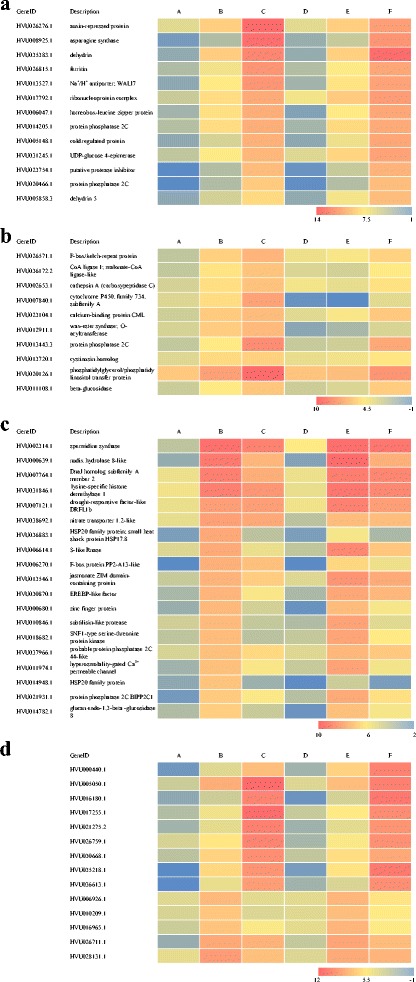
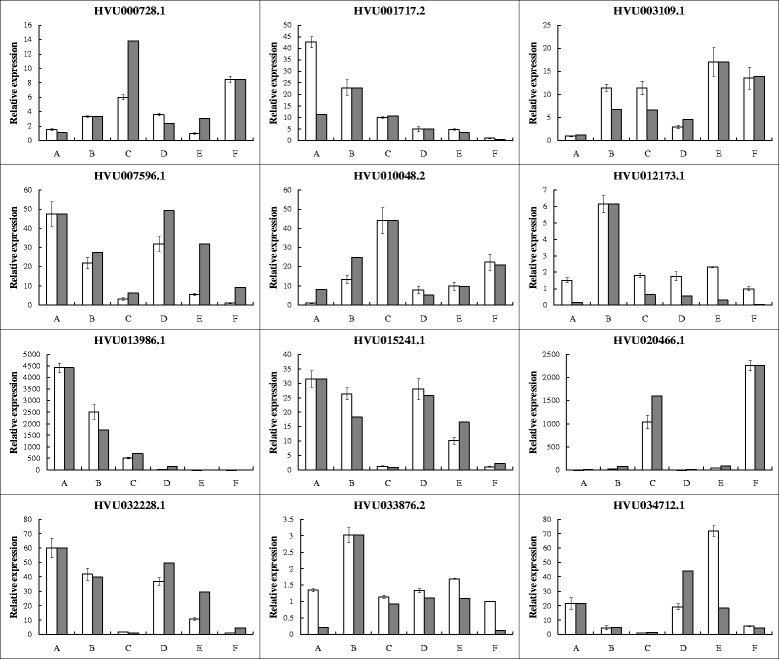
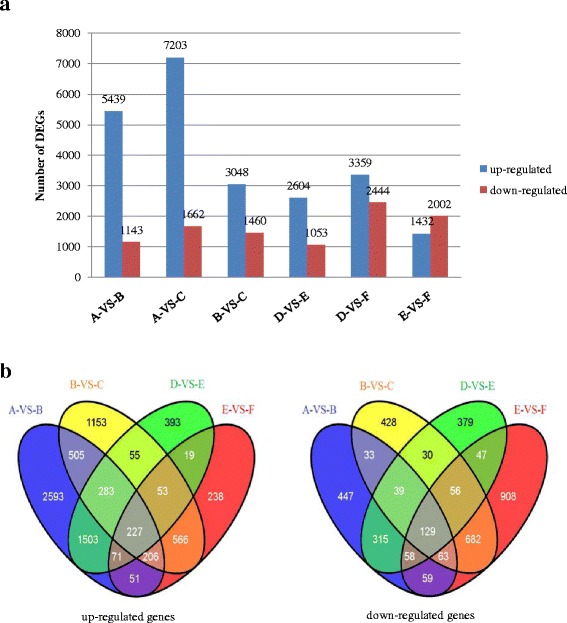
There were more up-regulated genes of Z772 than Z013 under both mild (5439-VS-2604) and severe (7203-VS-3359) dehydration treatments. Under mild dehydration stress, the pathways exclusively enriched in drought-tolerance genotype Z772 included Protein processing in endoplasmic reticulum, tricarboxylic acid (TCA) cycle, Wax biosynthesis, and Spliceosome. Under severe dehydration stress, the pathways that were mainly enriched in Z772 included Carbon fixation in photosynthetic organisms, Pyruvate metabolism, Porphyrin and chlorophyll metabolism. The main differentially expressed genes (DEGs) in response to dehydration stress and genes whose expression was different between tolerant and sensitive genotypes were presented in this study, respectively. The candidate genes for drought tolerance were selected based on their expression patterns.
The RNA-Seq data obtained in this study provided an initial overview on global gene expression patterns and networks that related to dehydration shock in Tibetan hulless barley. Furthermore, these data provided pathways and a targeted set of candidate genes that might be essential for deep analyzing the molecular mechanisms of plant tolerance to drought stress.
青藏高原恶劣的环境使西藏裸大麦(Hordeum vulgare var. nudum)具有很强的抗旱、耐盐、抗低温等逆境能力,是研究抗旱机制的良好材料。为了阐明其抗旱的具体基因网络和途径,以及为了培育目的鉴定新的候选基因,我们使用两个西藏裸大麦品种(耐旱型 Z772 和敏感型 Z013)进行了转录组分析。
在轻度(5439-VS-2604)和重度(7203-VS-3359)脱水处理下,Z772 的上调基因多于 Z013。在轻度脱水胁迫下,耐旱基因型 Z772 特异富集的途径包括内质网蛋白加工、三羧酸(TCA)循环、蜡质生物合成和剪接体。在重度脱水胁迫下,主要富集在 Z772 中的途径包括光合生物中的碳固定、丙酮酸代谢、卟啉和叶绿素代谢。本研究分别呈现了对脱水胁迫有反应的主要差异表达基因(DEGs)和在耐旱和敏感基因型之间表达不同的基因。根据表达模式选择了耐旱候选基因。
本研究获得的 RNA-Seq 数据提供了西藏裸大麦对脱水冲击相关的全局基因表达模式和网络的初步概述。此外,这些数据提供了途径和一组有针对性的候选基因,对于深入分析植物对干旱胁迫的分子机制可能是必不可少的。