Yang Libang, Gao Ling, Nickel Thomas, Yang Jing, Zhou Jingyi, Gilbertsen Adam, Geng Zhaohui, Johnson Caitlin, Young Bernice, Henke Craig, Gourley Glenn R, Zhang Jianyi
From the Division of Cardiology, Department of Medicine (L.Y., T.N., C.J., B.Y.), Division of Pulmonary, Allergy, Critical Care and Sleep Medicine, Department of Medicine (A.G., C.H., Z.G.) and Department of Paediatrics (G.R.G.), University of Minnesota Medical School, Minneapolis; Department of Biomedical Engineering, University of Alabama at Birmingham (L.G., J.Z.); and Department of Infectious Disease, Renmin Hospital (J.Y.) and Department of Microbiology, School of Basic Medical Science (J.Y., J.Z.), Hubei University of Medicine, Shiyan, China.
Circ Res. 2017 Nov 10;121(11):1251-1262. doi: 10.1161/CIRCRESAHA.117.311819. Epub 2017 Oct 11.
The phenotypes of vascular smooth muscle cells (vSMCs) comprise a continuum bounded by predominantly contractile and synthetic cells. Some evidence suggests that contractile vSMCs can assume a more synthetic phenotype in response to ischemic injury, but the mechanisms that activate this phenotypic switch are poorly understood.
To determine whether lactate, which increases in response to regional ischemia, may promote the synthetic phenotype in vSMCs.
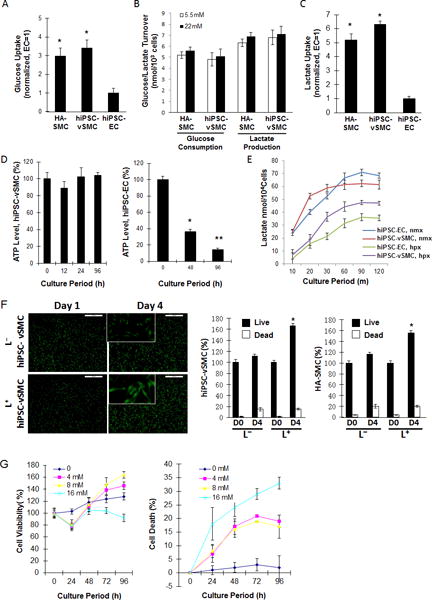
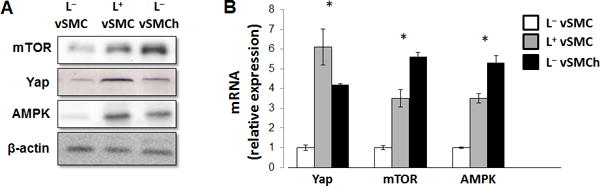
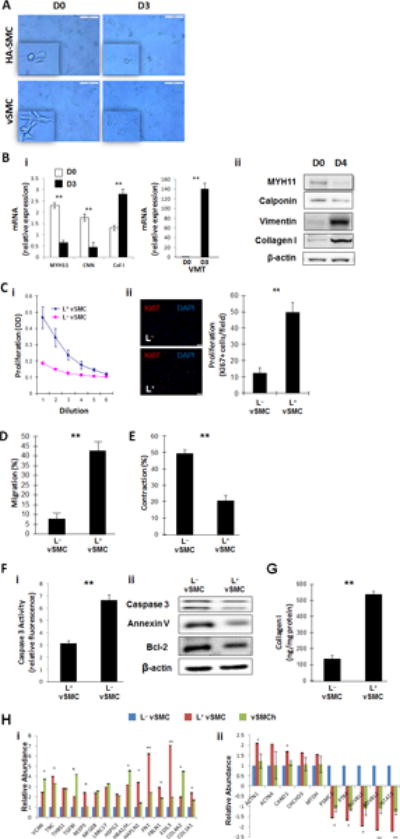
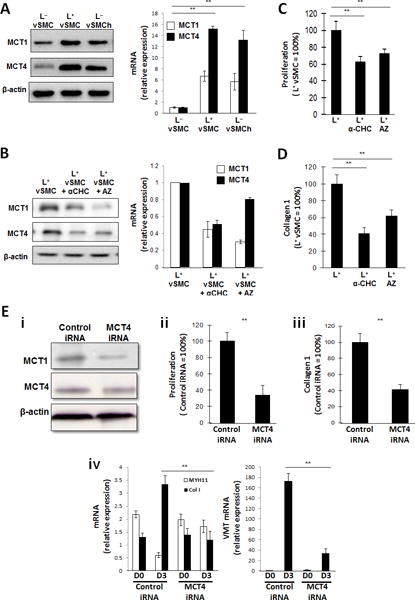
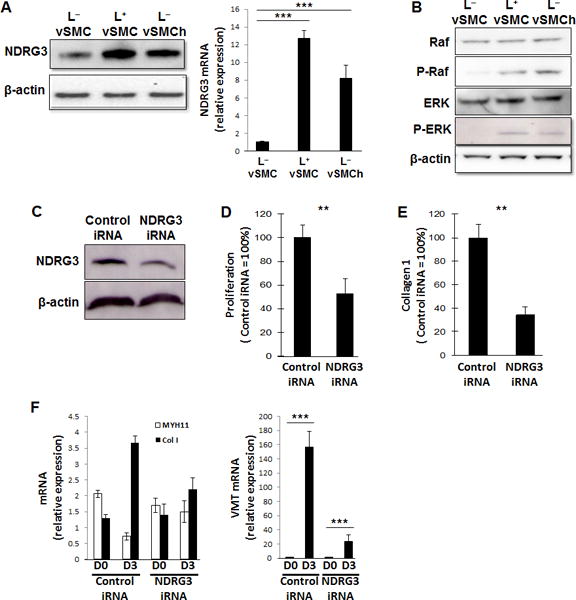
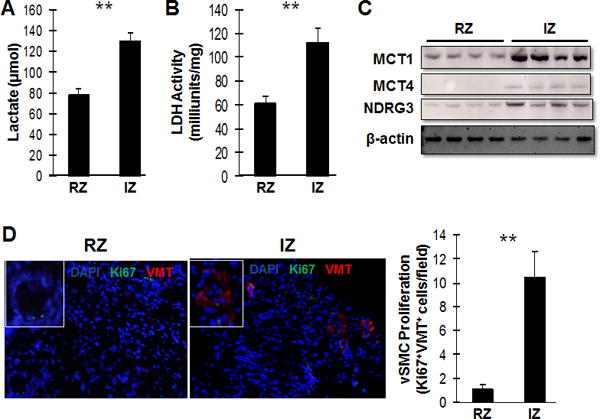
Experiments were performed with vSMCs that had been differentiated from human induced pluripotent stem cells and then cultured in glucose-free, lactate-enriched (L) medium or in standard (L) medium. Compared with the L medium, the L medium was associated with significant increases in synthetic vSMC marker expression, proliferation, and migration and with significant declines in contractile and apoptotic activity. Furthermore, these changes were accompanied by increases in the expression of monocarboxylic acid transporters and were generally attenuated both by the blockade of monocarboxylic acid transporter activity and by transfection with iRNA for (). Proteomics, biomarker, and pathway analyses suggested that the L medium tended to upregulate the expression of synthetic vSMC markers, the production of extracellular proteins that participate in tissue construction or repair, and the activity of pathways that regulate cell proliferation and migration. Observations in hypoxia-cultured vSMCs were similar to those in L-cultured vSMCs, and assessments in a swine myocardial infarction model suggested that measurements of lactate levels, lactate-dehydrogenase levels, vSMC proliferation, and monocarboxylic acid transporter and NDRG expression were greater in the ischemic zone than in nonischemic tissues.
These results demonstrate for the first time that vSMCs assume a more synthetic phenotype in a microenvironment that is rich in lactate. Thus, mechanisms that link glucose metabolism to vSMC phenotypic switching could play a role in the pathogenesis and treatment of cardiovascular disease.
血管平滑肌细胞(vSMC)的表型构成了一个连续体,其两端分别以主要收缩型细胞和合成型细胞为界。一些证据表明,收缩型vSMC可因缺血性损伤而呈现出更具合成性的表型,但激活这种表型转换的机制尚不清楚。
确定因局部缺血而增加的乳酸是否会促进vSMC的合成表型。
使用从人诱导多能干细胞分化而来的vSMC进行实验,然后将其培养在无葡萄糖、富含乳酸(L)的培养基或标准(L)培养基中。与L培养基相比,富含乳酸的培养基使合成型vSMC标志物表达、增殖和迁移显著增加,而收缩和凋亡活性显著下降。此外,这些变化伴随着单羧酸转运体表达的增加,并且通常因单羧酸转运体活性的阻断以及用针对()的干扰RNA转染而减弱。蛋白质组学、生物标志物和通路分析表明,富含乳酸的培养基倾向于上调合成型vSMC标志物的表达、参与组织构建或修复的细胞外蛋白的产生以及调节细胞增殖和迁移的通路的活性。在缺氧培养的vSMC中的观察结果与在富含乳酸培养的vSMC中的观察结果相似,并且在猪心肌梗死模型中的评估表明,缺血区的乳酸水平、乳酸脱氢酶水平、vSMC增殖以及单羧酸转运体和NDRG表达的测量值均高于非缺血组织。
这些结果首次证明vSMC在富含乳酸的微环境中呈现出更具合成性的表型。因此,将葡萄糖代谢与vSMC表型转换联系起来的机制可能在心血管疾病的发病机制和治疗中发挥作用。