Hashizume Atsushi, Banno Haruhiko, Katsuno Masahisa, Hijikata Yasuhiro, Yamada Shinichiro, Inagaki Tomonori, Suzuki Keisuke, Sobue Gen
Department of Neurology, Nagoya University Graduate School of Medicine, Japan.
Department of Clinical Research, Innovation Center for Clinical Research, National Center for Geriatrics and Gerontology, Japan.
Intern Med. 2017 Dec 1;56(23):3159-3165. doi: 10.2169/internalmedicine.8799-16. Epub 2017 Oct 11.
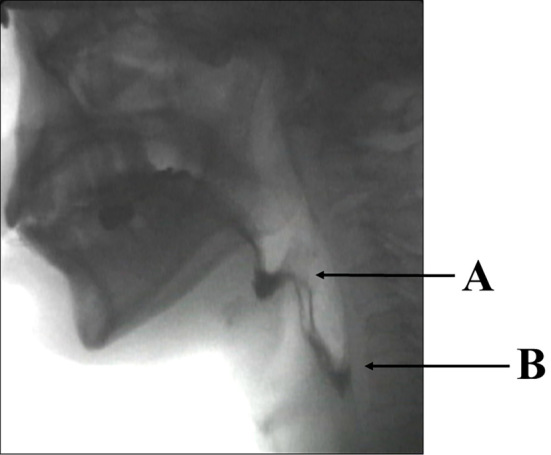
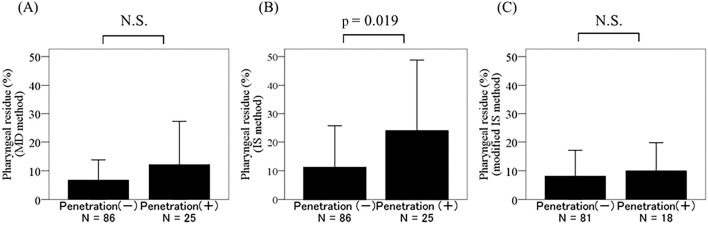
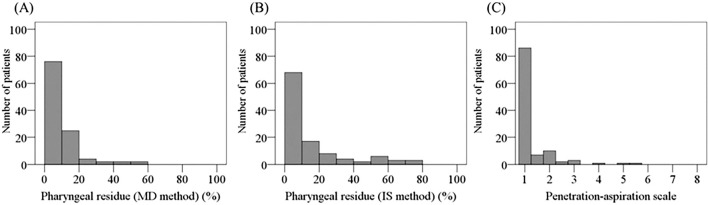
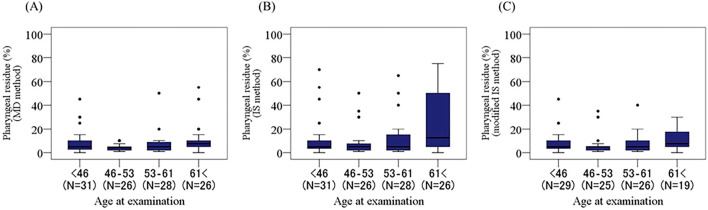
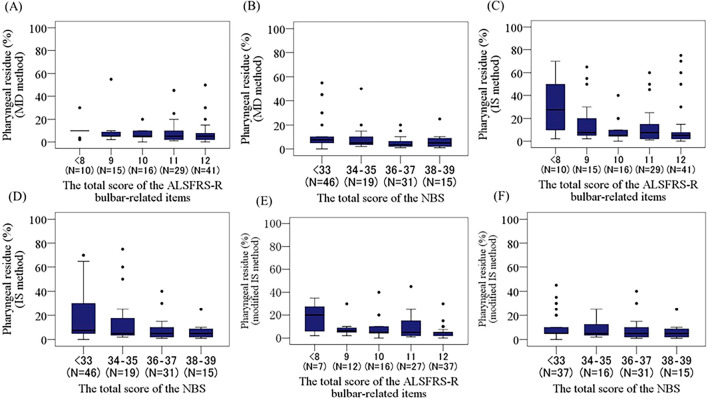
Objective This study aimed to evaluate swallowing dysfunction in patients with spinal and bulbar muscular atrophy and to identify the most appropriate method of assessing swallowing dysfunction using a videofluoroscopic swallowing study. Methods In the videofluoroscopic swallowing study, patients were instructed to swallow 3 mL of 40% weight/volume barium sulfate twice, and the pharyngeal residue was measured. We used three different methods to quantify the pharyngeal barium residue and an eight-point scale to evaluate the laryngeal penetration leading to aspiration pneumoniae. Patients We assessed 111 patients with spinal and bulbar muscular atrophy who weren't undergoing disease-specific treatment. Results Our results showed that the pharyngeal barium residue after initial swallowing correlated better with the bulbar-related functional rating scales than that after multiple deglutition. This correlation was vague when the data from patients whose barium residue was >50% were eliminated. In addition, evaluating the pharyngeal residue after initial swallowing proved to be the most sensitive method with regard to laryngeal penetration. Conclusion This study showed that the pharyngeal barium residue after initial swallowing was the most appropriate parameter for quantitatively assessing the degree of dysphagia using a videofluoroscopic swallowing study and suggests that this method may predict laryngeal penetration and aspiration in patients with spinal and bulbar muscular atrophy.
目的 本研究旨在评估脊髓延髓肌肉萎缩症患者的吞咽功能障碍,并通过电视荧光吞咽造影研究确定评估吞咽功能障碍的最合适方法。方法 在电视荧光吞咽造影研究中,指导患者分两次吞咽3 mL 40%重量/体积的硫酸钡,并测量咽部残留量。我们使用三种不同方法对咽部钡剂残留进行量化,并使用八分制量表评估导致吸入性肺炎的喉穿透情况。患者 我们评估了111例未接受疾病特异性治疗的脊髓延髓肌肉萎缩症患者。结果 我们的结果表明,初次吞咽后的咽部钡剂残留与延髓相关功能评定量表的相关性优于多次吞咽后。当排除钡剂残留>50%的患者数据时,这种相关性不明确。此外,就喉穿透而言,评估初次吞咽后的咽部残留是最敏感的方法。结论 本研究表明,初次吞咽后的咽部钡剂残留是使用电视荧光吞咽造影研究定量评估吞咽困难程度的最合适参数,并表明该方法可能预测脊髓延髓肌肉萎缩症患者的喉穿透和误吸情况。