Han Byung-Cheol, Ahn Huijeong, Lee Jiseon, Jeon Eunsaem, Seo Sanghoon, Jang Kyoung Hwa, Lee Seung-Ho, Kim Cheon Ho, Lee Geun-Shik
College of Veterinary Medicine and Institute of Veterinary Science, Kangwon National University, Chuncheon, Republic of Korea.
Korea Ginseng Research Institute, Korea Ginseng Corporation, Daejeon, Republic of Korea.
J Ginseng Res. 2017 Oct;41(4):513-523. doi: 10.1016/j.jgr.2016.10.001. Epub 2016 Oct 8.
Korean Red Ginseng extracts (RGE) have been suggested as effective immune modulators, and we reported that ginsenosides possess anti-inflammasome properties. However, the properties of nonsaponin components of RGE have not been well studied.
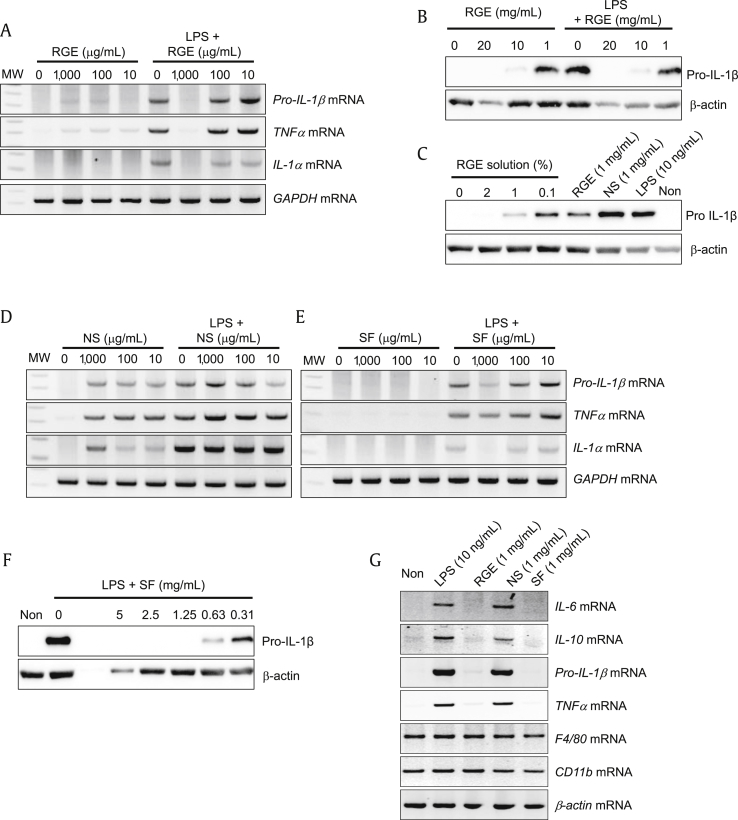
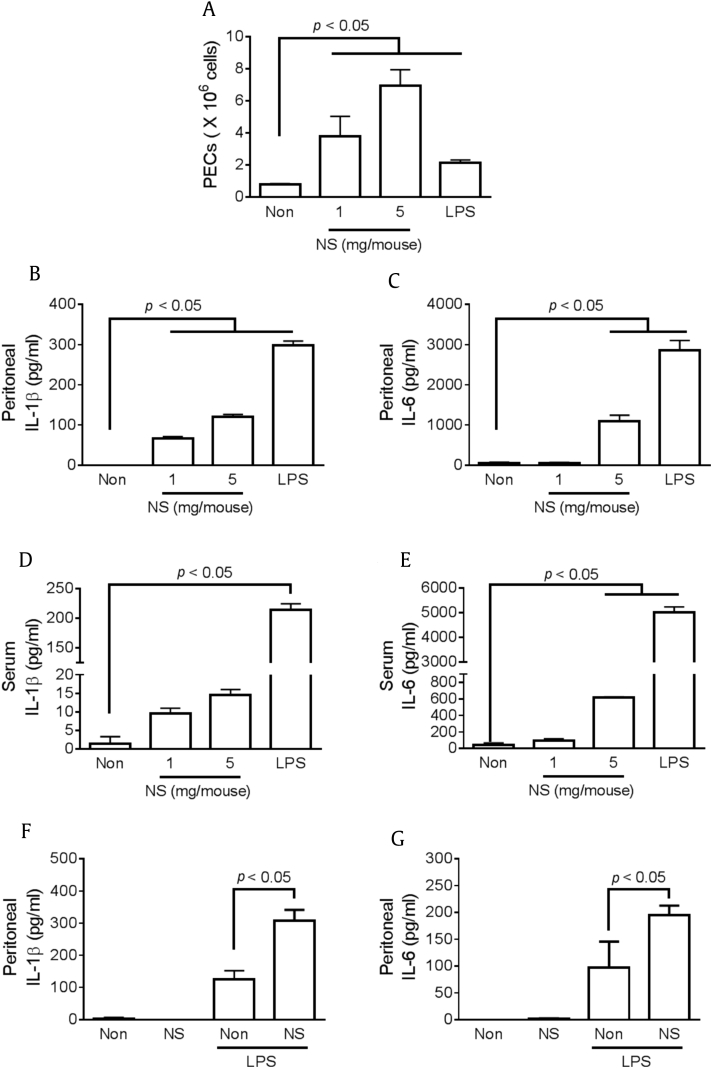
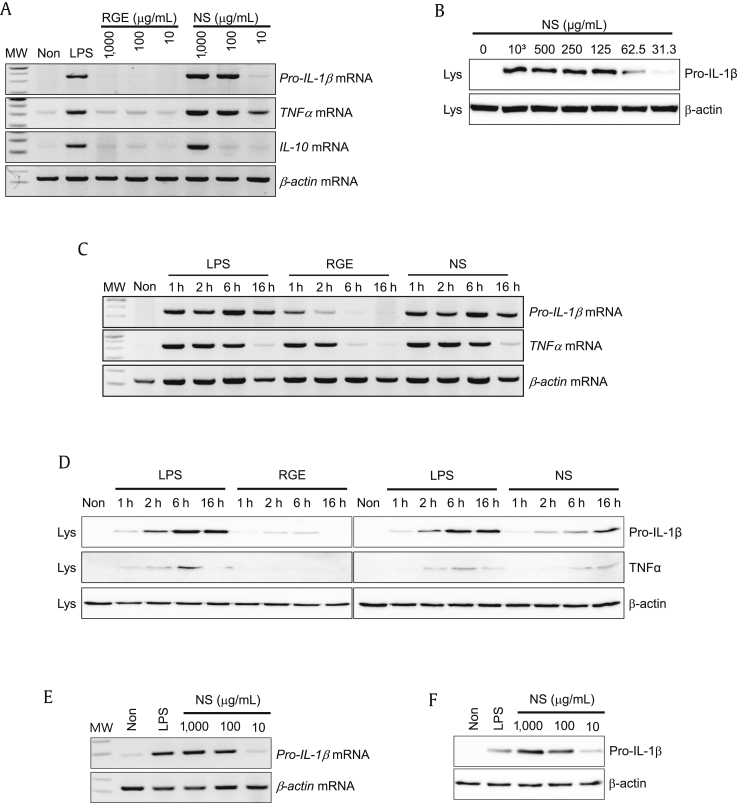
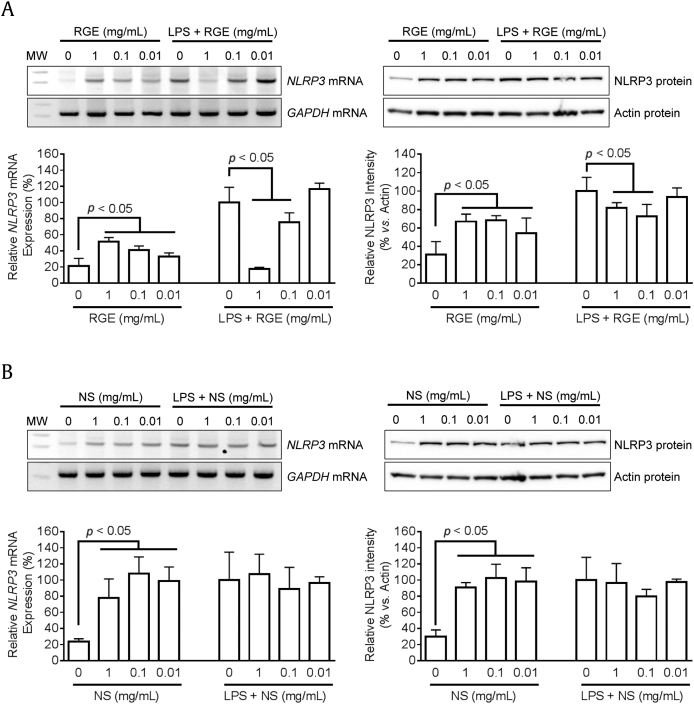
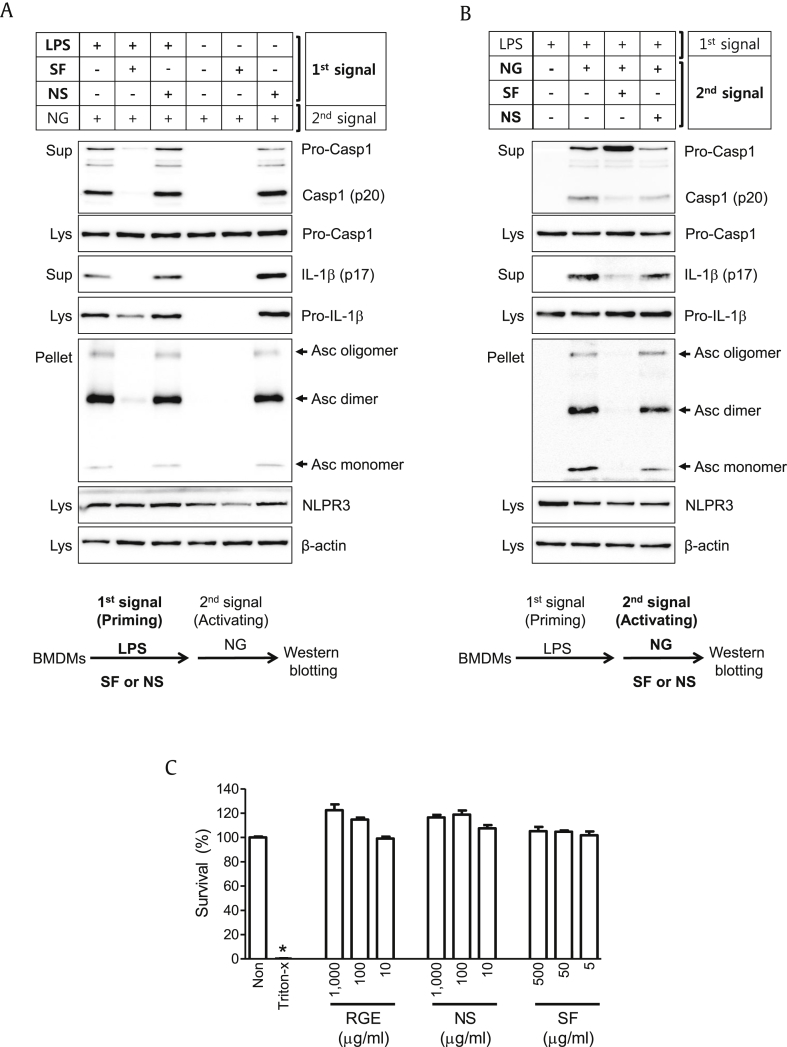
To assess the roles of nonsaponin fractions (NS) in NLRP3 inflammasome activation, we treated murine macrophages with or without first or second inflammasome activation signals with RGE, NS, or saponin fractions (SF). The first signal was nuclear factor kappa-light-chain-enhancer of activated B cells (NF-κB)-mediated transcription of pro-interleukin (IL)-1β and NLRP3 while the second signal triggered assembly of inflammasome components, leading to IL-1β maturation. In addition, we examined the role of NS in IL-6 production and IL-1β maturation in mice.
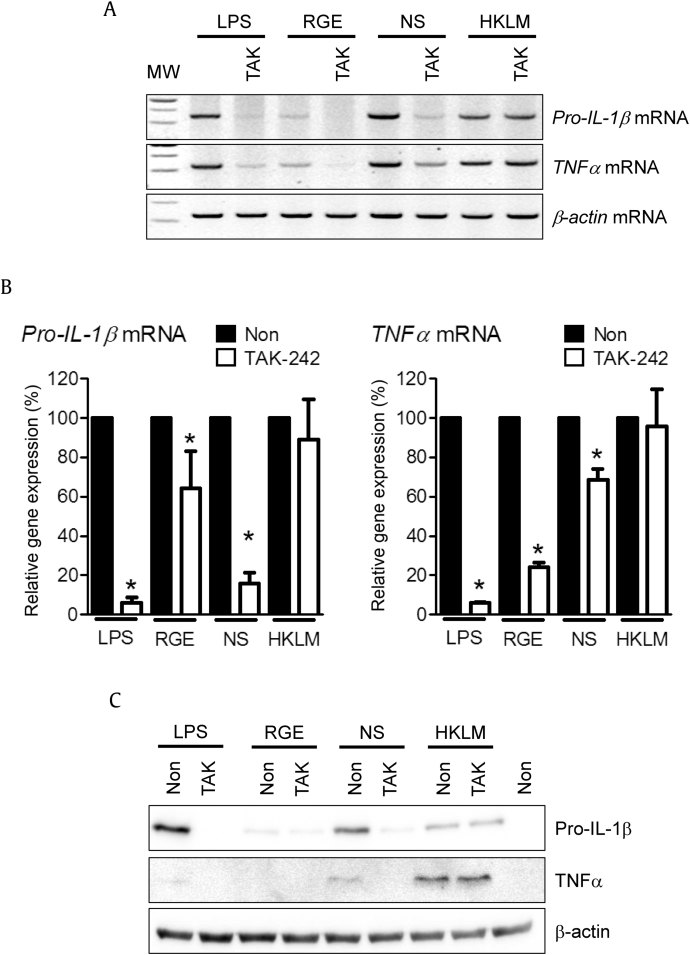
NS induced IL-1β and NLRP3 transcription via toll-like receptor 4 signaling, whereas SF blocked expression. During the second signal, SF attenuated NLRP3 inflammasome activation while NS did not. Further, NS-injected mice presented increased IL-1β maturation and IL-6 production.
SF and NS of RGE play differential roles in the NLRP3 inflammasome activation. Hence, RGE can be suggested as an NLRP3 inflammasome modulator.
韩国红参提取物(RGE)被认为是有效的免疫调节剂,我们曾报道人参皂苷具有抗炎症小体特性。然而,RGE中非皂苷成分的特性尚未得到充分研究。
为评估非皂苷组分(NS)在NLRP3炎症小体激活中的作用,我们用RGE、NS或皂苷组分(SF)处理小鼠巨噬细胞,给予或不给予初次或二次炎症小体激活信号。初次信号是活化B细胞核因子κB(NF-κB)介导的前白细胞介素(IL)-1β和NLRP3转录,而二次信号触发炎症小体成分组装,导致IL-1β成熟。此外,我们研究了NS在小鼠IL-6产生和IL-1β成熟中的作用。
NS通过Toll样受体4信号传导诱导IL-1β和NLRP3转录,而SF则抑制其表达。在二次信号阶段,SF减弱NLRP3炎症小体激活,而NS则无此作用。此外,注射NS的小鼠IL-1β成熟和IL-6产生增加。
RGE的SF和NS在NLRP3炎症小体激活中发挥不同作用。因此,RGE可被认为是一种NLRP3炎症小体调节剂。