Sharma Dew Kumari, Torp Anna Maria, Rosenqvist Eva, Ottosen Carl-Otto, Andersen Sven B
Molecular Plant Breeding, Section for Plant and Soil Science, Department of Plant and Environmental Sciences, Faculty of Science, University of Copenhagen, Frederiksberg, Denmark.
Section for Crop Sciences, Department of Plant and Environmental Sciences, Faculty of Science, University of Copenhagen, Taastrup, Denmark.
Front Plant Sci. 2017 Sep 27;8:1668. doi: 10.3389/fpls.2017.01668. eCollection 2017.
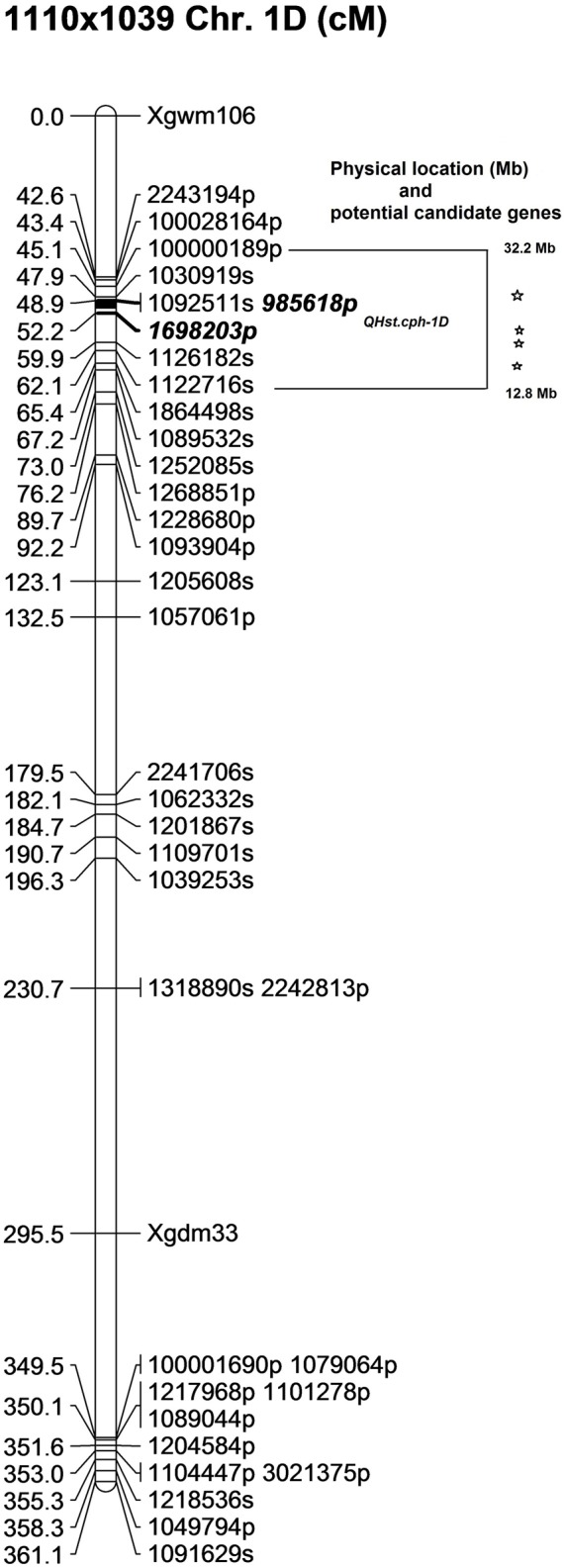
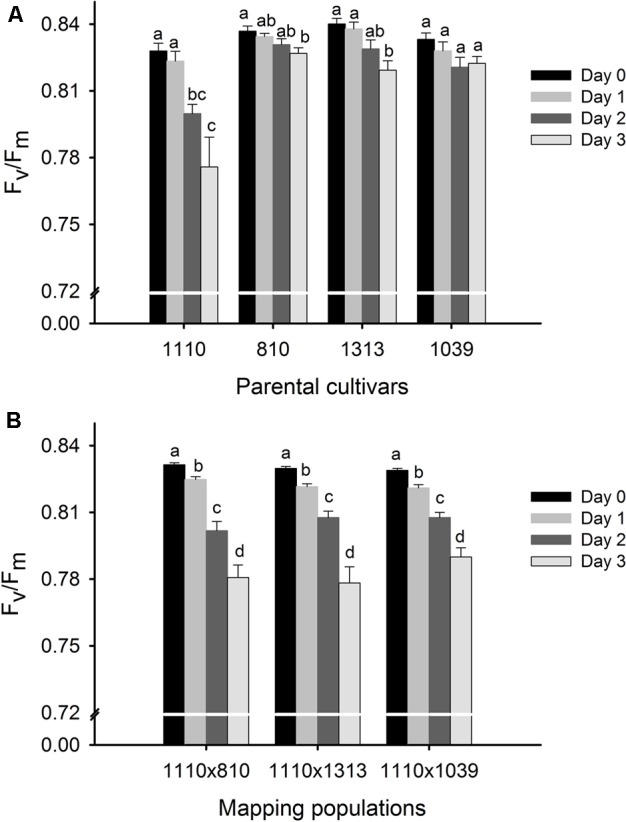
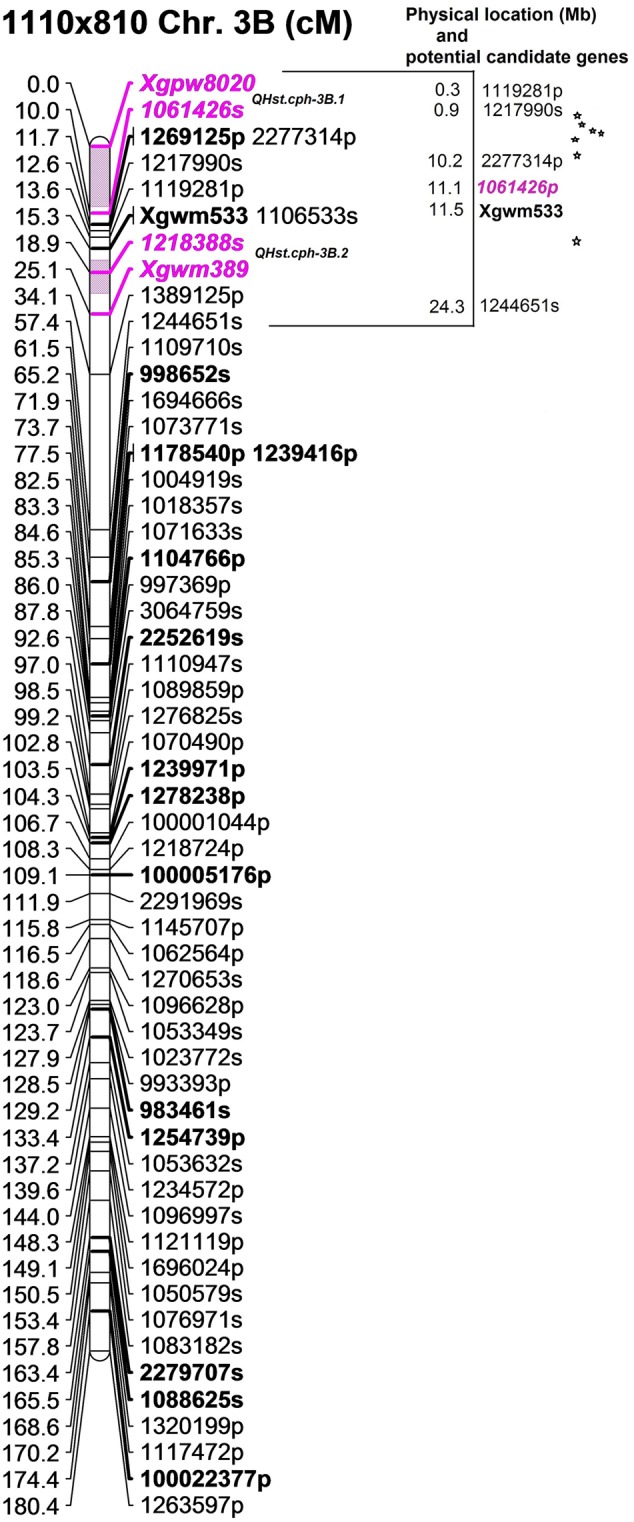
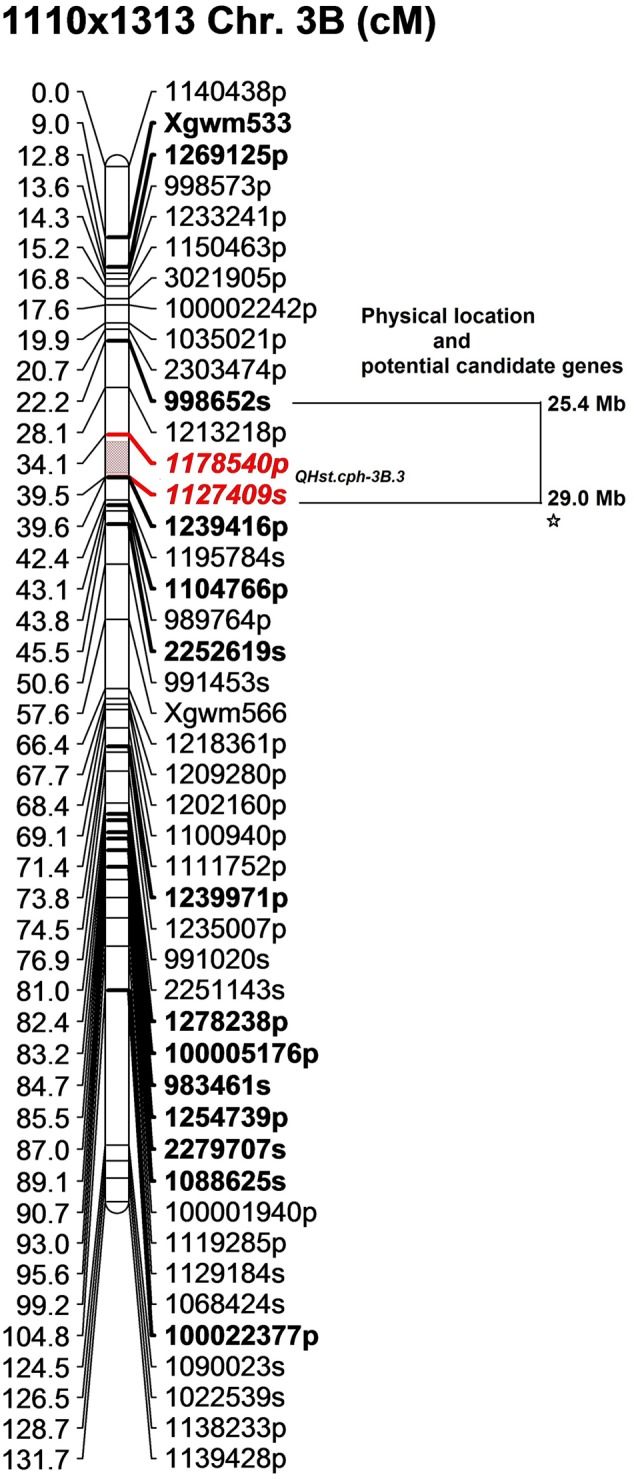
Despite the fact that / (maximum quantum efficiency of photosystem II) is the most widely used parameter for a rapid non-destructive measure of stress detection in plants, there are barely any studies on the genetic understanding of this trait under heat stress. Our aim was to identify quantitative trait locus (QTL) and the potential candidate genes linked to / for improved photosynthesis under heat stress in wheat ( L.). Three bi-parental F mapping populations were generated by crossing three heat tolerant male parents (origin: Afghanistan and Pakistan) selected for high / with a common heat susceptible female parent (origin: Germany) selected for lowest / out of a pool of 1274 wheat cultivars of diverse geographic origin. Parents together with 140 F individuals in each population were phenotyped by / under heat stress (40°C for 3 days) around anthesis. The / decreased by 6.3% in the susceptible parent, 1-2.5% in the tolerant parents and intermediately 4-6% in the mapping populations indicating a clear segregation for the trait. The three populations were genotyped with 34,955 DArTseq and 27 simple sequence repeat markers, out of which ca. 1800 polymorphic markers mapped to 27 linkage groups covering all the 21 chromosomes with a total genome length of about 5000 cM. Inclusive composite interval mapping resulted in the identification of one significant and heat-stress driven QTL in each population on day 3 of the heat treatment, two of which were located on chromosome 3B and one on chromosome 1D. These QTLs explained about 13-35% of the phenotypic variation for / with an additive effect of 0.002-0.003 with the positive allele for / originating from the heat tolerant parents. Approximate physical localization of these three QTLs revealed the presence of 12 potential candidate genes having a direct role in photosynthesis and/or heat tolerance. Besides providing an insight into the genetic control of / in the present study, the identified QTLs would be useful in breeding for heat tolerance in wheat.
尽管光系统II的最大量子效率是用于植物应激检测快速无损测量的最广泛使用的参数,但关于热胁迫下该性状的遗传理解几乎没有任何研究。我们的目标是鉴定与小麦(L.)热胁迫下光合作用改善相关的数量性状位点(QTL)和潜在候选基因。通过将三个为高/选择的耐热雄性亲本(原产于阿富汗和巴基斯坦)与一个从1274个不同地理来源的小麦品种库中选择的常见热敏感雌性亲本(原产于德国)杂交,产生了三个双亲亲本F作图群体。在开花期周围的热胁迫(40°C处理3天)下,对亲本以及每个群体中的140个F个体进行表型分析。易感亲本中的/下降了6.3%,耐受亲本中下降了1-2.5%,作图群体中下降了4-6%,表明该性状有明显的分离。使用34955个DArTseq和27个简单序列重复标记对这三个群体进行基因分型,其中约1800个多态性标记映射到27个连锁群,覆盖所有21条染色体,总基因组长度约为5000 cM。包容性复合区间作图导致在热处理第3天在每个群体中鉴定出一个显著的、由热胁迫驱动的QTL,其中两个位于3B染色体上,一个位于1D染色体上。这些QTL解释了/表型变异的约13-35%,加性效应为0.002-0.003,/的正向等位基因来自耐热亲本。这三个QTL的近似物理定位揭示了12个在光合作用和/或耐热性中具有直接作用的潜在候选基因的存在。除了在本研究中深入了解/的遗传控制外,鉴定出的QTL将有助于小麦耐热性育种。