Hassan Ahmed O, Amen Omar, Sayedahmed Ekramy E, Vemula Sai V, Amoah Samuel, York Ian, Gangappa Shivaprakash, Sambhara Suryaprakash, Mittal Suresh K
Department of Comparative Pathobiology and Purdue Institute for Inflammation, Immunology, and Infectious Disease, Purdue University, West Lafayette, IN, United States of America.
Poultry Diseases Department, Faculty of Veterinary Medicine, Assiut University, Assiut, Egypt.
PLoS One. 2017 Oct 12;12(10):e0186244. doi: 10.1371/journal.pone.0186244. eCollection 2017.
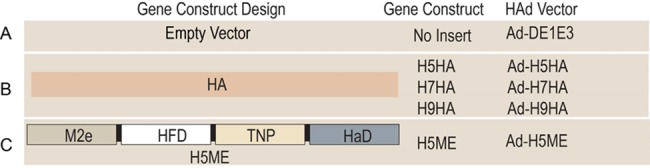
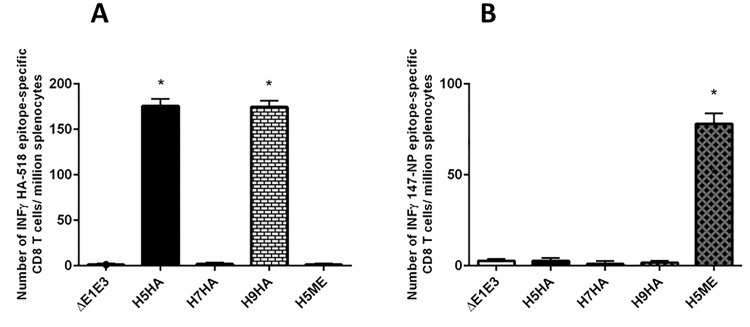
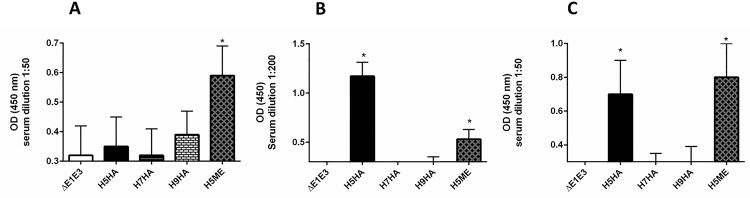
The emergence of H5, H7, and H9 avian influenza virus subtypes in humans reveals their pandemic potential. Although human-to-human transmission has been limited, the genetic reassortment of the avian and human/porcine influenza viruses or mutations in some of the genes resulting in virus replication in the upper respiratory tract of humans could generate novel pandemic influenza viruses. Current vaccines do not provide cross protection against antigenically distinct strains of the H5, H7, and H9 influenza viruses. Therefore, newer vaccine approaches are needed to overcome these potential threats. We developed an egg-independent, adenovirus vector-based, multi-epitope (ME) vaccine approach using the relatively conserved immunogenic domains of the H5N1 influenza virus [M2 ectodomain (M2e), hemagglutinin (HA) fusion domain (HFD), T-cell epitope of nucleoprotein (TNP). and HA α-helix domain (HαD)]. Our ME vaccine induced humoral and cell-mediated immune responses and caused a significant reduction in the viral loads in the lungs of vaccinated mice that were challenged with antigenically distinct H5, H7, or H9 avian influenza viruses. These results suggest that our ME vaccine approach provided broad protection against the avian influenza viruses. Further improvement of this vaccine will lead to a pre-pandemic vaccine that may lower morbidity, hinder transmission, and prevent mortality in a pandemic situation before a strain-matched vaccine becomes available.
H5、H7和H9禽流感病毒亚型在人类中的出现揭示了它们的大流行潜力。尽管人际传播有限,但禽流感病毒与人类/猪流感病毒的基因重配或某些基因的突变导致病毒在人类上呼吸道复制,可能会产生新型大流行性流感病毒。目前的疫苗不能对H5、H7和H9流感病毒的抗原性不同的毒株提供交叉保护。因此,需要更新的疫苗方法来克服这些潜在威胁。我们利用H5N1流感病毒相对保守的免疫原性结构域[M2胞外结构域(M2e)、血凝素(HA)融合结构域(HFD)、核蛋白的T细胞表位(TNP)和HAα螺旋结构域(HαD)],开发了一种不依赖鸡蛋、基于腺病毒载体的多表位(ME)疫苗方法。我们的ME疫苗诱导了体液免疫和细胞介导的免疫反应,并使接种疫苗的小鼠在受到抗原性不同的H5、H7或H9禽流感病毒攻击后,肺部病毒载量显著降低。这些结果表明,我们的ME疫苗方法对禽流感病毒提供了广泛的保护。进一步改进这种疫苗将产生一种大流行前疫苗,在匹配毒株的疫苗可用之前,这种疫苗可能会降低发病率、阻碍传播并防止在大流行情况下的死亡。