Department of Viroscience, Erasmus Medical Center, 3015GE Rotterdam, The Netherlands.
Nature. 2013 Sep 26;501(7468):560-3. doi: 10.1038/nature12476. Epub 2013 Aug 7.
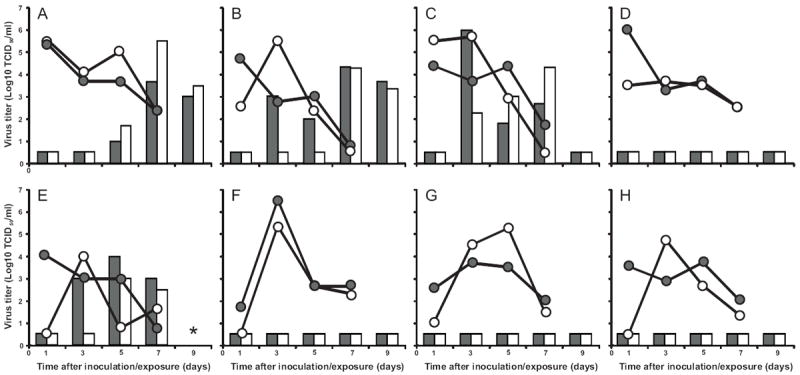
Wild waterfowl form the main reservoir of influenza A viruses, from which transmission occurs directly or indirectly to various secondary hosts, including humans. Direct avian-to-human transmission has been observed for viruses of subtypes A(H5N1), A(H7N2), A(H7N3), A(H7N7), A(H9N2) and A(H10N7) upon human exposure to poultry, but a lack of sustained human-to-human transmission has prevented these viruses from causing new pandemics. Recently, avian A(H7N9) viruses were transmitted to humans, causing severe respiratory disease and deaths in China. Because transmission via respiratory droplets and aerosols (hereafter referred to as airborne transmission) is the main route for efficient transmission between humans, it is important to gain an insight into airborne transmission of the A(H7N9) virus. Here we show that although the A/Anhui/1/2013 A(H7N9) virus harbours determinants associated with human adaptation and transmissibility between mammals, its airborne transmissibility in ferrets is limited, and it is intermediate between that of typical human and avian influenza viruses. Multiple A(H7N9) virus genetic variants were transmitted. Upon ferret passage, variants with higher avian receptor binding, higher pH of fusion, and lower thermostability were selected, potentially resulting in reduced transmissibility. This A(H7N9) virus outbreak highlights the need for increased understanding of the determinants of efficient airborne transmission of avian influenza viruses between mammals.
野生水禽是甲型流感病毒的主要宿主,病毒可通过直接或间接途径传播给各种次级宿主,包括人类。人类接触家禽时,曾观察到亚型为 A(H5N1)、A(H7N2)、A(H7N3)、A(H7N7)、A(H9N2)和 A(H10N7)的病毒发生了直接的禽传人传播,但由于这些病毒缺乏持续的人际传播能力,因此未能引发新的大流行。最近,甲型 H7N9 病毒传播到人类,在中国导致严重的呼吸道疾病和死亡。由于通过呼吸道飞沫和气溶胶(以下简称空气传播)传播是人际之间高效传播的主要途径,因此深入了解甲型 H7N9 病毒的空气传播方式非常重要。在这里,我们表明,尽管 A/Anhui/1/2013 型 H7N9 病毒具有与哺乳动物之间人类适应性和传染性相关的决定因素,但它在雪貂中的空气传播能力有限,介于典型的人类和禽流感病毒之间。多种 A(H7N9)病毒遗传变异株被传播。在雪貂传播过程中,选择了具有更高禽类受体结合能力、更高融合 pH 值和更低热稳定性的变体,这可能导致传播能力降低。此次 H7N9 病毒暴发凸显了需要进一步了解哺乳动物之间禽流感病毒高效空气传播的决定因素。