Department of Biotechnology, Guru Nanak Dev University, Amritsar, Punjab, 143005, India.
J Neuroinflammation. 2017 Oct 12;14(1):201. doi: 10.1186/s12974-017-0975-6.
The epidemic of obesity has reached alarming levels in both developing and developed nations. Excessive calorie intake and sedentary lifestyle due to technological advancements are the main causal factors for overweight and obesity among the human population. Obesity has been associated with a number of co-morbidities such as hypertension, type 2 diabetes mellitus, cardiovascular diseases, and neurodegeneration and dementia. The progression of neurological disorders in obese subjects has been mainly attributed to neuroinflammation. Withania somnifera has been used in numerous Ayurvedic formulations owing to its wide array of health-promoting properties. The current study was designed to test the hypothesis whether dry leaf powder of W. somnifera has anxiolytic and anti-neuroinflammatory potential in diet-induced obesity.
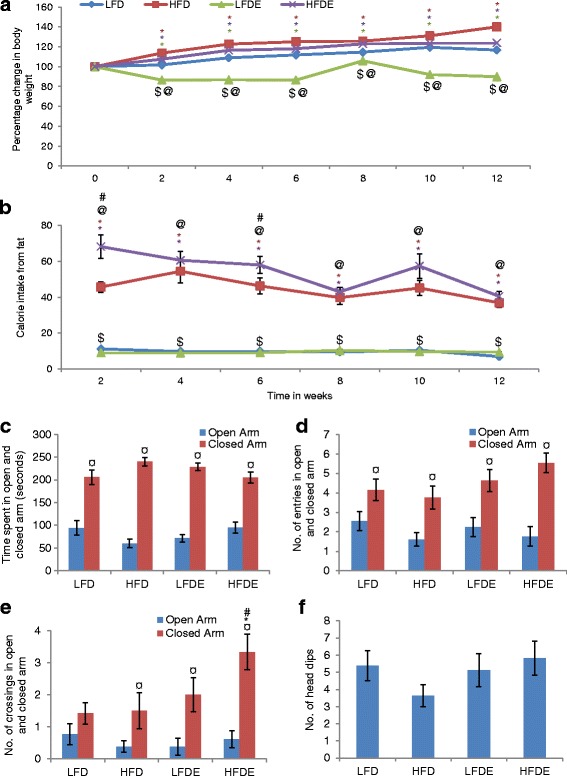
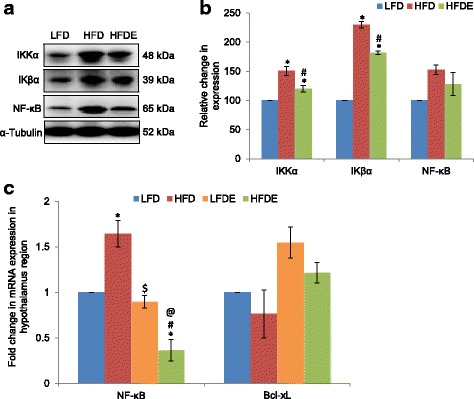
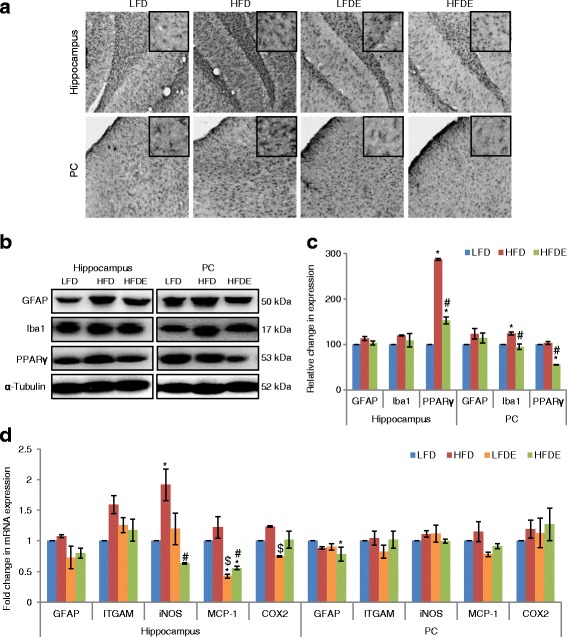
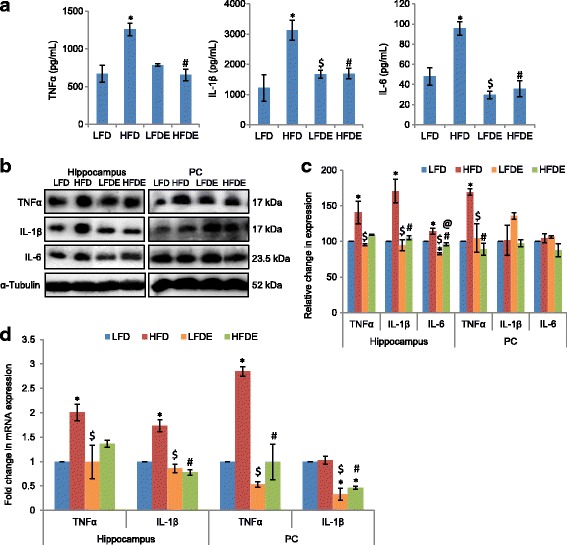
Young adult female rats were divided into four groups: low fat diet group (LFD) fed with regular chow feed, high fat diet group (HFD) fed with diet containing 30% fat by weight, low fat diet plus extract group (LFDE) fed with regular chow feed supplemented with dry leaf powder of W. somnifera 1 mg/g of body weight (ASH), and high fat diet plus extract group (HFDE) fed with diet containing 30% fat by weight and supplemented with ASH. All the animals were kept on respective feeding regimen for 12 weeks; following which, the animals were tested for their anxiety-like behavior using elevated plus maze test. The animals were sacrificed and used to study various inflammatory markers such as GFAP, Iba1, PPARγ, iNOS, MCP-1, TNFα, IL-1β, IL-6, and various markers of NF-κB pathway by Western blotting and quantitative real-time PCR. Serum levels of leptin, insulin and pro-inflammatory cytokines were also assayed.
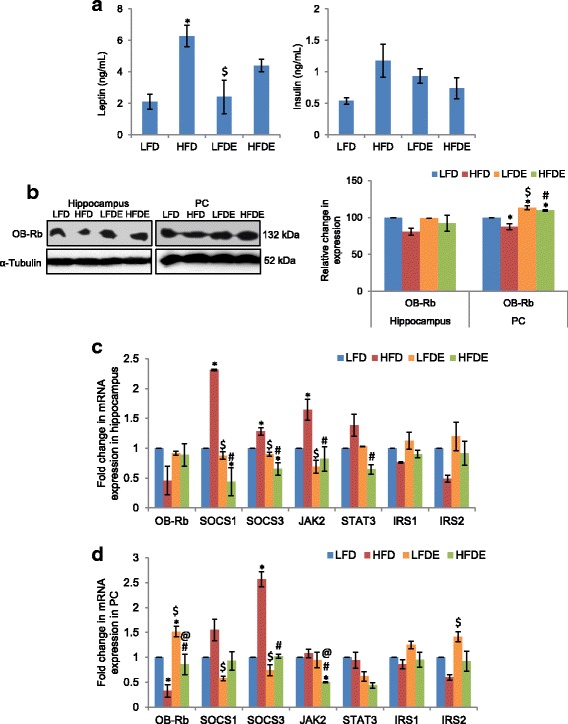
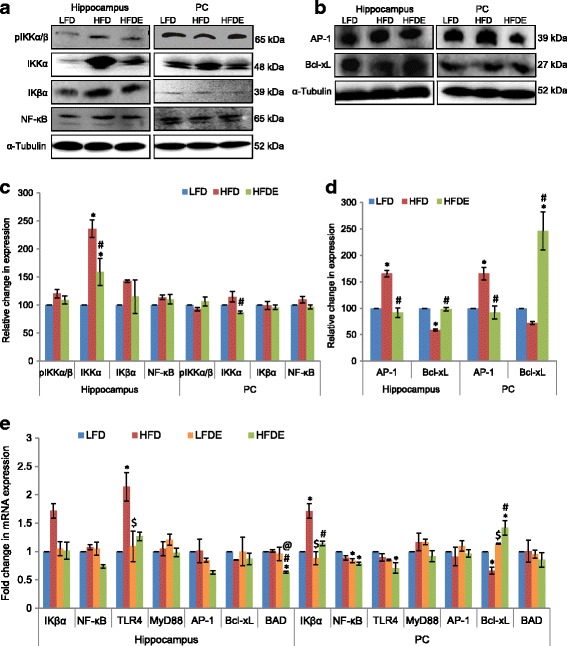
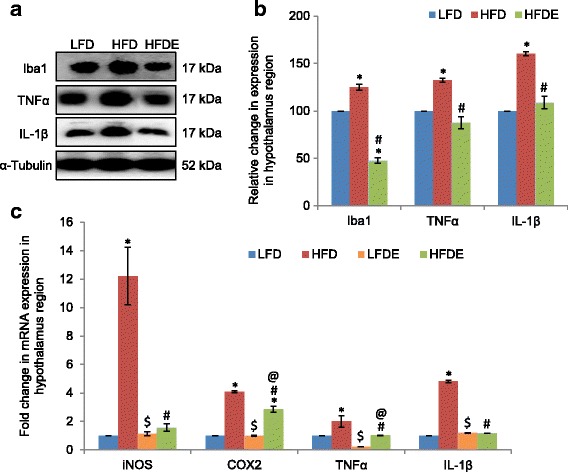
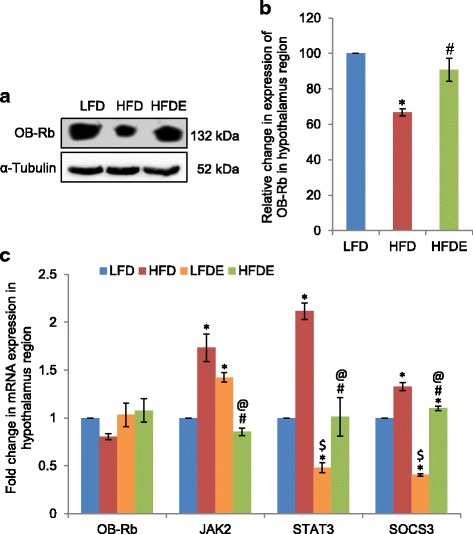
ASH treated rats showed less anxiety levels as compared to HFD animals. At molecular level, ASH ameliorated the HFD-induced reactive gliosis and microgliosis and suppressed the expression of inflammatory markers such as PPARγ, iNOS, MCP-1, TNFα, IL-1β, and IL-6. Further, ASH ameliorated leptin and insulin resistance and prevented HFD-induced apoptosis.
Dry leaf powder of W. somnifera may prove to be a potential therapeutic agent to attenuate neuroinflammation associated with obesity and may prevent its co-morbidities.
肥胖症在发展中国家和发达国家都已达到惊人的水平。由于技术进步,人们摄入过多的卡路里并保持久坐的生活方式,这是导致人类超重和肥胖的主要因素。肥胖与许多合并症有关,如高血压、2 型糖尿病、心血管疾病和神经退行性疾病及痴呆。肥胖患者的神经退行性疾病的进展主要归因于神经炎症。由于其广泛的促进健康的特性,印度草医学中已使用了多种睡茄配方。本研究旨在测试以下假设:睡茄干叶粉是否具有抗焦虑和抗神经炎症的潜力,可以预防饮食诱导的肥胖。
将年轻成年雌性大鼠分为四组:低脂饮食组(LFD)喂食常规的标准饲料,高脂饮食组(HFD)喂食含有 30%脂肪的饮食,低脂饮食加提取物组(LFDE)喂食常规标准饲料,并补充 1mg/g 体重的睡茄干叶粉(ASH),高脂饮食加提取物组(HFDE)喂食含有 30%脂肪的饮食,并补充 ASH。所有动物均按照各自的饲养方案饲养 12 周;之后,使用高架十字迷宫测试评估动物的焦虑样行为。处死动物,通过 Western blot 和实时定量 PCR 研究各种炎症标志物,如 GFAP、Iba1、PPARγ、iNOS、MCP-1、TNFα、IL-1β、IL-6 和 NF-κB 通路的各种标志物。还测定了血清瘦素、胰岛素和促炎细胞因子的水平。
与 HFD 动物相比,ASH 处理的大鼠表现出较低的焦虑水平。在分子水平上,ASH 改善了 HFD 诱导的反应性神经胶质增生和小神经胶质增生,并抑制了炎症标志物的表达,如 PPARγ、iNOS、MCP-1、TNFα、IL-1β 和 IL-6。此外,ASH 改善了瘦素和胰岛素抵抗,并防止了 HFD 诱导的细胞凋亡。
睡茄干叶粉可能是一种潜在的治疗药物,可以减轻与肥胖相关的神经炎症,并预防其合并症。