Department of Biochemistry, Faculty of Natural and Agricultural Sciences, University of Pretoria, Hatfield Campus, Pretoria 0002, South Africa.
Department of Chemistry and Biochemistry, Faculty of Science, University of Namibia, P/Bag 13301, Windhoek 9000, Namibia.
Molecules. 2017 Oct 13;22(10):1703. doi: 10.3390/molecules22101703.
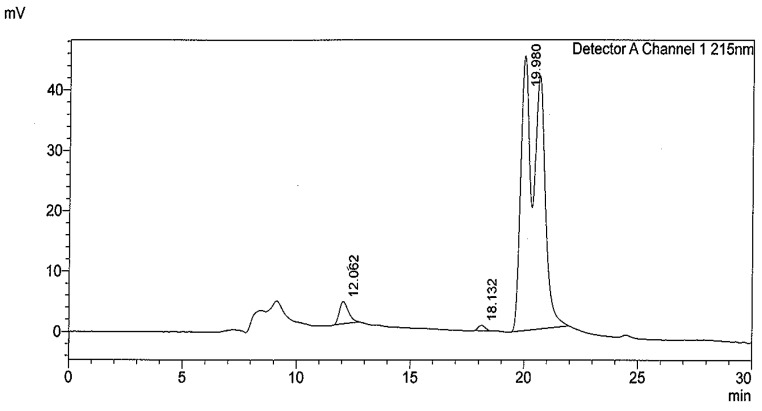
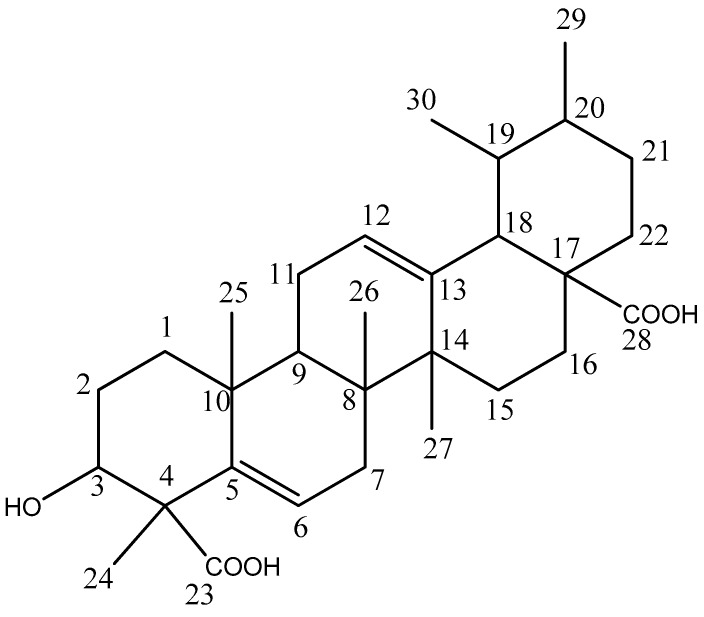
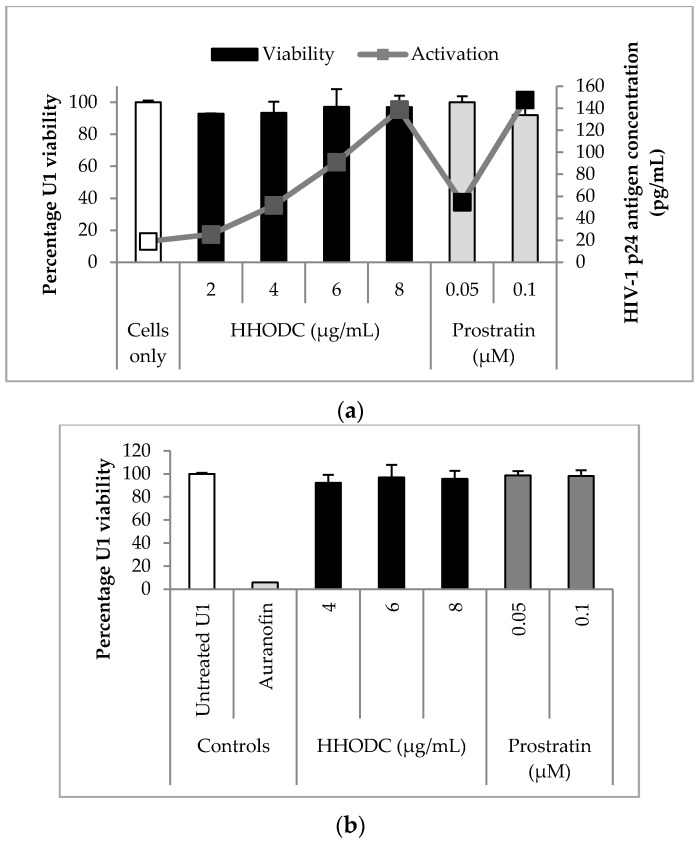
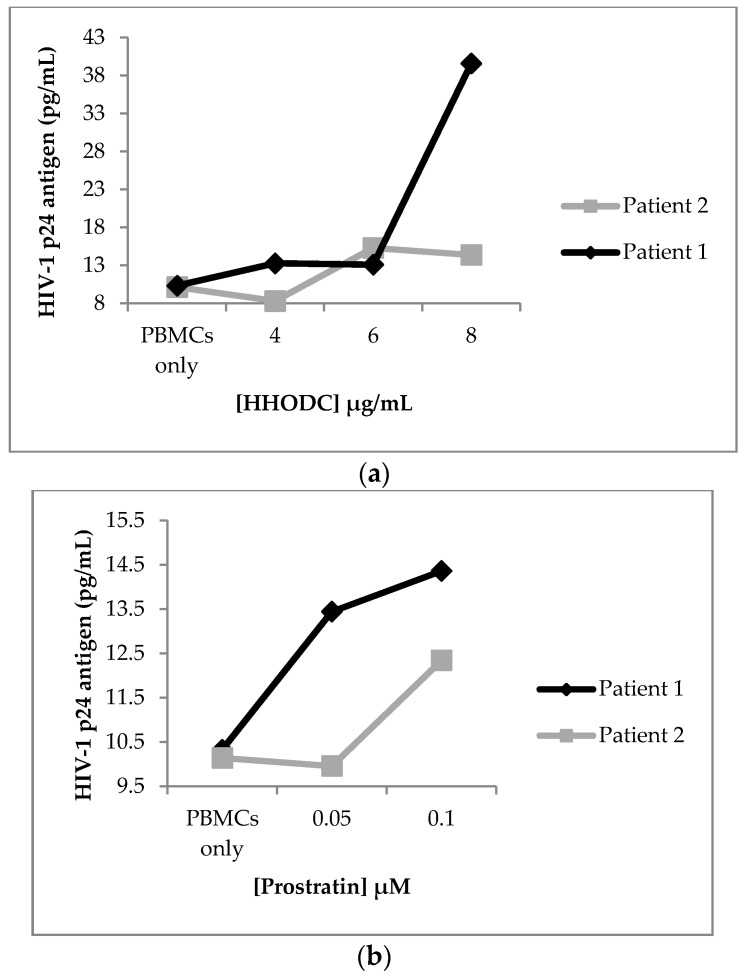
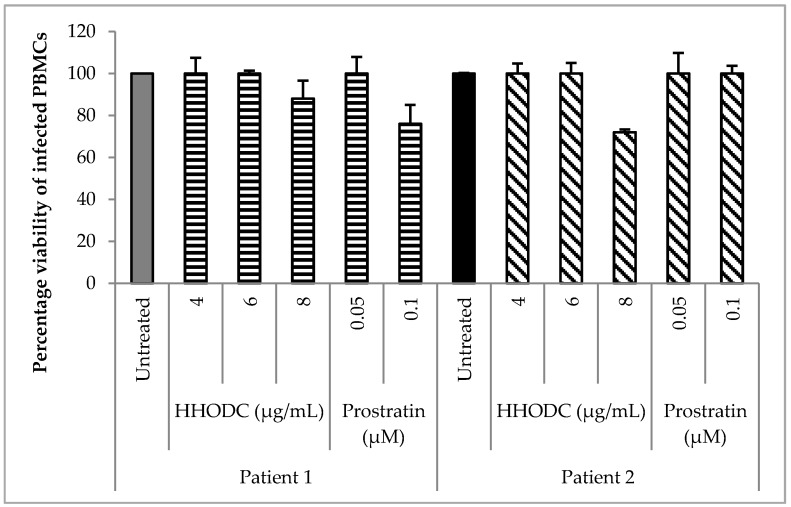
Latent HIV reservoirs in infected individuals prevent current treatment from eradicating infection. Treatment strategies against latency involve adjuvants for viral reactivation which exposes viral particles to antiretroviral drugs. In this study, the effect of novel triterpenoids isolated from on HIV-1 expression was measured through HIV-1 p24 antigen capture in the U1 latency model of HIV-1 infection and in peripheral blood mononuclear cells (PBMCs) of infected patients on combination antiretroviral therapy (cART). The mechanism of viral reactivation was determined through the compound's effect on cytokine production, histone deacetylase (HDAC) inhibition, and protein kinase C (PKC) activation. Cytotoxicity of the triterpenoids was determined using a tetrazolium dye and flow cytometry. The isolated triterpene isomers, 3-hydroxy-4,6,6,11,12,14-hexamethyl-1,2,3,4,6,6,6,7,8,8,9,10,11,12,12,14,14,14-octadecahydropicene-4,8-dicarboxylic acid (HHODC), significantly ( < 0.05) induced HIV-1 expression in a dose-dependent manner in U1 cells at non-cytotoxic concentrations. HHODC also induced viral expression in PBMCs of HIV-1 infected patients on cART. In addition, the compound up-regulated the production of interleukin (IL)-2, IL-6, tumour necrosis factor (TNF)-α, and interferon (IFN)-γ but had no effect on HDAC and PKC activity, suggesting cytokine upregulation as being involved in latency activation. The observed in vitro reactivation of HIV-1 introduces the adjuvant potential of HHODC for the first time here.
潜伏的 HIV 储库会阻止当前的治疗方法根除感染。针对潜伏期的治疗策略包括使用病毒激活佐剂,使病毒颗粒暴露于抗逆转录病毒药物中。在这项研究中,通过 HIV-1 感染 U1 潜伏期模型中的 HIV-1 p24 抗原捕获和感染患者接受联合抗逆转录病毒治疗(cART)的外周血单核细胞(PBMC),测量了从 中分离的新型三萜类化合物对 HIV-1 表达的影响。通过化合物对细胞因子产生、组蛋白去乙酰化酶(HDAC)抑制和蛋白激酶 C(PKC)激活的影响来确定病毒激活的机制。使用四唑染料和流式细胞术测定三萜类化合物的细胞毒性。分离的三萜类异构体 3-羟基-4,6,6,11,12,13,14-六甲基-1,2,3,4,6,6,6,7,8,8,9,10,11,12,12,14,14,14-十八氢-4,8-二羧酸(HHODC)在非细胞毒性浓度下以剂量依赖性方式显著(<0.05)诱导 U1 细胞中的 HIV-1 表达。HHODC 还诱导接受 cART 的 HIV-1 感染患者的 PBMC 中的病毒表达。此外,该化合物上调了白细胞介素(IL)-2、IL-6、肿瘤坏死因子(TNF)-α 和干扰素(IFN)-γ 的产生,但对 HDAC 和 PKC 活性没有影响,表明细胞因子上调参与了潜伏期激活。体外 HIV-1 的再激活首次在这里介绍了 HHODC 的佐剂潜力。