Zhang Xue, Biagini Myers Jocelyn M, Yadagiri Veda K, Ulm Ashley, Chen Xiaoting, Weirauch Matthew T, Khurana Hershey Gurjit K, Ji Hong
Division of Human Genetics, Cincinnati Children's Hospital Medical Center, Cincinnati, Ohio, United States of America.
Pyrosequencing lab for genomic and epigenomic research, Cincinnati Children's Hospital Medical Center, Cincinnati, Ohio, United States of America.
PLoS One. 2017 Oct 13;12(10):e0186150. doi: 10.1371/journal.pone.0186150. eCollection 2017.
Treatment response to systemic corticosteroid in asthmatic children is heterogeneous and may be mediated by epigenetic mechanism(s). We aim to identify DNA methylation (DNAm) changes responsive to steroid, and DNAm biomarkers that distinguish treatment response.
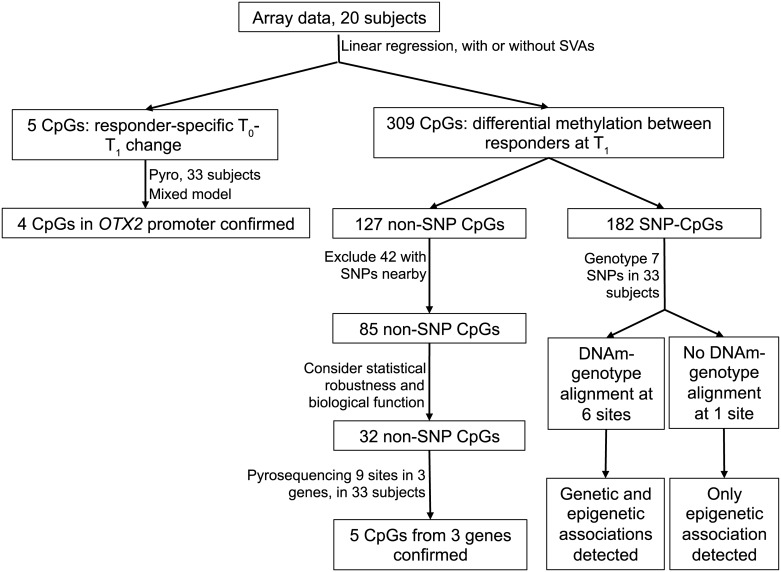
We followed 33 children (ages 5-18) presenting to the Emergency Department (ED) for asthma exacerbation. Based on whether they met discharge criteria in ≤24 hours, participants were grouped into good and poor responders to steroid treatment. Nasal samples were collected upon presentation to the ED (T0) and 18-24 hours later (T1). Genome-wide DNAm was measured for both time points in 20 subjects, and compared between T0 and T1 in good and poor responders respectively. DNAm at T1 was also compared between two responder groups. DNAm of selected CpGs was verified in the complete cohort, and expression of associated genes was examined. Interactions between DNAm, common single nucleotide polymorphism (SNP) located at the CpG sites and treatment responses were assessed.
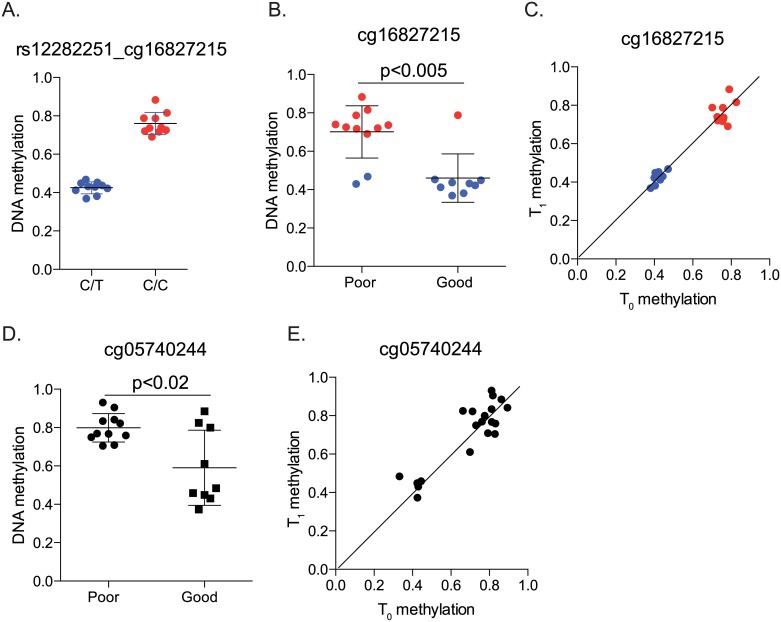
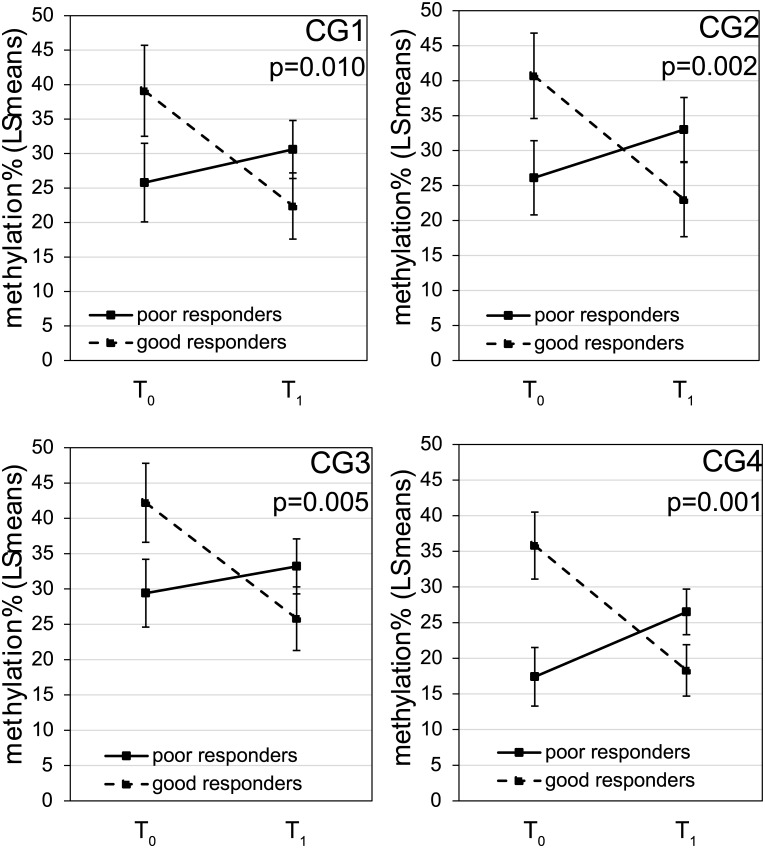
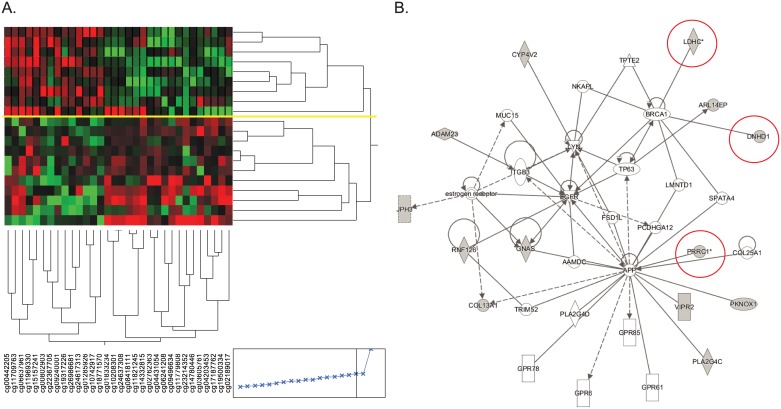
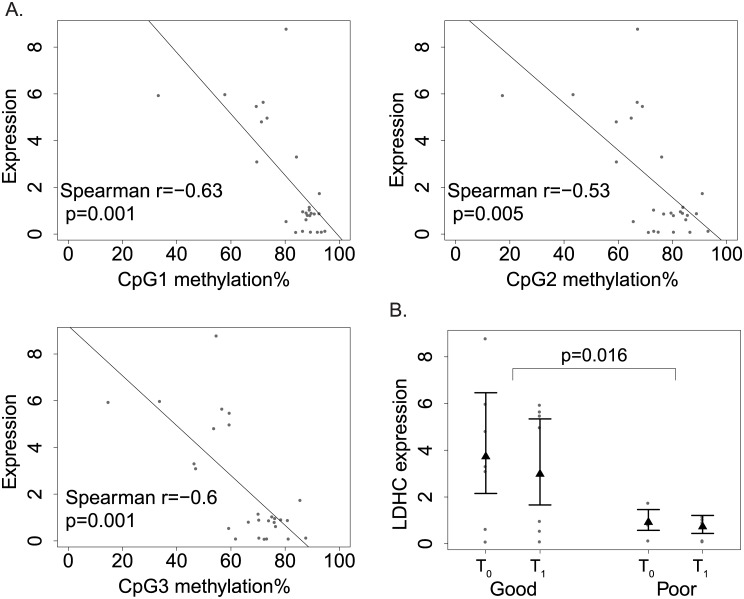
Three CpGs located in the OTX2 promoter showed responder-specific DNAm changes from T0 to T1, in which DNAm decreased in good but not in poor responders. Good and poor responders showed differential DNAm at T1 in 127 CpGs without and 182 CpGs with common SNP co-localization. Negative correlations between DNAm and gene expression were observed at CpGs located within the LDHC promoter, suggesting an impact of DNAm on gene regulation. Interactions between SNPs, DNAm and treatment response were detected.
Acute systemic steroid treatment modifies nasal DNAm in good responders. Nasal DNAm, dependent or independent of SNPs, can differentiate response to treatment in acute asthmatic children.
哮喘儿童对全身用糖皮质激素的治疗反应存在异质性,可能由表观遗传机制介导。我们旨在确定对类固醇有反应的DNA甲基化(DNAm)变化,以及区分治疗反应的DNAm生物标志物。
我们对33名因哮喘急性发作到急诊科就诊的儿童(年龄5 - 18岁)进行了随访。根据他们是否在≤24小时内达到出院标准,将参与者分为对类固醇治疗反应良好和反应不佳的两组。在到急诊科就诊时(T0)和18 - 24小时后(T1)采集鼻样本。对20名受试者在两个时间点进行全基因组DNAm测量,并分别比较反应良好组和反应不佳组T0和T1之间的情况。还比较了两个反应组在T1时的DNAm。在整个队列中验证了选定CpG的DNAm,并检测了相关基因的表达。评估了DNAm、位于CpG位点的常见单核苷酸多态性(SNP)与治疗反应之间的相互作用。
位于OTX2启动子的三个CpG显示出从T0到T1的反应者特异性DNAm变化,其中反应良好者的DNAm下降,而反应不佳者则没有。反应良好组和反应不佳组在T1时,分别有127个无常见SNP共定位的CpG和182个有常见SNP共定位的CpG表现出不同的DNAm。在LDHC启动子内的CpG处观察到DNAm与基因表达之间存在负相关,表明DNAm对基因调控有影响。检测到SNP、DNAm与治疗反应之间的相互作用。
急性全身用类固醇治疗可使反应良好者的鼻DNAm发生改变。鼻DNAm,无论是否依赖SNP,均可区分急性哮喘儿童的治疗反应。