Morales Ingrid, Sanchez Alberto, Rodriguez-Sabate Clara, Rodriguez Manuel
Laboratory of Neurobiology and Experimental Neurology, Department of Basic Medical Sciences, Faculty of Medicine, Universidad de La Laguna, La Laguna, Tenerife, Canary Islands, Spain.
Center for Networked Biomedical Research in Neurodegenerative Diseases (CIBERNED), Madrid, Spain.
PLoS One. 2017 Oct 13;12(10):e0185989. doi: 10.1371/journal.pone.0185989. eCollection 2017.
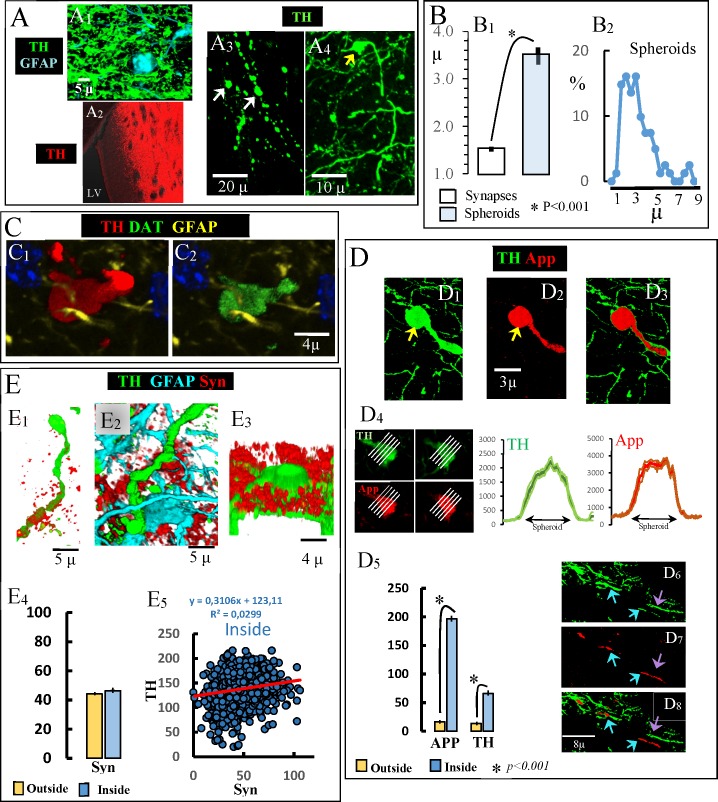
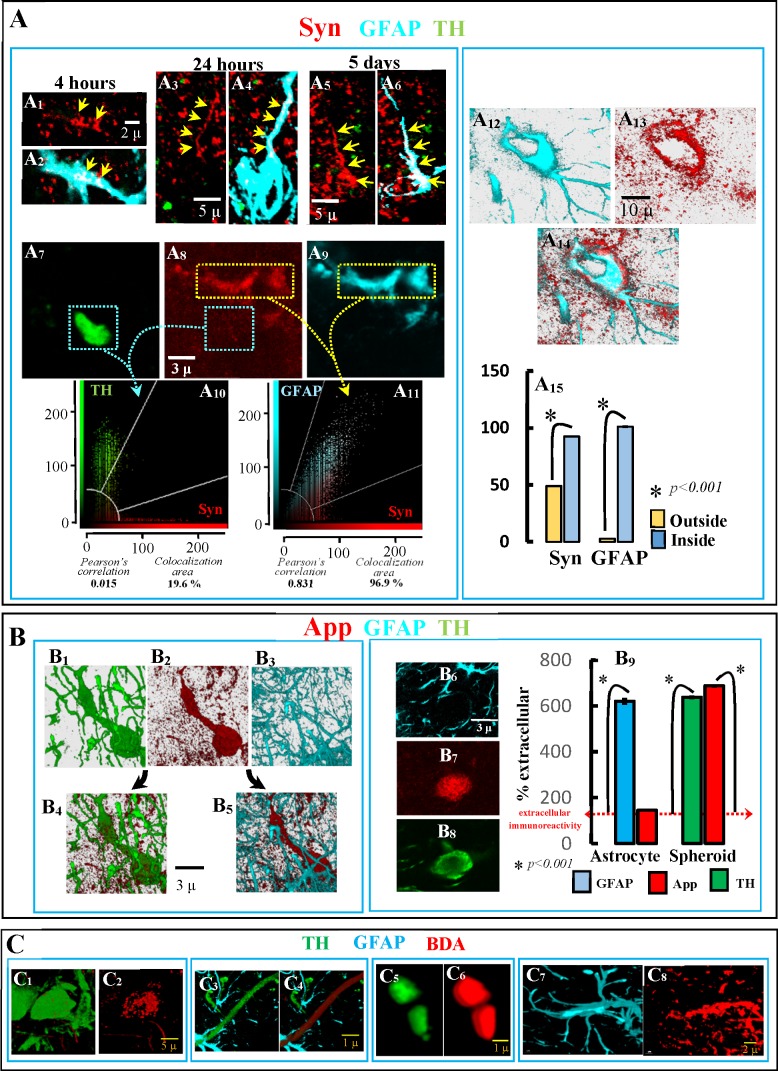
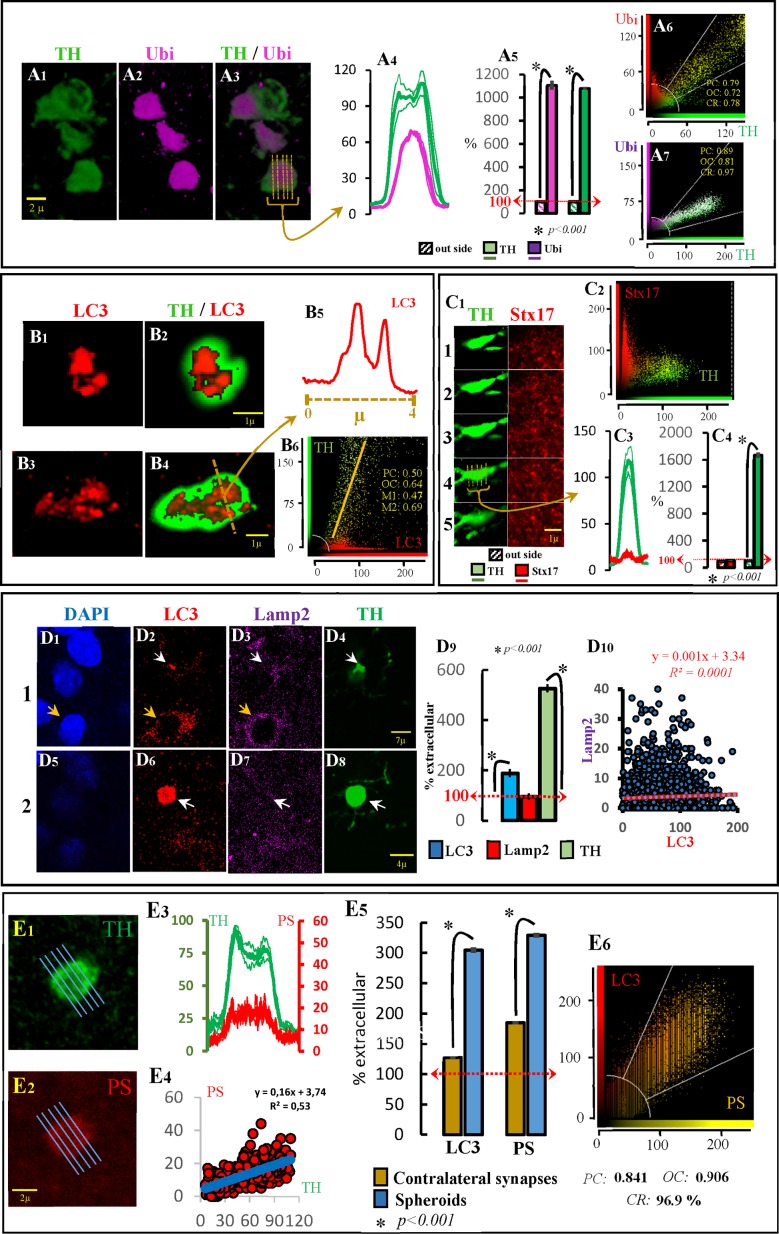
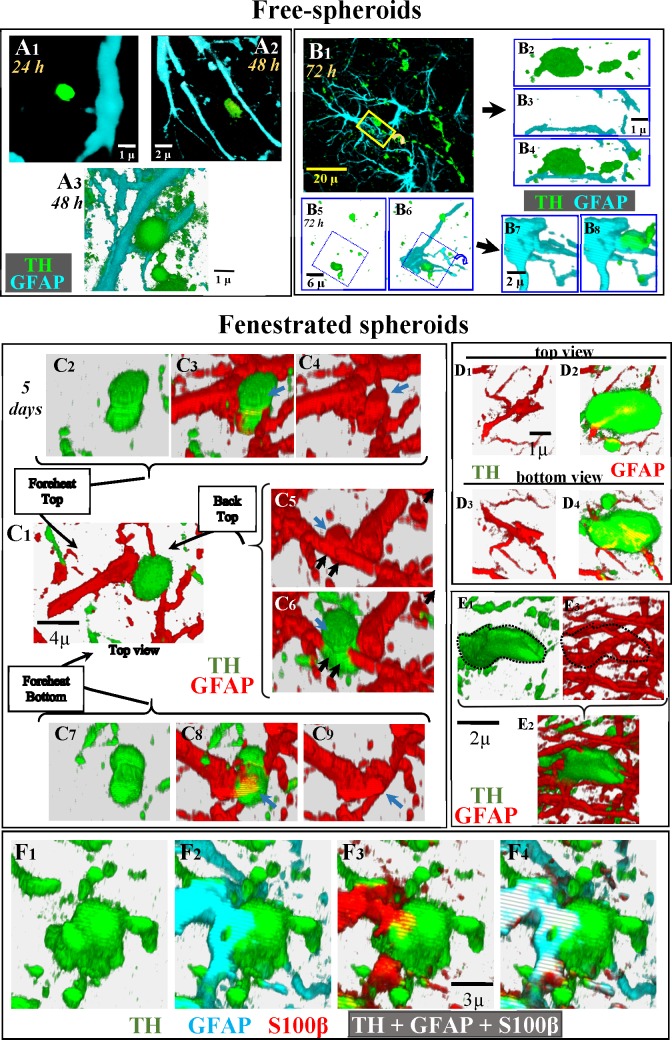
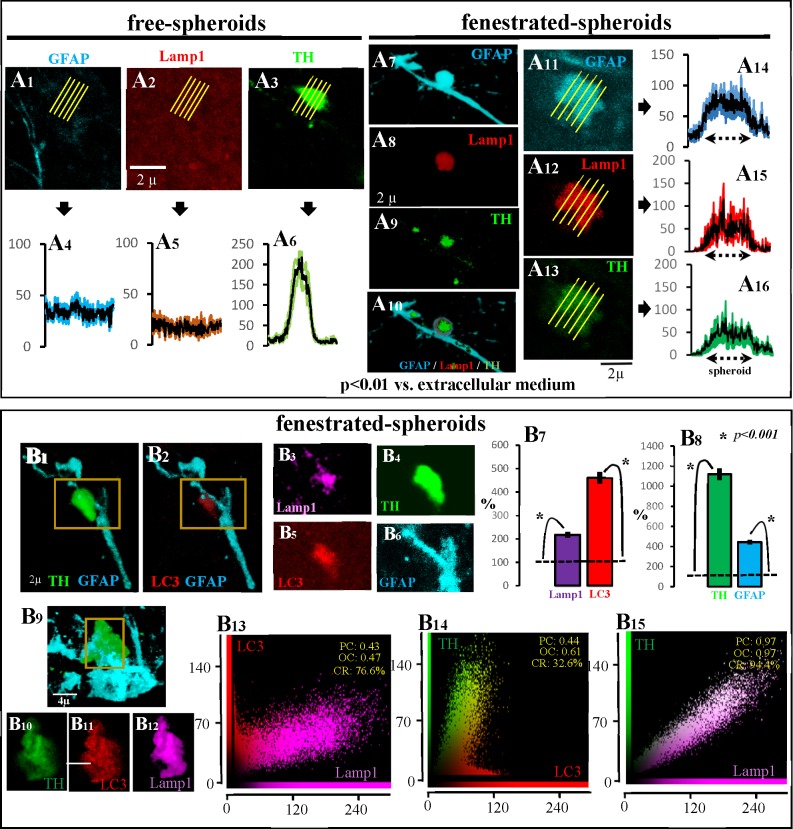
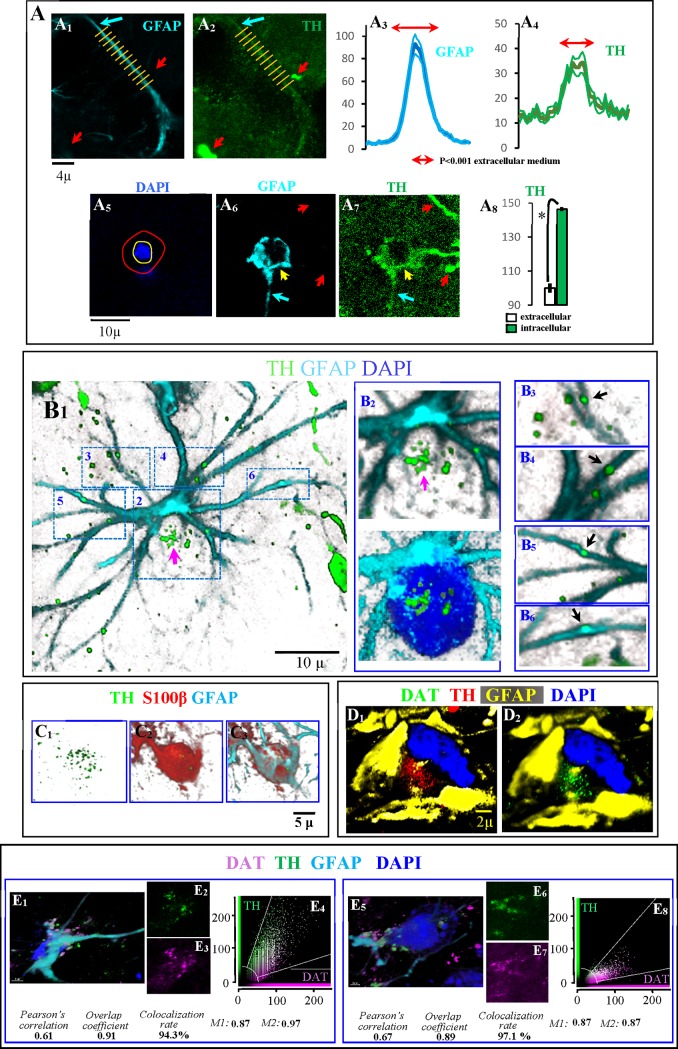
The role of astrocytes in Parkinson's disease is still not well understood. This work studied the astrocytic response to the dopaminergic denervation. Rats were injected in the lateral ventricles with 6-hydroxydopamine (25μg), inducing a dopaminergic denervation of the striatum not accompanied by non-selective tissue damage. The dopaminergic debris were found within spheroids (free-spheroids) which retained some proteins of dopaminergic neurons (e.g., tyrosine hydroxylase, the dopamine transporter protein, and APP) but not others (e.g., α-synuclein). Free-spheroids showed the initial (LC3-autophagosomes) but not the late (Lamp1/Lamp2-lysosomes) components of autophagy (incomplete autophagy), preparing their autophagosomes for an external phagocytosis (accumulation of phosphatidylserine). Free-spheroids were penetrated by astrocyte processes (fenestrated-spheroids) which made them immunoreactive for GFAP and S100β, and which had some elements needed to continue the debris degradation (Lamp1/Lamp2). Finally, proteins normally found in neurons (TH, DAT and α-synuclein) were observed within astrocytes 2-5 days after the dopaminergic degeneration, suggesting that the intracellular contents of degenerated cells had been transferred to astrocytes. Taken together, present data suggest phagocytosis as a physiological role of striatal astrocytes, a role which could be critical for cleaning striatal debris during the initial stages of Parkinson's disease.
星形胶质细胞在帕金森病中的作用仍未得到充分理解。这项研究探讨了星形胶质细胞对多巴胺能去神经支配的反应。向大鼠侧脑室注射6-羟基多巴胺(25μg),诱导纹状体多巴胺能去神经支配,且不伴有非选择性组织损伤。在球状体(游离球状体)中发现了多巴胺能碎片,这些碎片保留了一些多巴胺能神经元的蛋白质(如酪氨酸羟化酶、多巴胺转运蛋白和淀粉样前体蛋白),但不包括其他蛋白质(如α-突触核蛋白)。游离球状体显示出自噬的初始成分(LC3-自噬体),但没有晚期成分(Lamp1/Lamp2-溶酶体)(不完全自噬),为外部吞噬作用(磷脂酰丝氨酸的积累)准备其自噬体。游离球状体被星形胶质细胞突起穿透(有孔球状体),使其对GFAP和S100β具有免疫反应性,并且具有继续降解碎片所需的一些成分(Lamp1/Lamp2)。最后,在多巴胺能变性后2-5天,在星形胶质细胞内观察到通常存在于神经元中的蛋白质(TH、DAT和α-突触核蛋白),这表明变性细胞的细胞内内容物已转移至星形胶质细胞。综上所述,目前的数据表明吞噬作用是纹状体星形胶质细胞的一种生理功能,这一功能在帕金森病早期清除纹状体碎片方面可能至关重要。