Dantas Camila G, da Paixão Ailma O, Nunes Tássia L G M, Silva Italo J F, Dos S Lima Bruno, Araújo Adriano A S, de Albuquerque-Junior Ricardo L C, Gramacho Kátia P, Padilha Francine F, da Costa Luiz P, Severino Patricia, Cardoso Juliana C, Souto Eliana B, Gomes Margarete Z
Institute of Research and Technology, Tiradentes University, Av. Murilo Dantas, 300, Aracaju 49032-490, Sergipe, Brazil.
Department of Pharmacy, Federal University of Sergipe (U.F.S.), Cidade Universitária Prof. José Aloísio de Campos, Av. Marechal Rondon, Jardim Rosa Elze, São Cristóvão 49100-000, Sergipe, Brazil.
Toxics. 2022 Oct 3;10(10):583. doi: 10.3390/toxics10100583.
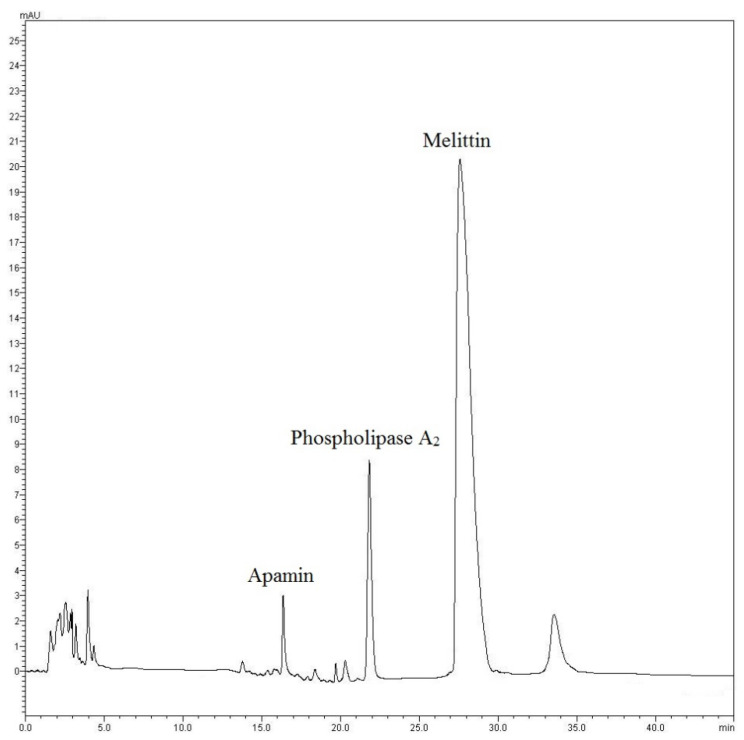
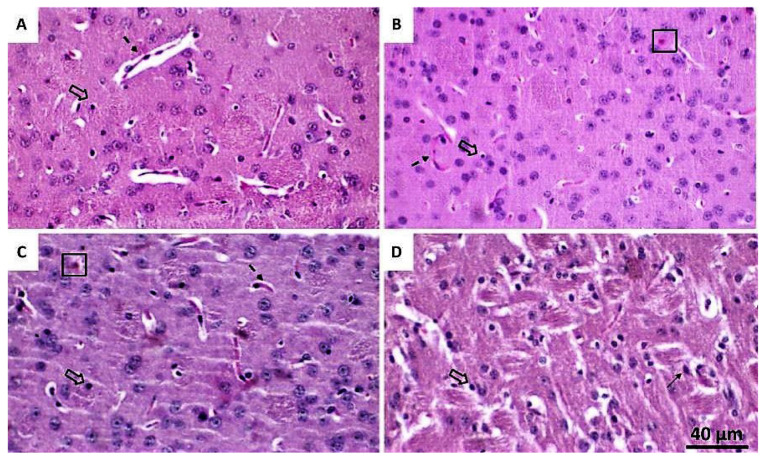
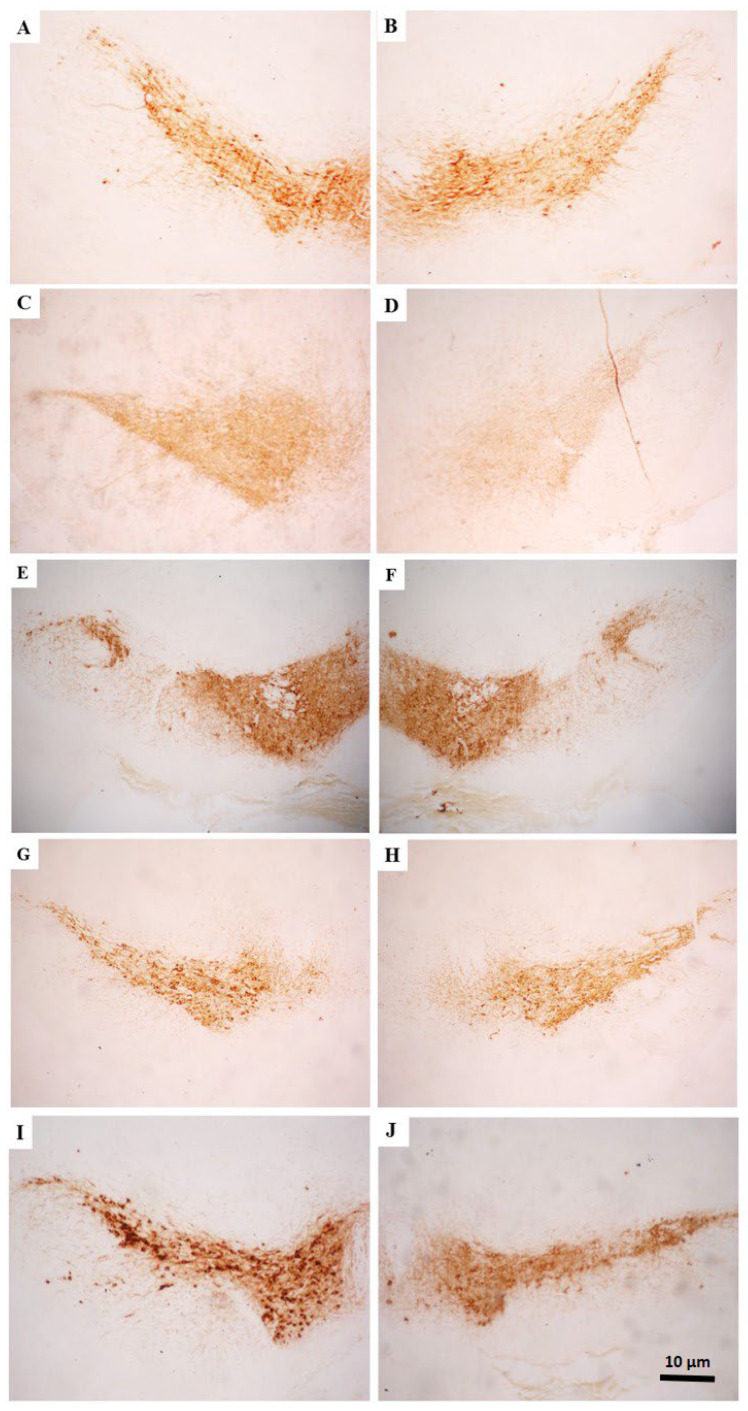
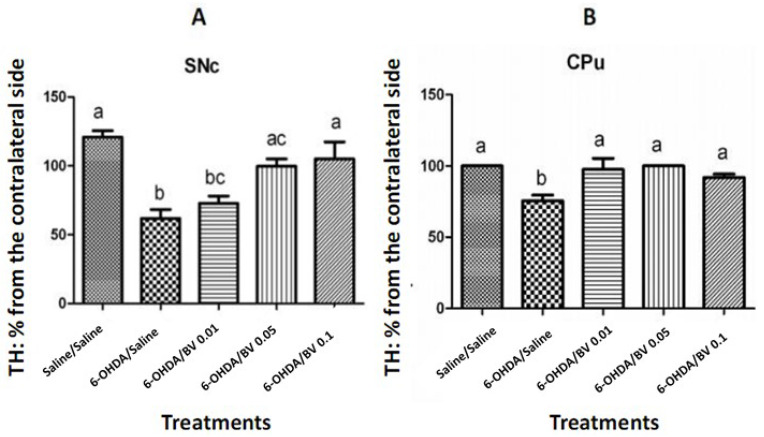
This study evaluated the neuroprotective effects of the Africanized bee venom (BV) and its mechanisms of action after 6-hydroxydopamine-(6-OHDA)-induced lesion in a mice model. Prior to BV treatment, mice received intrastriatal microinjections of 6-OHDA (no induced dopaminergic neuronal death) or ascorbate saline (as a control). BV was administered subcutaneously at different dosages (0.01, 0.05 or 0.1 mg·Kg) once every two days over a period of 3 weeks. The open field test was carried out, together with the immunohistochemical and histopathological analysis. The chemical composition of BV was also assessed, identifying the highest concentrations of apamin, phospholipase A and melittin. In the behavioral evaluation, the BV (0.1 mg·Kg) counteracted the 6-OHDA-induced decrease in crossings and rearing. 6-OHDA caused loss of dopaminergic cell bodies in the substantia nigra pars compacta and fibers in striatum (STR). Mice that received 0.01 mg·Kg showed significant increase in the mean survival of dopaminergic cell bodies. Increased astrocytic infiltration occurred in the STR of 6-OHDA injected mice, differently from those of the groups treated with BV. The results suggested that Africanized BV has neuroprotective activity in an animal model of Parkinson's disease.
本研究评估了非洲化蜜蜂毒液(BV)在6-羟基多巴胺(6-OHDA)诱导的小鼠模型损伤后的神经保护作用及其作用机制。在BV治疗前,小鼠接受纹状体内微量注射6-OHDA(未诱导多巴胺能神经元死亡)或抗坏血酸盐生理盐水(作为对照)。BV以不同剂量(0.01、0.05或0.1mg·kg)皮下给药,每两天一次,持续3周。进行旷场试验以及免疫组织化学和组织病理学分析。还评估了BV的化学成分,确定了蜂毒明肽、磷脂酶A和蜂毒肽的最高浓度。在行为评估中,BV(0.1mg·kg)抵消了6-OHDA诱导的穿越和竖毛行为减少。6-OHDA导致黑质致密部多巴胺能细胞体和纹状体(STR)纤维丢失。接受0.01mg·kg的小鼠多巴胺能细胞体的平均存活率显著增加。与BV治疗组不同,6-OHDA注射小鼠的STR中星形胶质细胞浸润增加。结果表明,非洲化BV在帕金森病动物模型中具有神经保护活性。