Alcala Martin, Calderon-Dominguez Maria, Serra Dolors, Herrero Laura, Ramos Maria P, Viana Marta
Department of Chemistry and Biochemistry, Facultad de Farmacia, Universidad San Pablo-CEU, CEU Universities, Madrid, Spain.
Department of Biochemistry and Physiology, Institut de Biomedicina de la Universitat de Barcelona (IBUB), Universitat de Barcelona, Barcelona, Spain.
PLoS One. 2017 Oct 13;12(10):e0186579. doi: 10.1371/journal.pone.0186579. eCollection 2017.
The use of antioxidant therapy in the treatment of oxidative stress-related diseases such as cardiovascular disease, diabetes or obesity remains controversial. Our aim is to demonstrate that antioxidant supplementation may promote negative effects if used before the establishment of oxidative stress due to a reduced ROS generation under physiological levels, in a mice model of obesity.
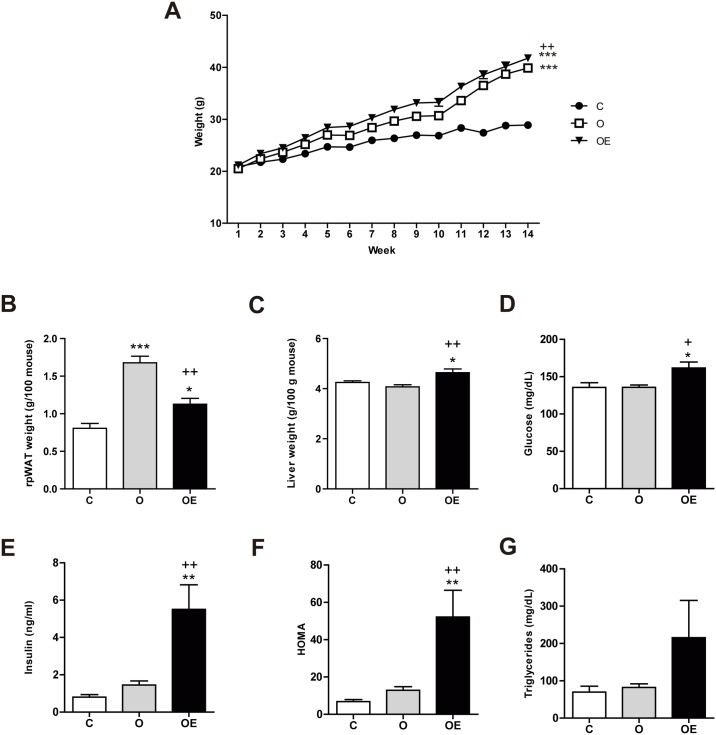
C57BL/6J mice were fed with a high-fat diet for 14 weeks, with (OE group) or without (O group) vitamin E supplementation.
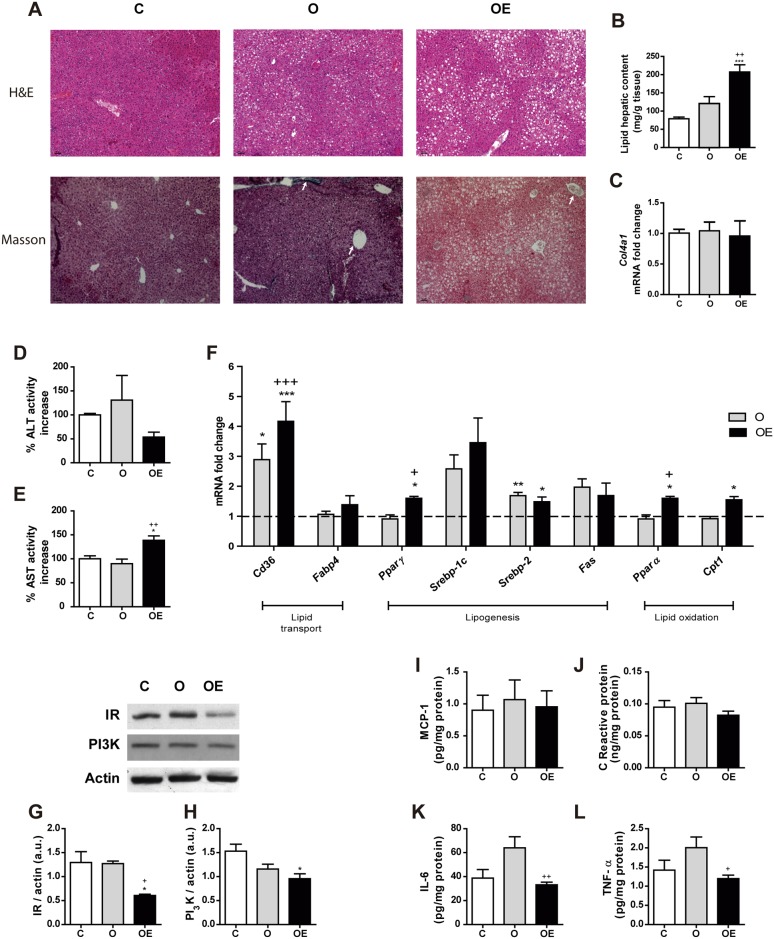
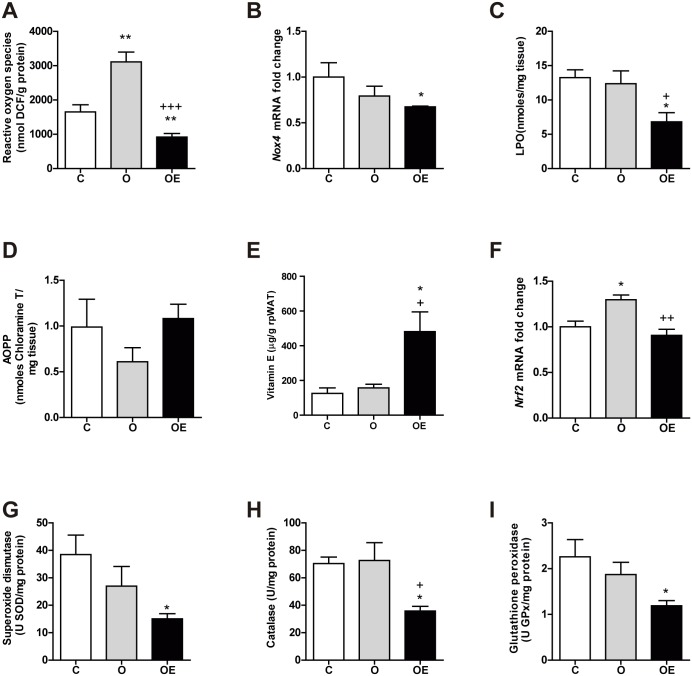
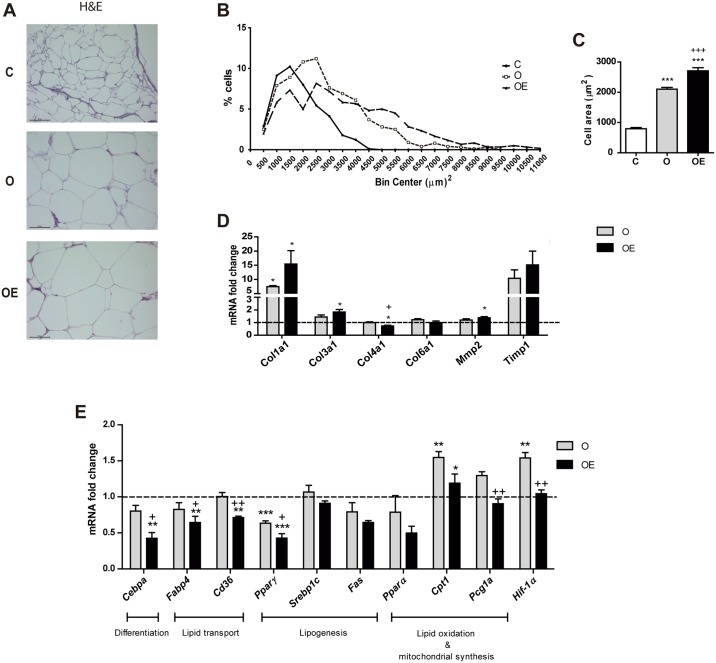
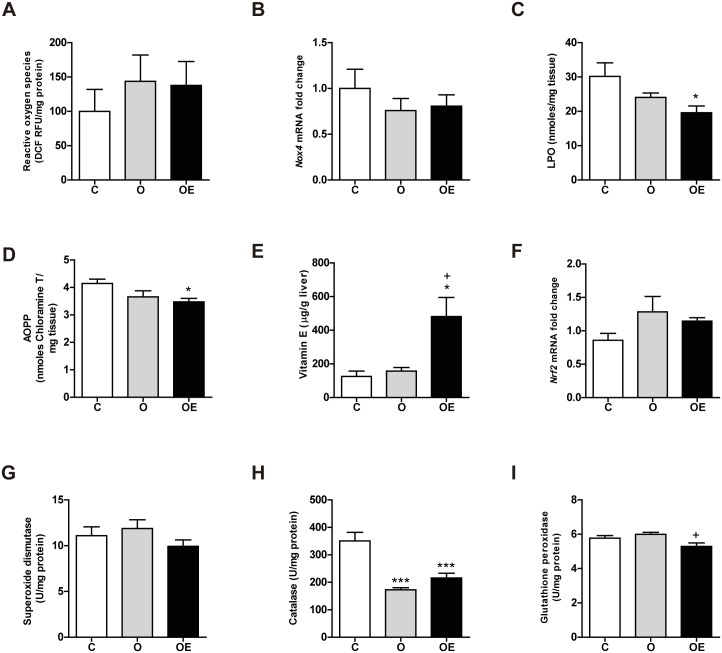
O mice developed a mild degree of obesity, which was not enough to induce metabolic alterations or oxidative stress. These animals exhibited a healthy expansion of retroperitoneal white adipose tissue (rpWAT) and the liver showed no signs of lipotoxicity. Interestingly, despite achieving a similar body weight, OE mice were insulin resistant. In the rpWAT they presented a reduced generation of ROS, even below physiological levels (C: 1651.0 ± 212.0; O: 3113 ± 284.7; OE: 917.6 ±104.4 RFU/mg protein. C vs OE p< 0.01). ROS decay may impair their action as second messengers, which could account for the reduced adipocyte differentiation, lipid transport and adipogenesis compared to the O group. Together, these processes limited the expansion of this fat pad and as a consequence, lipid flux shifted towards the liver, causing steatosis and hepatomegaly, which may contribute to the marked insulin resistance.
This study provides in vivo evidence for the role of ROS as second messengers in adipogenesis, lipid metabolism and insulin signaling. Reducing ROS generation below physiological levels when the oxidative process has not yet been established may be the cause of the controversial results obtained by antioxidant therapy.
抗氧化疗法用于治疗心血管疾病、糖尿病或肥胖症等与氧化应激相关的疾病仍存在争议。我们的目的是在肥胖小鼠模型中证明,由于生理水平下活性氧生成减少,在氧化应激形成之前使用抗氧化补充剂可能会产生负面影响。
给C57BL/6J小鼠喂食高脂饮食14周,一组添加维生素E(OE组),另一组不添加(O组)。
O组小鼠出现轻度肥胖,但不足以诱发代谢改变或氧化应激。这些动物的腹膜后白色脂肪组织(rpWAT)健康扩张,肝脏未显示脂毒性迹象。有趣的是,尽管OE组小鼠体重与O组相似,但出现了胰岛素抵抗。在rpWAT中,它们的活性氧生成减少,甚至低于生理水平(C组:1651.0±212.0;O组:3113±284.7;OE组:917.6±104.4 RFU/mg蛋白。C组与OE组比较,p<0.01)。活性氧的减少可能会损害其作为第二信使的作用,这可以解释与O组相比,OE组脂肪细胞分化、脂质转运和脂肪生成减少的原因。这些过程共同限制了该脂肪垫的扩张,结果脂质通量转向肝脏,导致脂肪变性和肝肿大,这可能是导致明显胰岛素抵抗的原因。
本研究为活性氧作为脂肪生成、脂质代谢和胰岛素信号传导中的第二信使的作用提供了体内证据。在氧化过程尚未建立时将活性氧生成降低到生理水平以下可能是抗氧化疗法产生争议性结果的原因。