Wang Lu, Li Ning, Lin Dongdong, Zang Yunjin
Department of Surgery and Liver Transplantation Center, Capital Medical University Affiliated Youan Hospital, Beijing, China.
Oncotarget. 2017 Jun 27;8(39):65414-65420. doi: 10.18632/oncotarget.18676. eCollection 2017 Sep 12.
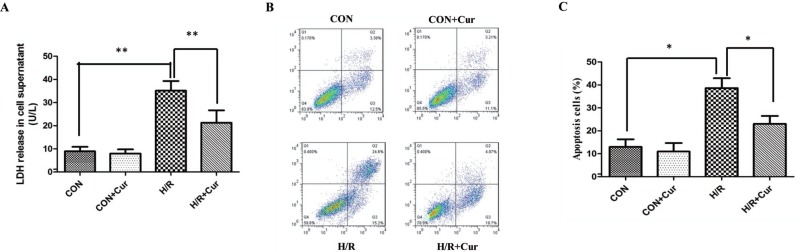
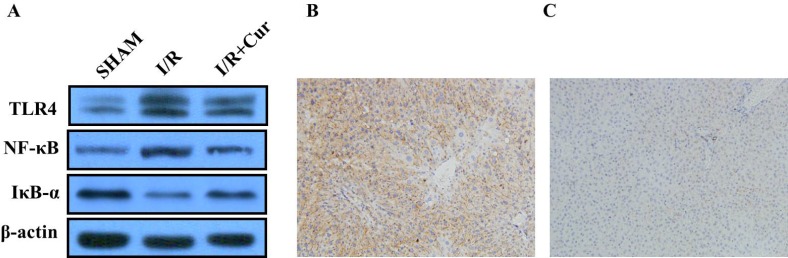
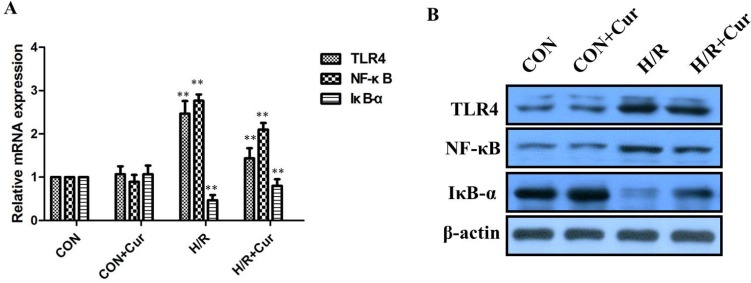
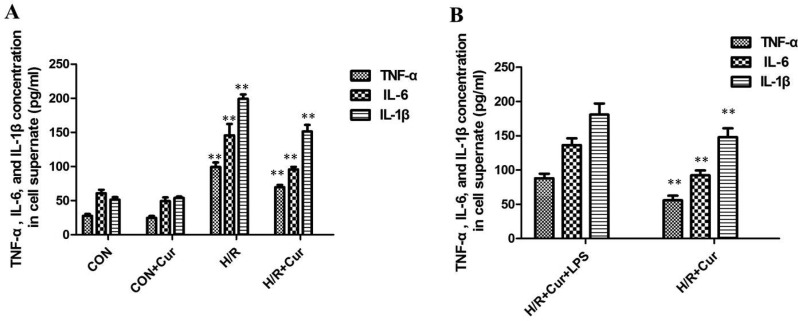
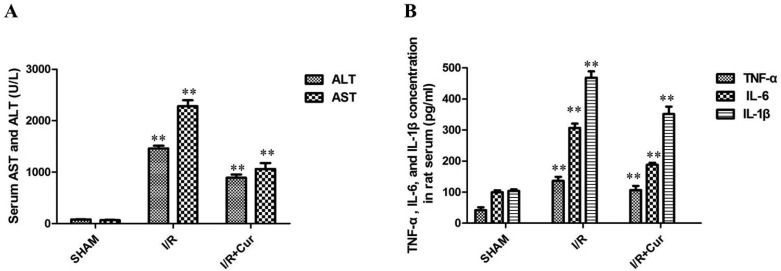
The TLR4/NF-κB pathway had important roles in hepatic ischemia/reperfusion (I/R) injury. In this study, we reported a protective effect of curcumin against hepatic I/R injury via TLR4/NF-κB pathway. Curcumin significantly inhibited cell apoptosis, and decreased levels of LDH and production of TNF-a, IL-1b, and IL-6 in the cell supernatant. In addition, curcumin ameliorated elevated TLR4 and NF-κB caused by hypoxia/reoxygenation stimulation in BRL-3A cells. In vivo assays revealed that curcumin reduce levels of ALT and AST, and reversed TLR4/NF-κB signaling pathway caused by hepatic I/R stimulation in liver tissues. These results suggested that curcumin ameliorates hepatic I/R injury, which may be mediated in part via the TLR4/NF-κB signaling pathway.
TLR4/NF-κB信号通路在肝脏缺血/再灌注(I/R)损伤中起重要作用。在本研究中,我们报道了姜黄素通过TLR4/NF-κB信号通路对肝脏I/R损伤具有保护作用。姜黄素显著抑制细胞凋亡,并降低细胞上清液中乳酸脱氢酶(LDH)水平以及肿瘤坏死因子-α(TNF-α)、白细胞介素-1β(IL-1β)和白细胞介素-6(IL-6)的产生。此外,姜黄素改善了缺氧/复氧刺激引起的BRL-3A细胞中TLR4和NF-κB的升高。体内实验表明,姜黄素降低了谷丙转氨酶(ALT)和谷草转氨酶(AST)水平,并逆转了肝脏I/R刺激在肝组织中引起的TLR4/NF-κB信号通路。这些结果表明,姜黄素可改善肝脏I/R损伤,这可能部分通过TLR4/NF-κB信号通路介导。