
探索自我伤害在线支持社区的治疗作用:一项针对成员的在线调查
Exploring the Therapeutic Affordances of Self-Harm Online Support Communities: An Online Survey of Members.
作者信息
Coulson Neil S, Bullock Emma, Rodham Karen
机构信息
University of Nottingham, Nottingham, United Kingdom.
Staffordshire University, Stoke-on-Trent, United Kingdom.
出版信息
JMIR Ment Health. 2017 Oct 13;4(4):e44. doi: 10.2196/mental.8084.
BACKGROUND
A growing number of online communities have been established to support those who self-harm. However, little is known about the therapeutic affordances arising from engagement with these communities and resulting outcomes.
OBJECTIVE
The aim of this study was to explore the presence of therapeutic affordances as reported by members of self-harm online support communities.
METHODS
In total, 94 respondents (aged 13-63 years, mean=23.5 years; 94% female) completed an online survey exploring their experiences of engaging with a self-harm online support community. Respondents varied in terms of how long they had been accessing an online community, with 22% (21/94) accessing less than 1 year, 39% (37/94) 1 to 2 years, 14% (13/94) 2 to 3 years, and 24.5% (23/94) more than 3 years. Responses were analyzed using deductive thematic analysis.
RESULTS
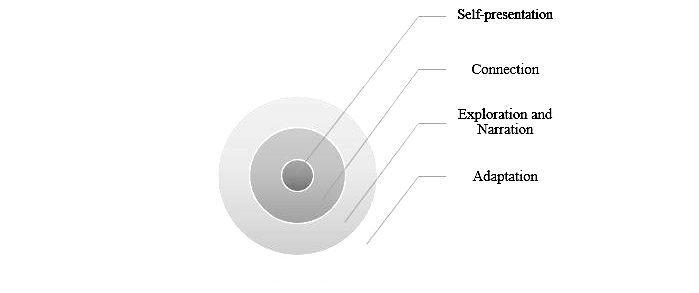
The results of our analysis describe each of the five therapeutic affordances that were present in the data, namely (1) connection, the ability to make contact with others who self-harm for the purposes of mutual support and in so doing reduce feelings of loneliness and isolation; (2) adaptation, that is, how use of online support varies in relation to the personal circumstances of the individual user; (3) exploration, that is, the ability to learn about self-harm and learn about strategies to reduce or stop self-harming behavior; (4) narration, that is, the ability to share experiences, as well as read about the experiences of others; and (5) self-presentation, that is, how and what users present about themselves to others in the online community.
CONCLUSIONS
Our findings suggest that engagement with self-harm online support communities may confer a range of therapeutic benefits for some users, which may serve to minimize the psychosocial burden of self-harm and promote positive coping strategies. In addition, the online nature of the support available may be helpful to those who are unable to access face-to-face support.
背景
越来越多的在线社区已建立起来,以支持那些自我伤害者。然而,对于参与这些社区所产生的治疗效果以及最终结果,我们知之甚少。
目的
本研究的目的是探讨自我伤害在线支持社区成员所报告的治疗效果的存在情况。
方法
共有94名受访者(年龄在13 - 63岁之间,平均年龄 = 23.5岁;94%为女性)完成了一项在线调查,该调查探讨了他们参与自我伤害在线支持社区的经历。受访者访问在线社区的时间各不相同,22%(21/94)访问时间不到1年,39%(37/94)为1至2年,14%(13/94)为2至3年,24.5%(23/94)超过3年。使用演绎主题分析法对回答进行了分析。
结果
我们的分析结果描述了数据中存在的五种治疗效果,即:(1)联系,即与其他自我伤害者建立联系以获得相互支持,从而减少孤独感和孤立感的能力;(2)适应,即在线支持的使用如何因个体用户的个人情况而有所不同;(3)探索,即了解自我伤害以及学习减少或停止自我伤害行为策略的能力;(4)叙述,即分享自身经历以及阅读他人经历的能力;(5)自我呈现,即用户在在线社区中如何以及向他人呈现自己。
结论
我们的研究结果表明,参与自我伤害在线支持社区可能会为一些用户带来一系列治疗益处,这可能有助于减轻自我伤害的心理社会负担并促进积极的应对策略。此外,所提供支持的在线性质可能对那些无法获得面对面支持的人有所帮助。
 Zotero 插件