Extremity Trauma and Regenerative Medicine, United States Army Institute of Surgical Research, Fort Sam Houston, TX, USA.
Massachusetts Institute of Technology, Lincoln Laboratory, Lexington, MA, USA.
Sci Rep. 2017 Oct 13;7(1):13179. doi: 10.1038/s41598-017-13306-2.
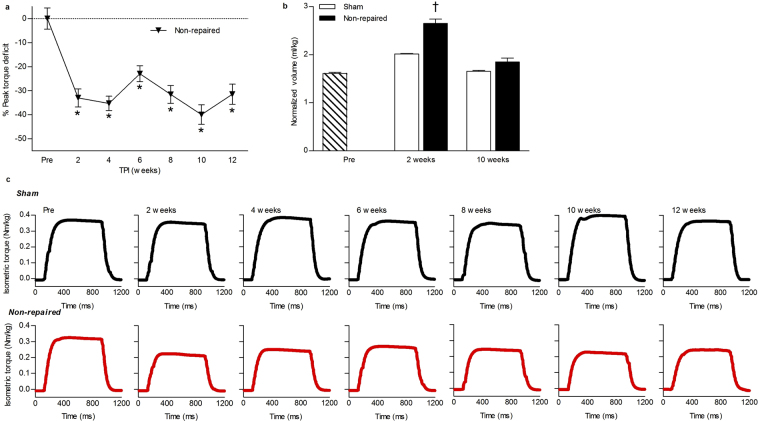
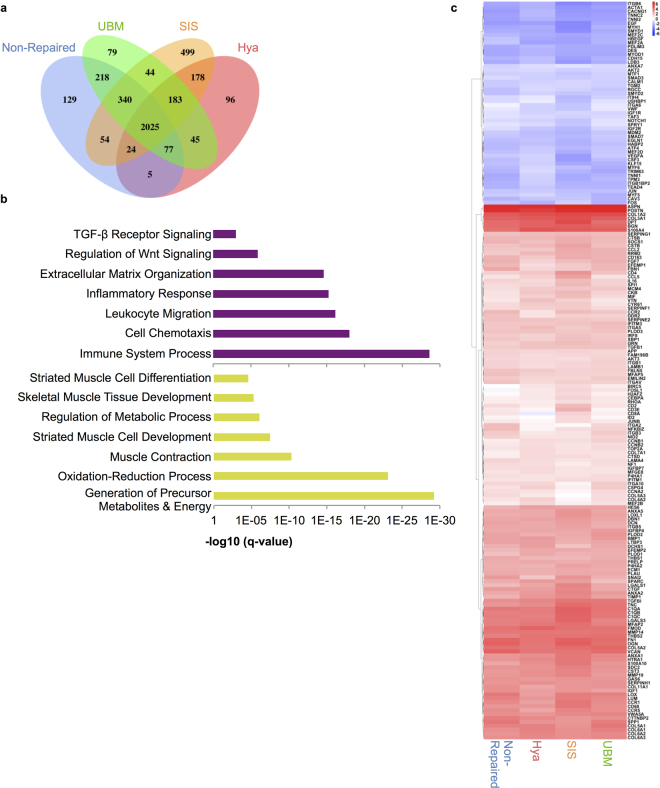
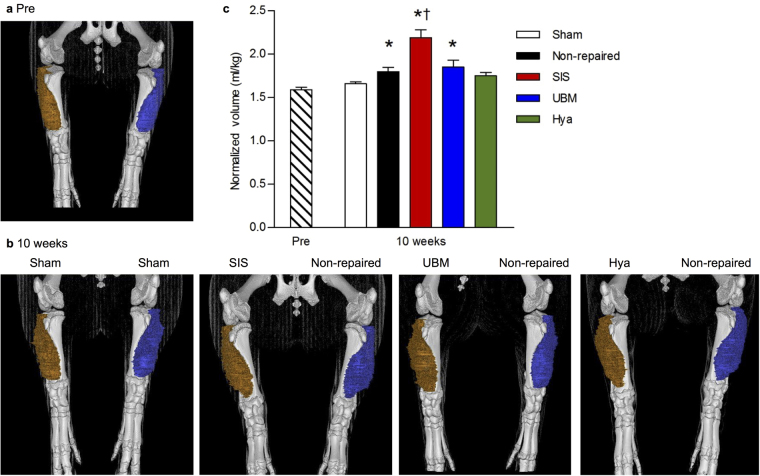
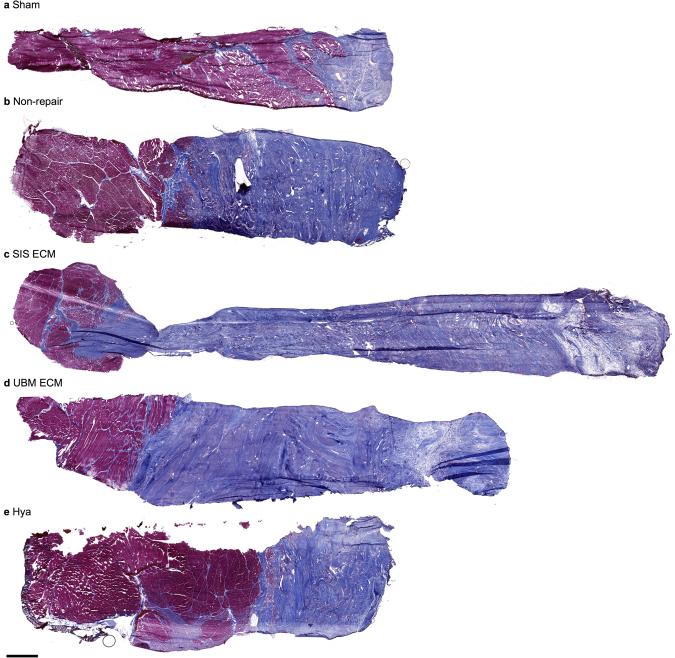
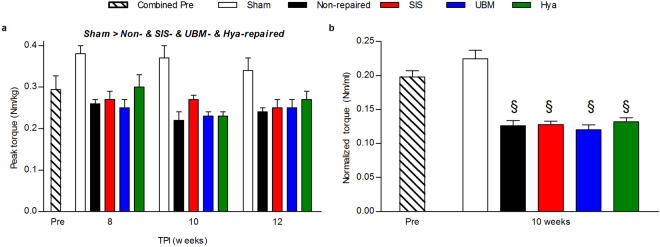
Volumetric muscle loss (VML) resulting from extremity trauma presents chronic and persistent functional deficits which ultimately manifest disability. Acellular biological scaffolds, or decellularized extracellular matrices (ECMs), embody an ideal treatment platform due to their current clinical use for soft tissue repair, off-the-shelf availability, and zero autogenous donor tissue burden. ECMs have been reported to promote functional skeletal muscle tissue remodeling in small and large animal models of VML injury, and this conclusion was reached in a recent clinical trial that enrolled 13 patients. However, numerous other pre-clinical reports have not observed ECM-mediated skeletal muscle regeneration. The current study was designed to reconcile these discrepancies. The capacity of ECMs to orchestrate functional muscle tissue remodeling was interrogated in a porcine VML injury model using unbiased assessments of muscle tissue regeneration and functional recovery. Here, we show that VML injury incites an overwhelming inflammatory and fibrotic response that leads to expansive fibrous tissue deposition and chronic functional deficits, which ECM repair does not augment.
由于外伤导致的容积性肌肉损失 (VML) 会导致慢性和持续的功能缺陷,最终导致残疾。去细胞生物支架或脱细胞细胞外基质 (ECM) 由于其目前在软组织修复中的临床应用、现成可用性和零自体供体组织负担,是一种理想的治疗平台。已经有报道称,ECM 可促进 VML 损伤的小型和大型动物模型中的功能性骨骼肌组织重塑,最近的一项临床试验招募了 13 名患者得出了这一结论。然而,许多其他临床前报告并没有观察到 ECM 介导的骨骼肌再生。本研究旨在调和这些差异。本研究通过对肌肉组织再生和功能恢复的无偏评估,在猪 VML 损伤模型中探究了 ECM 协调功能性肌肉组织重塑的能力。在这里,我们表明,VML 损伤会引发强烈的炎症和纤维化反应,导致广泛的纤维组织沉积和慢性功能缺陷,而 ECM 修复并不能增强这种反应。