Aguilar Carlos A, Pop Ramona, Shcherbina Anna, Watts Alain, Matheny Ronald W, Cacchiarelli Davide, Han Woojin M, Shin Eunjung, Nakhai Shadi A, Jang Young C, Carrigan Christopher T, Gifford Casey A, Kottke Melissa A, Cesana Marcella, Lee Jackson, Urso Maria L, Meissner Alexander
Lincoln Laboratory, Massachusetts Institute of Technology, Lexington, MA 02127, USA.
Broad Institute of MIT and Harvard, Cambridge, MA 02142, USA; Department of Stem Cell and Regenerative Biology, Harvard Stem Cell Institute, Harvard University, Cambridge, MA 02138, USA.
Stem Cell Reports. 2016 Nov 8;7(5):983-997. doi: 10.1016/j.stemcr.2016.09.009. Epub 2016 Oct 20.
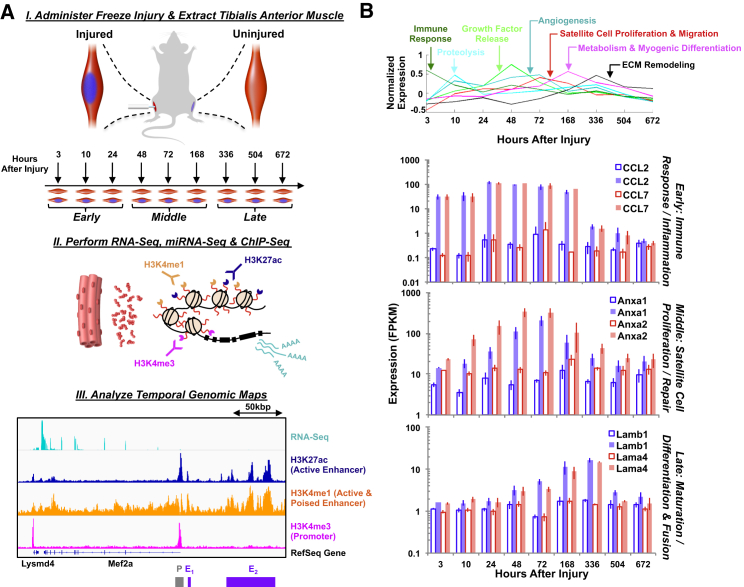
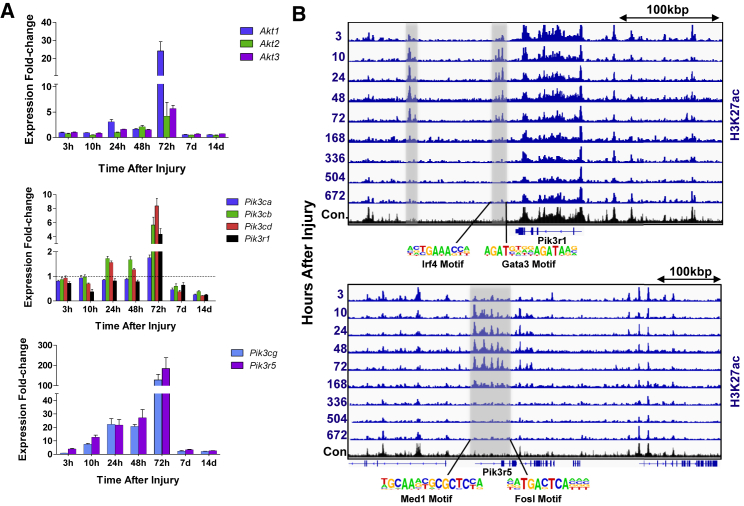
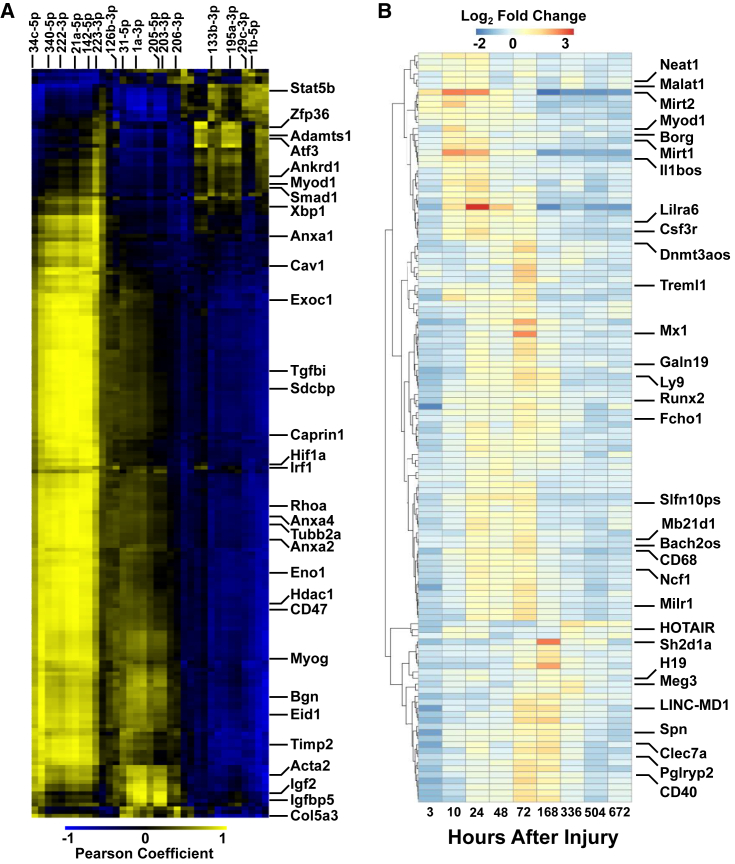
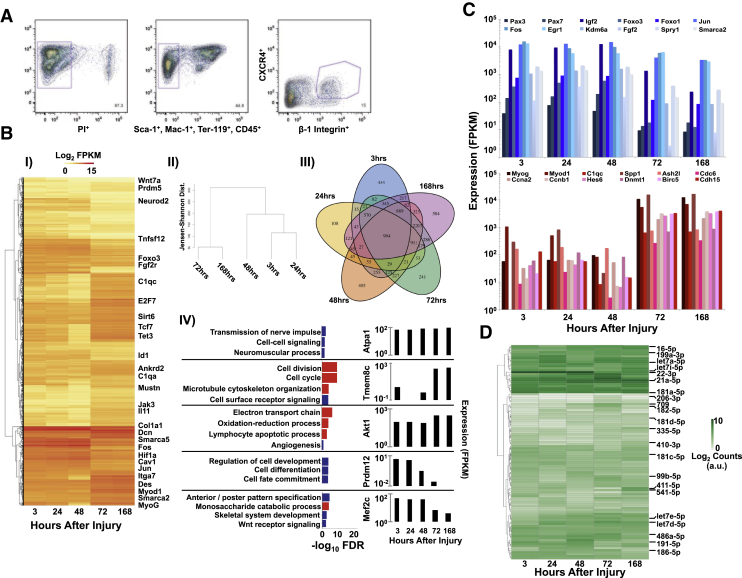
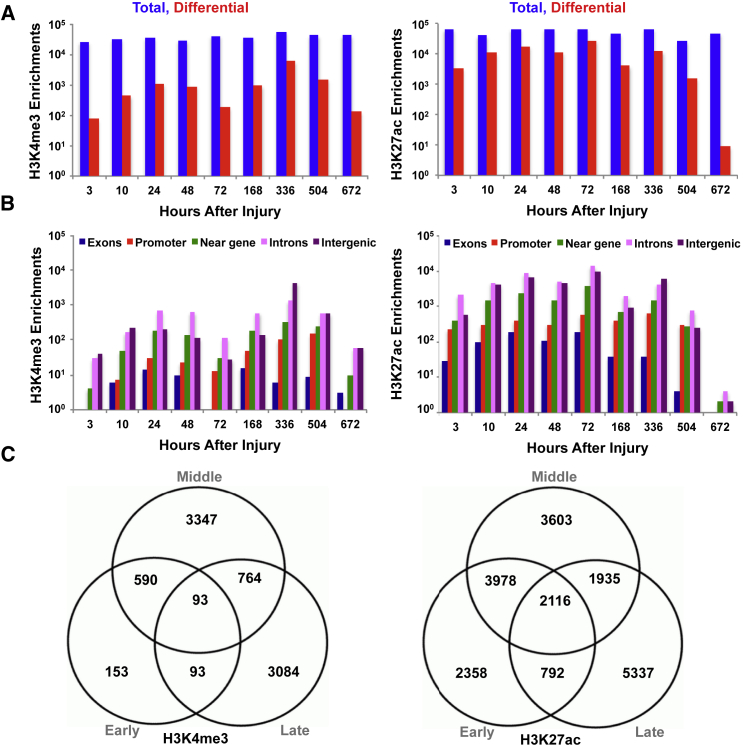
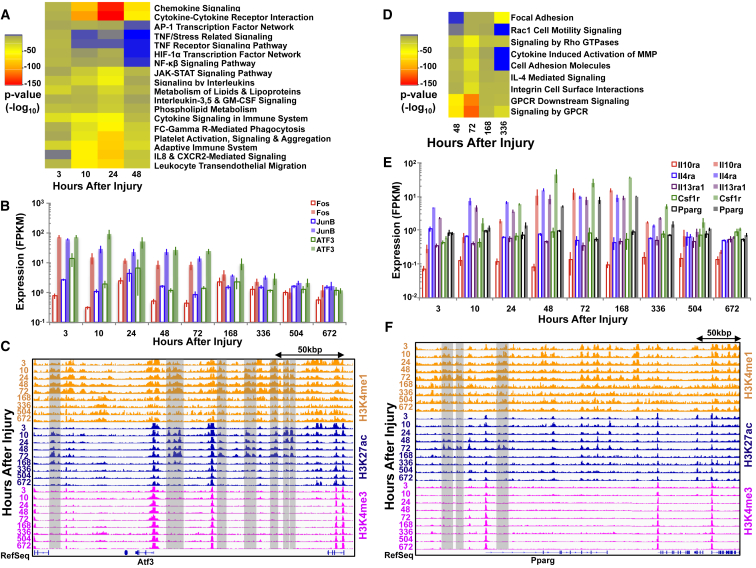
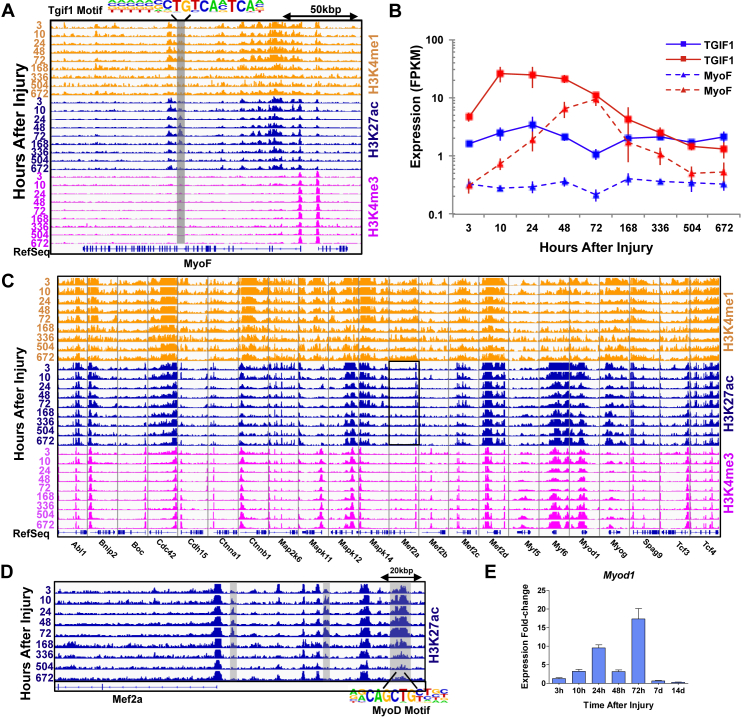
Following injury, adult skeletal muscle undergoes a well-coordinated sequence of molecular and physiological events to promote repair and regeneration. However, a thorough understanding of the in vivo epigenomic and transcriptional mechanisms that control these reparative events is lacking. To address this, we monitored the in vivo dynamics of three histone modifications and coding and noncoding RNA expression throughout the regenerative process in a mouse model of traumatic muscle injury. We first illustrate how both coding and noncoding RNAs in tissues and sorted satellite cells are modified and regulated during various stages after trauma. Next, we use chromatin immunoprecipitation followed by sequencing to evaluate the chromatin state of cis-regulatory elements (promoters and enhancers) and view how these elements evolve and influence various muscle repair and regeneration transcriptional programs. These results provide a comprehensive view of the central factors that regulate muscle regeneration and underscore the multiple levels through which both transcriptional and epigenetic patterns are regulated to enact appropriate repair and regeneration.
受伤后,成年骨骼肌会经历一系列协调良好的分子和生理事件,以促进修复和再生。然而,目前尚缺乏对控制这些修复事件的体内表观基因组和转录机制的全面了解。为了解决这一问题,我们在创伤性肌肉损伤小鼠模型的整个再生过程中,监测了三种组蛋白修饰以及编码和非编码RNA表达的体内动态变化。我们首先阐述了创伤后不同阶段组织和分选卫星细胞中的编码和非编码RNA是如何被修饰和调控的。接下来,我们采用染色质免疫沉淀测序技术来评估顺式调控元件(启动子和增强子)的染色质状态,并观察这些元件如何演变以及影响各种肌肉修复和再生转录程序。这些结果提供了调控肌肉再生的核心因素的全面视图,并强调了转录和表观遗传模式通过多个层面进行调控以实现适当修复和再生的过程。