Department of Molecular Gastroenterology and Hepatology, Graduate School of Medical Science, Kyoto Prefectural University of Medicine, Kyoto, Japan.
Department of Infectious Diseases, Graduate School of Medical Science, Kyoto Prefectural University of Medicine, Kyoto, Japan.
Sci Rep. 2017 Oct 13;7(1):13186. doi: 10.1038/s41598-017-13732-2.
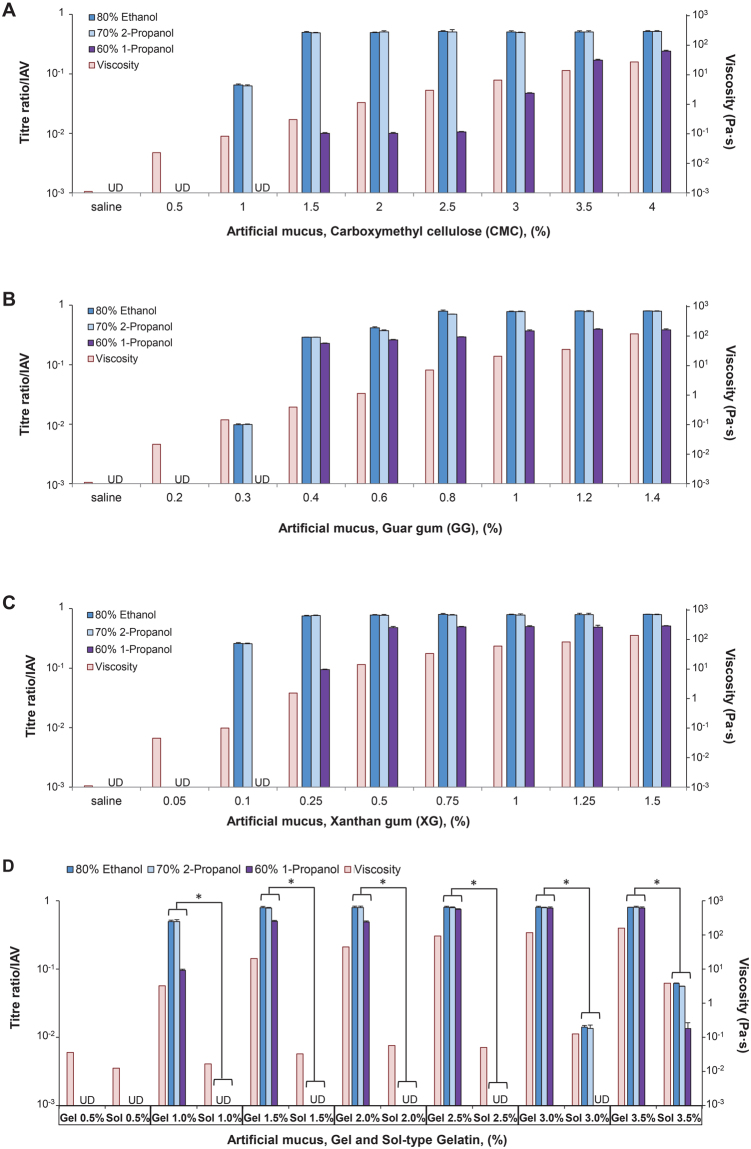
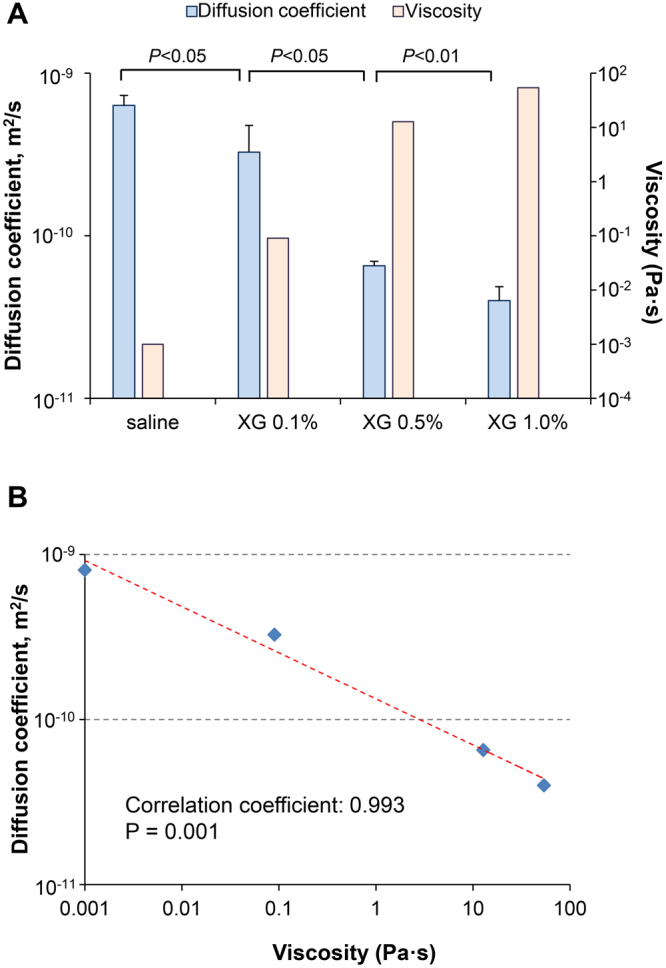
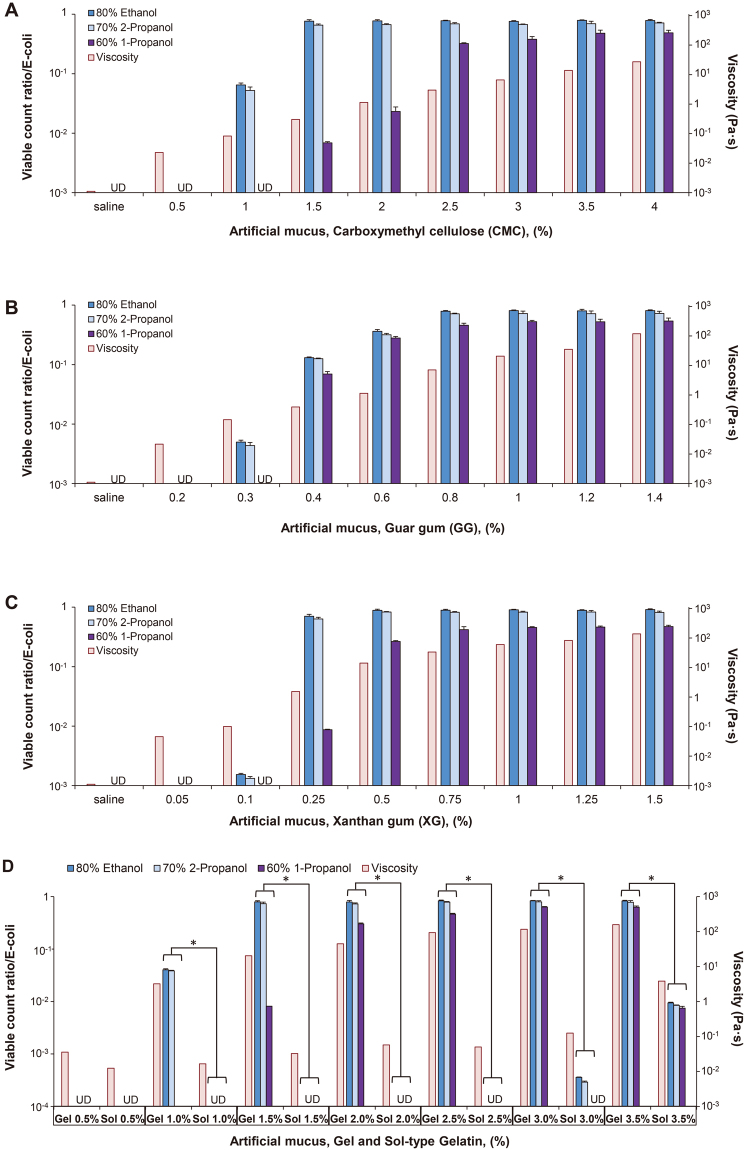
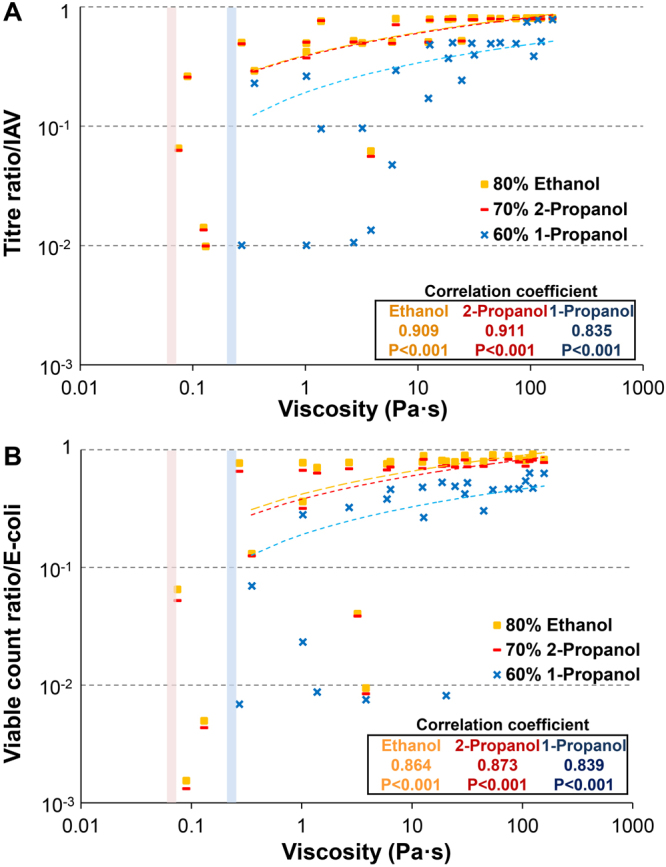
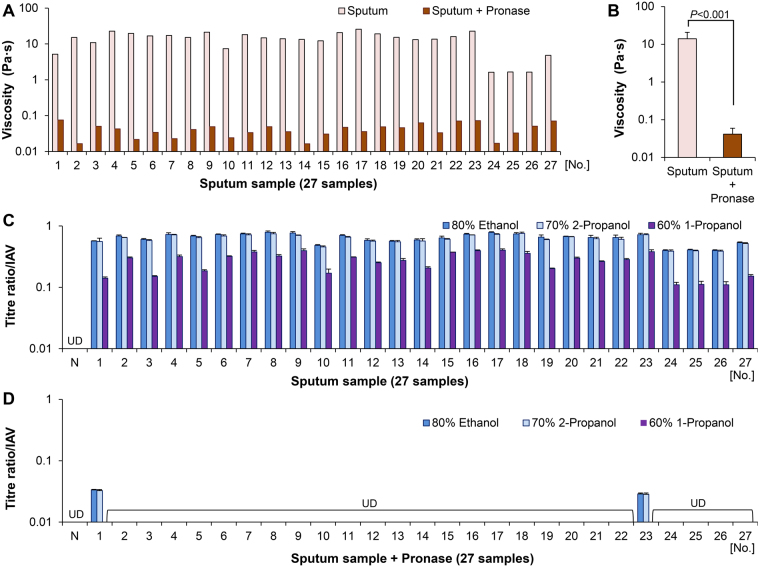
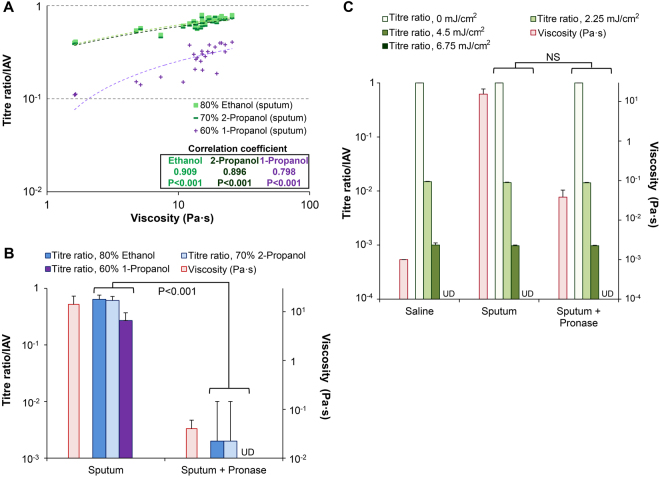
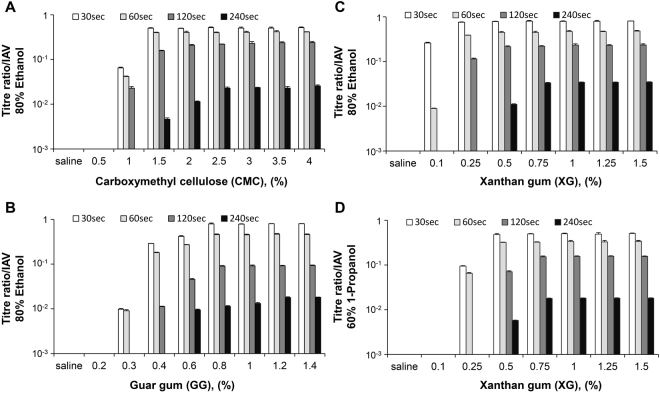
Alcohol-based disinfectants play an important role in the prevention of healthcare-acquired infection (HAI). We investigated whether pathogens present in mucus acquire resistance to alcohol-based disinfectants, and elucidated the underlying mechanism. Both the resistance of influenza A virus and Escherichia coli to alcohol-based disinfectants or ultraviolet irradiation and the diffusion rate of ethanol were determined in artificial mucus or sputum samples obtained from 27 individuals with acute upper respiratory infection. Pathogens in mucus (artificial mucus or sputum samples) were not completely inactivated by alcohol-based disinfectants (survival rate >10%), suggesting that the alcohol-based disinfectants were ineffective. Pathogen survival and mucus viscosity were strongly correlated (correlation coefficient >0.7, P < 0.001). Additionally, the ethanol diffusion rate decreased with increasing mucus viscosity, which contributed to ethanol resistance. Pronase treatment of sputum samples significantly decreased sputum viscosity and increased the disinfectant effect (P < 0.001 for all). In contrast, complete inactivation was achieved by ultraviolet irradiation independently of mucus viscosity. Thus, mucus viscosity contributes to resistance of pathogens to alcohol-based disinfectants by decreasing the alcohol diffusion rate. These findings can provide a basis for developing new strategies, including improved disinfectants, for overcoming HAI.
酒精类消毒剂在预防医源性感染(HAI)方面发挥着重要作用。我们研究了黏液中存在的病原体是否会对酒精类消毒剂产生耐药性,并阐明了其潜在机制。在从 27 名急性上呼吸道感染患者获得的人工黏液或痰样本中,测定了甲型流感病毒和大肠杆菌对酒精类消毒剂或紫外线照射的耐药性以及乙醇的扩散率。黏液中的病原体(人工黏液或痰样本)并未被酒精类消毒剂完全灭活(存活率>10%),这表明酒精类消毒剂无效。病原体存活与黏液黏度呈强相关性(相关系数>0.7,P<0.001)。此外,随着黏液黏度的增加,乙醇的扩散率降低,导致乙醇耐药性增加。痰液样本中的蛋白酶处理显著降低了痰液黏度并提高了消毒剂效果(所有 P<0.001)。相比之下,紫外线照射可独立于黏液黏度实现完全灭活。因此,黏液黏度通过降低酒精扩散率来导致病原体对酒精类消毒剂产生耐药性。这些发现可为开发新策略提供依据,包括改进的消毒剂,以克服 HAI。