Jimenez Ambar S, Jaramillo Francesca, Hemraz Usha D, Boluk Yaman, Ckless Karina, Sunasee Rajesh
Department of Chemistry, State University of New York at Plattsburgh, Plattsburgh, NY, USA.
National Research Council, Montreal, QC, Canada.
Nanotechnol Sci Appl. 2017 Sep 28;10:123-136. doi: 10.2147/NSA.S145891. eCollection 2017.
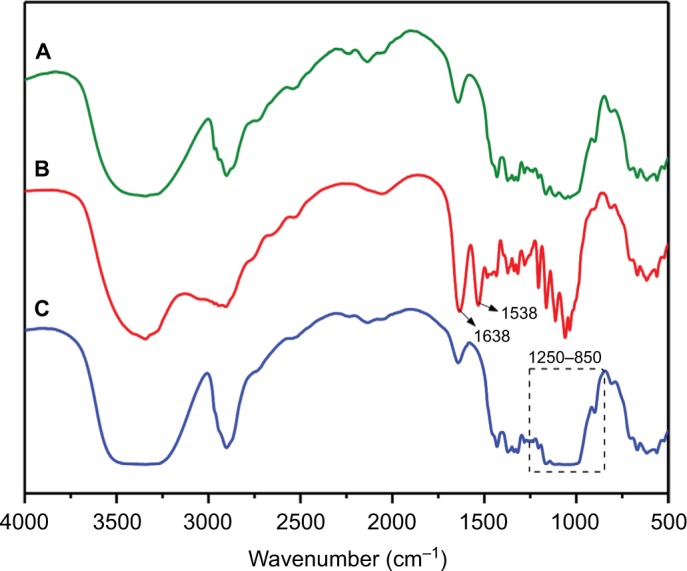
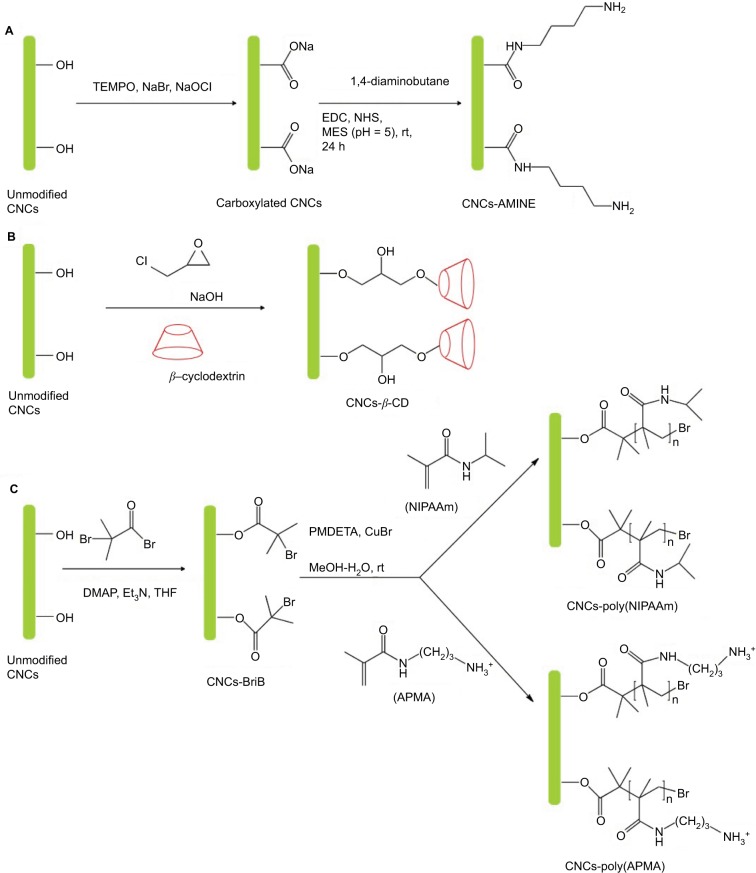
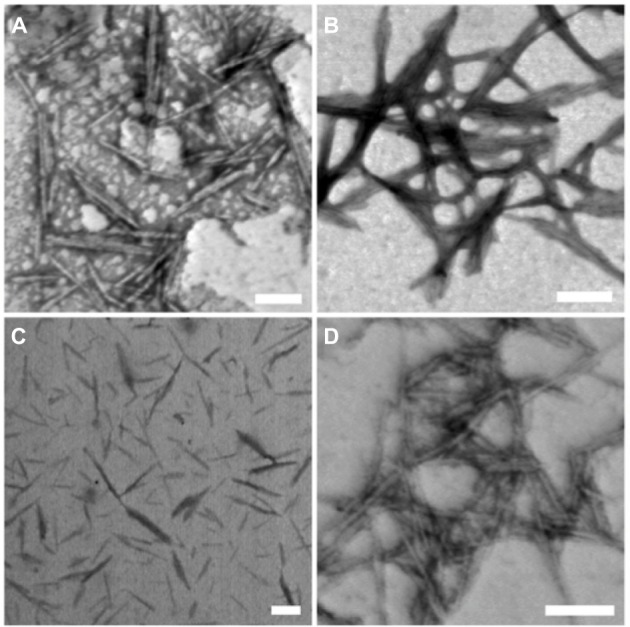
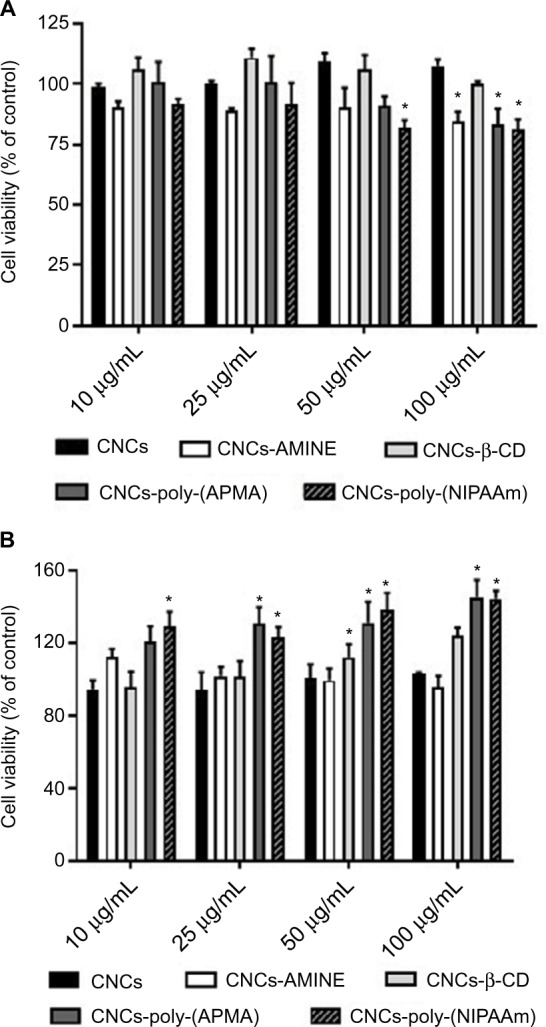
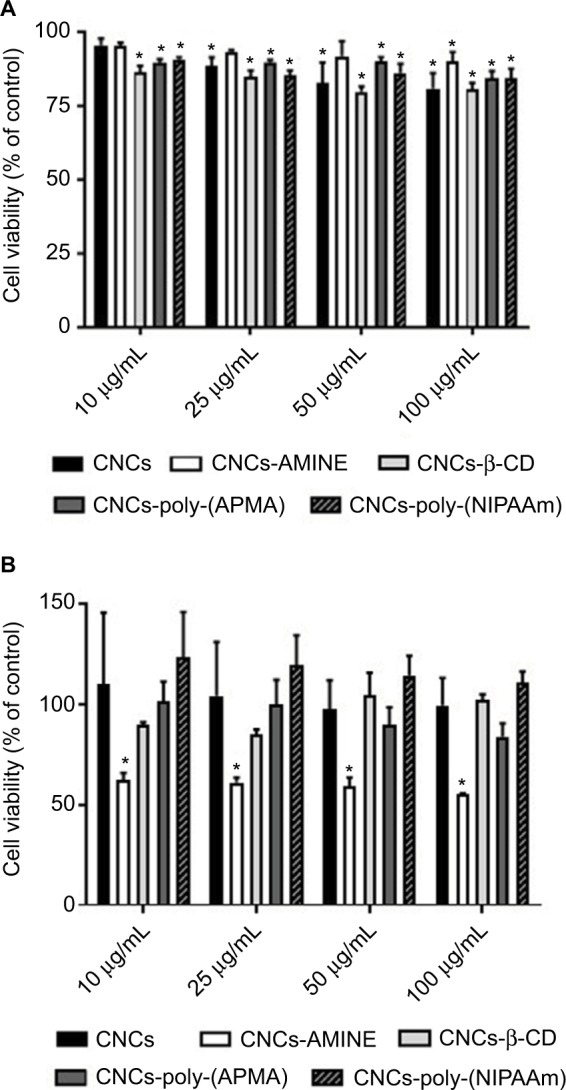
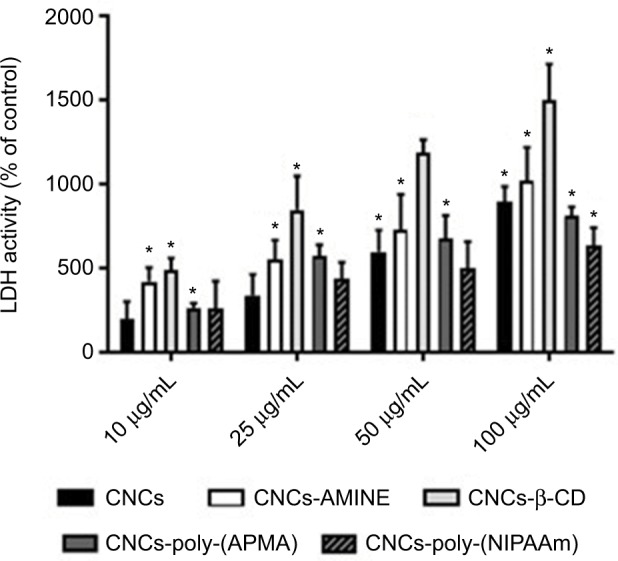
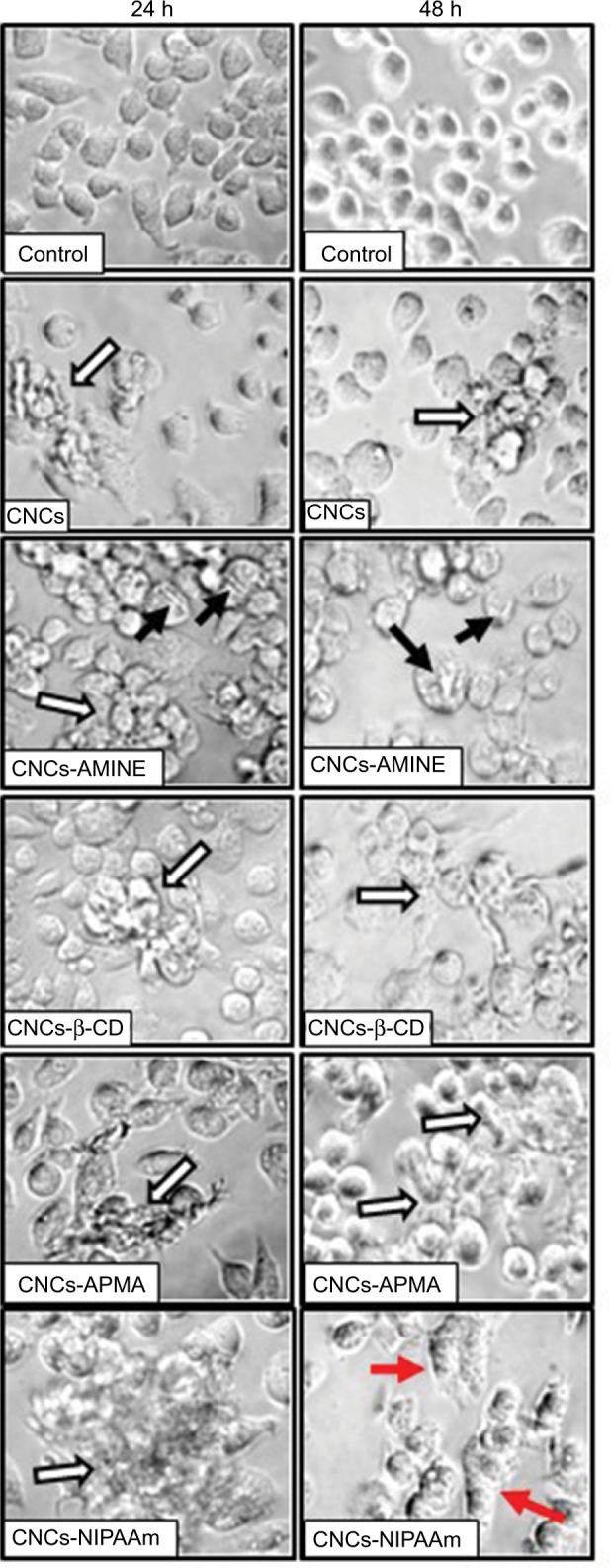
Cellulose nanocrystals (CNCs) have emerged as promising candidates for a number of bio-applications. Surface modification of CNCs continues to gain significant research interest as it imparts new properties to the surface of the nanocrystals for the design of multifunctional CNCs-based materials. A small chemical surface modification can potentially lead to drastic behavioral changes of cell-material interactions thereby affecting the intended bio-application. In this work, unmodified CNCs were covalently decorated with four different organic moieties such as a diaminobutane fragment, a cyclic oligosaccharide (-cyclodextrin), a thermoresponsive polymer (poly[-isopropylacrylamide]), and a cationic aminomethacrylamide-based polymer using different synthetic covalent methods. The effect of surface coatings of CNCs and the respective dose-response of the above organic moieties on the cell viability were evaluated on mammalian cell cultures (J774A.1 and MFC-7), using 3-(4,5-dimethylthiazol-2-yl)-2,5-diphe-nyltetrazolium bromide and lactate dehydrogenase assays. Overall, the results indicated that cells exposed to surface-coated CNCs for 24 h did not display major changes in cell viability, membrane permeability as well as cell morphology. However, with longer exposure, all these parameters were somewhat affected, which appears not to be correlated with either anionic or cationic surface coatings of CNCs used in this study.
纤维素纳米晶体(CNCs)已成为许多生物应用中颇具潜力的候选材料。CNCs的表面改性一直备受研究关注,因为它能赋予纳米晶体表面新的特性,以设计基于多功能CNCs的材料。微小的化学表面改性可能会导致细胞与材料相互作用的行为发生剧烈变化,从而影响预期的生物应用。在这项工作中,使用不同的合成共价方法,将未改性的CNCs与四种不同的有机部分共价修饰,如二氨基丁烷片段、环状寡糖(β-环糊精)、热响应聚合物(聚[ -异丙基丙烯酰胺])和基于阳离子氨基甲基丙烯酰胺的聚合物。使用3 -(4,5 -二甲基噻唑-2 -基)-2,5 -二苯基四氮唑溴盐和乳酸脱氢酶测定法,在哺乳动物细胞培养物(J774A.1和MFC - 7)上评估了CNCs表面涂层的效果以及上述有机部分各自对细胞活力的剂量反应。总体而言,结果表明,暴露于表面涂层CNCs 24小时的细胞在细胞活力、膜通透性以及细胞形态方面未显示出重大变化。然而,随着暴露时间延长,所有这些参数都受到了一定程度的影响,这似乎与本研究中使用的CNCs的阴离子或阳离子表面涂层均无关。