Blocker Kenneth A, Wright Timothy J, Boot Walter R
Florida State University, Tallahassee, Florida, USA.
Gerontechnology. 2014;12(3):174-184. doi: 10.4017/gt.2014.12.3.008.00.
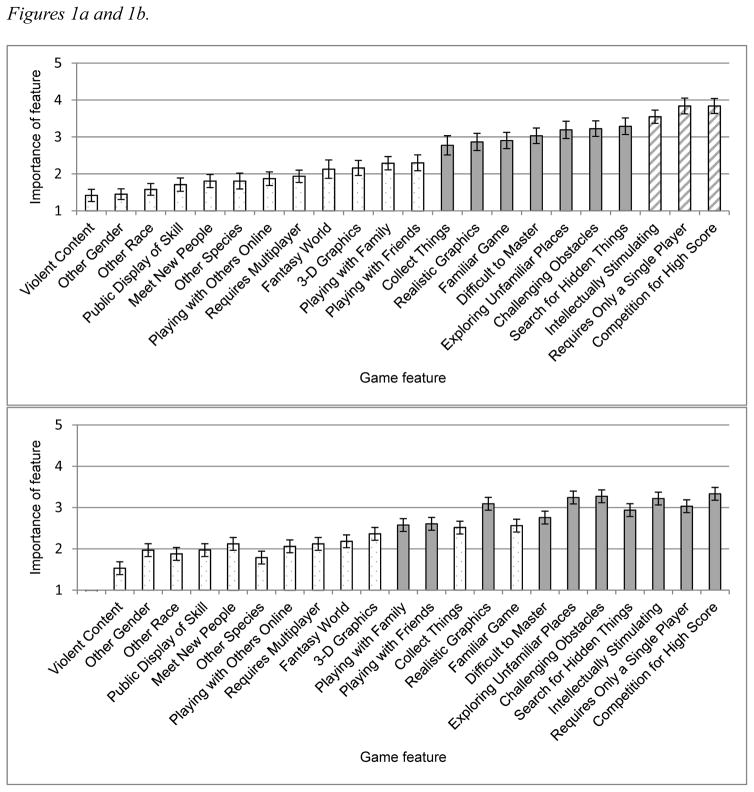
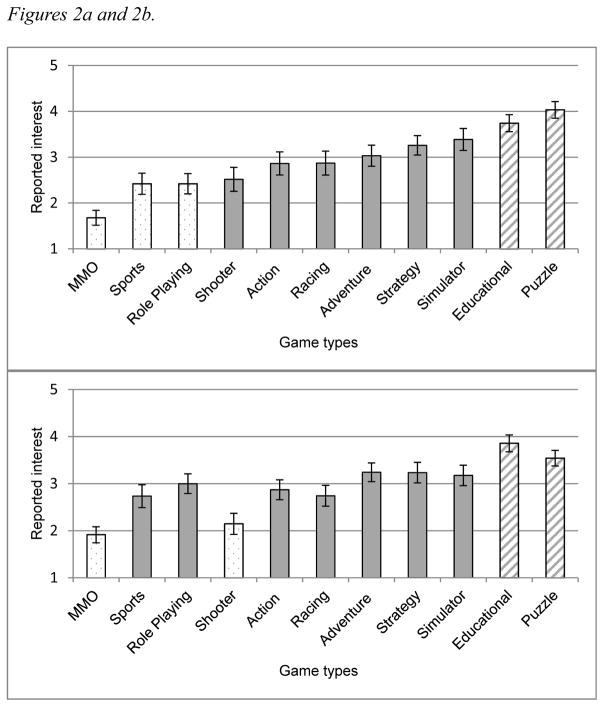
Increasing evidence suggests that action digital game training can improve a variety of perceptual and cognitive abilities, including those that decline most with age. Unfortunately, previous work has found that older adults dislike these games and adherence may be poor for action game-based interventions. The focus of the current study was to better understand the types of games older adults are willing to play and explore predictors of game preference (e.g., gender, age, technology experience, personality). With this information action games might be modified or developed to maximize adherence and cognitive benefit. Older adults were administered a modified version of an existing game questionnaire and a custom game preference survey. Clear preferences were observed that were similar between participants with and without previous digital game experience (with puzzle and intellectually stimulating games being most interesting to older adults in our sample, and massively multiplayer online games and first-person shooters being least interesting). Personality, demographic, and technology experience variables were also collected. Interesting trends suggested the possibility that several demographic and personality variables might be predictive of game preference. Results have implications for future directions of research, designing games that would appeal to older adult audiences, and for how to design custom games to maximize intervention adherence based on individual difference characteristics.
越来越多的证据表明,动作类数字游戏训练可以提高多种感知和认知能力,包括那些随年龄增长下降最为明显的能力。不幸的是,先前的研究发现,老年人不喜欢这类游戏,基于动作游戏的干预措施的依从性可能较差。当前研究的重点是更好地了解老年人愿意玩的游戏类型,并探索游戏偏好的预测因素(例如性别、年龄、技术经验、性格)。有了这些信息,动作游戏可能会被修改或开发,以最大限度地提高依从性和认知效益。研究人员对老年人进行了一份现有游戏问卷的修改版和一份定制的游戏偏好调查。结果观察到了明确的偏好,有数字游戏经验和没有数字游戏经验的参与者之间的偏好相似(在我们的样本中,益智和智力刺激类游戏对老年人最有吸引力,大型多人在线游戏和第一人称射击游戏最没有吸引力)。研究人员还收集了性格、人口统计学和技术经验变量。有趣的趋势表明,一些人口统计学和性格变量可能预测游戏偏好。研究结果对未来的研究方向、设计吸引老年受众的游戏以及如何根据个体差异特征设计定制游戏以最大限度地提高干预依从性具有启示意义。