Atolani Olubunmi, Adeyemi Stephen O, Akpan Essiet, Adeosun Charles B, Olatunji Gabriel A
Department of Chemical Sciences, Redeemer's University, P.M.B. 3005, Redemption Camp, Mowe, Ogun State, Nigeria.
Department of Chemistry, University of Ilorin, P.M.B. 1515, Ilorin, Nigeria.
EXCLI J. 2011 Nov 30;10:264-273. eCollection 2011.
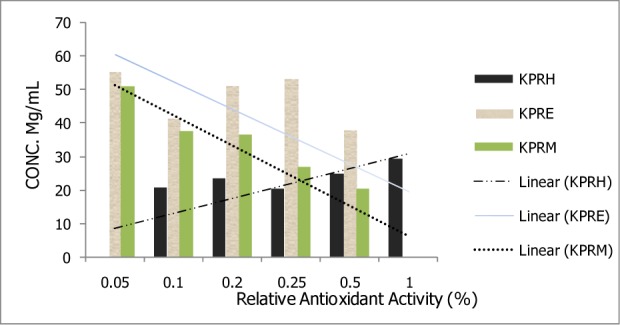
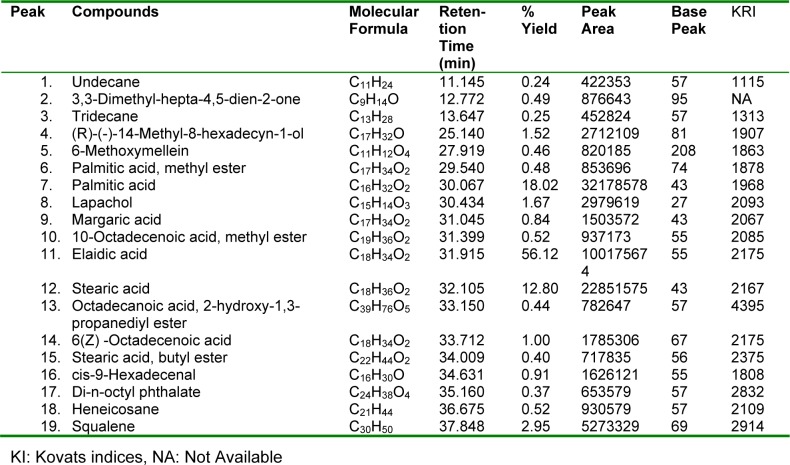
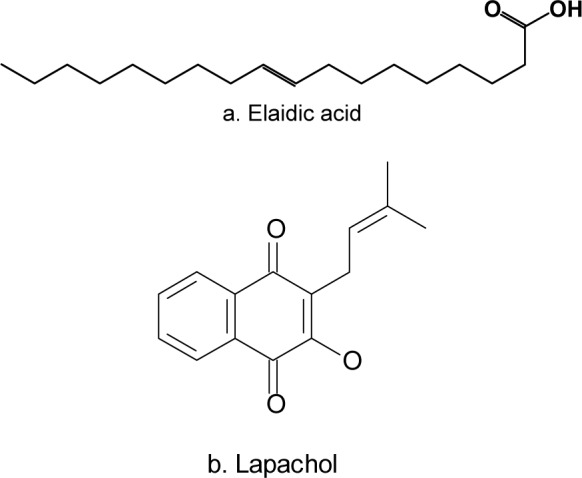
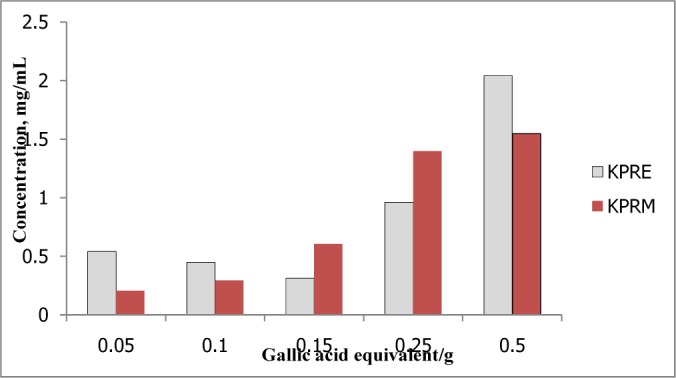
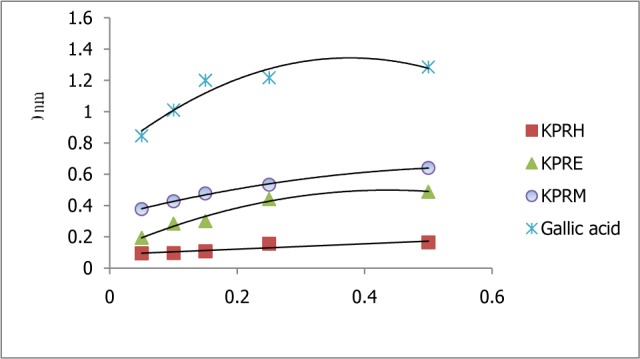
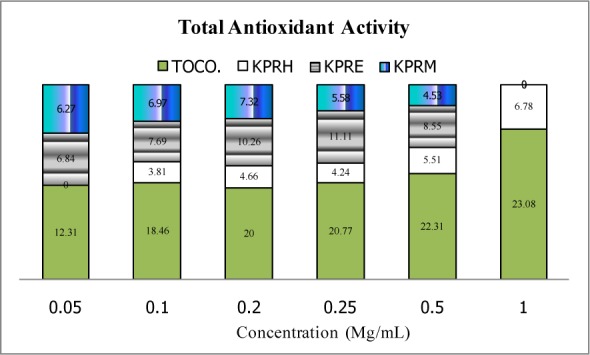
The chemical composition of root oil extracted with n-hexane was analyzed by GC/GCMS. The antioxidant potential of the oil was compared to that of ethyl acetate and methanol extracts of the root. UV and IR spectroscopic techniques were used to carry out partial characterization of the oil and extracts. The free radical scavenging activity by spectrophotometric assay on the reduction of 1,1-diphenyl-2-picrylhydrazyl (DPPH) was examined while the total antioxidant activity (TAA) and relative antioxidant activity (RAA) were compared with standard antioxidant, α-tocopherol. The antioxidant activity (which correlated with the total phenolic content of the extracts) was assumed to be from the total phenolic content of the extracts. TAA was found to be higher in methanol extract (at 0.25 mg/mL). We hereby report for the first time the major component of the oil from the root of to be elaidic acid (56.12 %). It is a reported toxicant which thereby underscores the risk in the use of the plant in traditional therapies.
采用气相色谱/气相色谱-质谱联用仪(GC/GCMS)分析了用正己烷提取的根油的化学成分。将该油的抗氧化潜力与根的乙酸乙酯提取物和甲醇提取物的抗氧化潜力进行了比较。利用紫外和红外光谱技术对该油和提取物进行了部分表征。通过分光光度法测定了1,1-二苯基-2-苦基肼(DPPH)还原反应的自由基清除活性,同时将总抗氧化活性(TAA)和相对抗氧化活性(RAA)与标准抗氧化剂α-生育酚进行了比较。抗氧化活性(与提取物的总酚含量相关)被认为来自提取物的总酚含量。发现甲醇提取物中的TAA较高(浓度为0.25 mg/mL)。我们首次在此报告,该植物根油的主要成分是反油酸(56.12%)。它是一种已报道的有毒物质,因此突出了在传统疗法中使用该植物的风险。