Santana Noemí, Artigas Francesc
Systems Neuropharmacology, Department of Neurochemistry and Neuropharmacology, Institut d'Investigacions Biomèdiques de Barcelona, Consejo Superior de Investigaciones Científicas, Barcelona, Spain.
Centro de Investigación Biomédica en Red de Salud Mental, Madrid, Spain.
Front Neuroanat. 2017 Sep 28;11:87. doi: 10.3389/fnana.2017.00087. eCollection 2017.
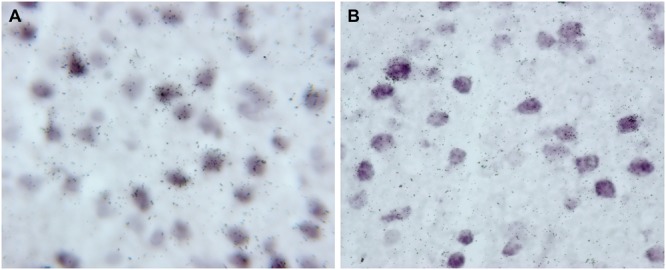
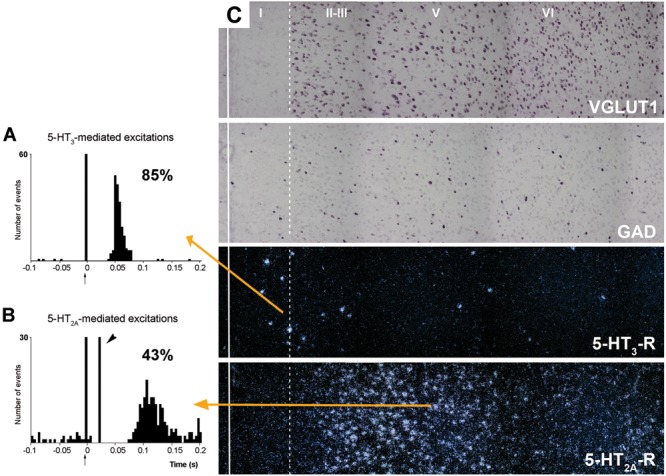
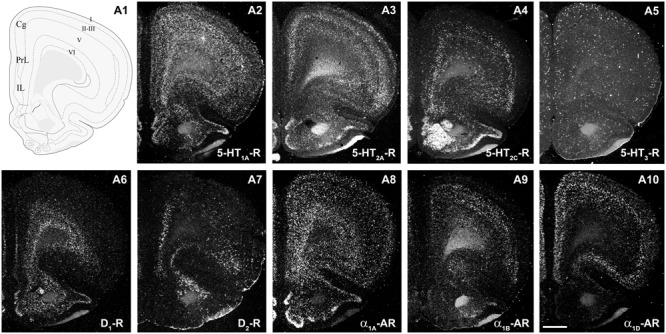
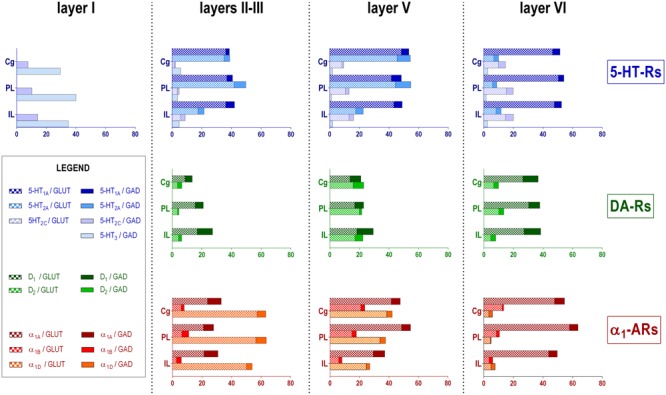
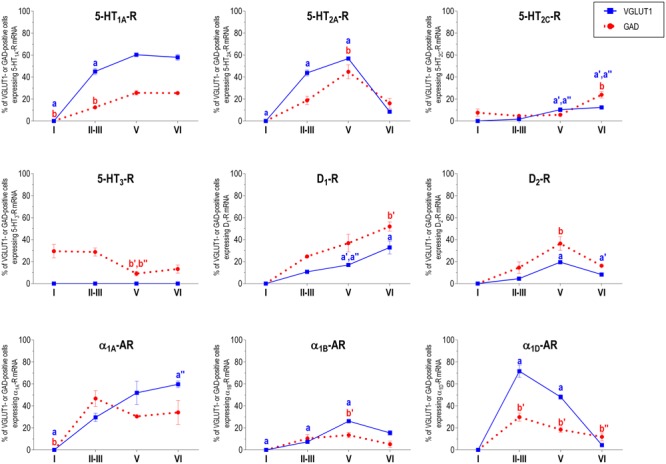
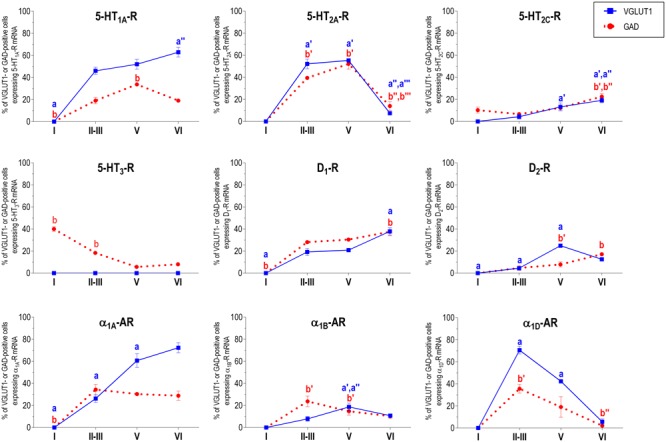
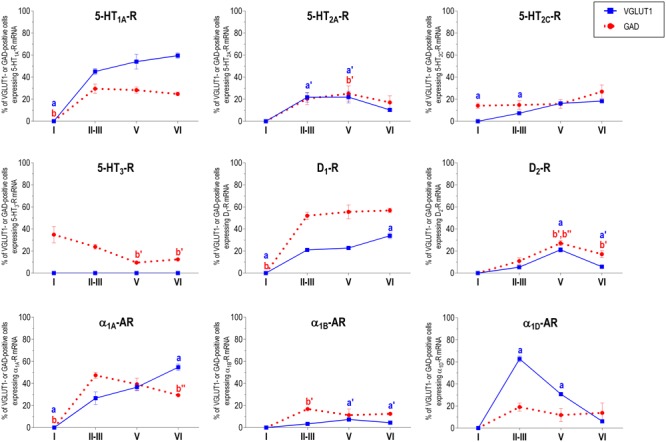
The prefrontal cortex (PFC) is deeply involved in higher brain functions, many of which are altered in psychiatric conditions. The PFC exerts a top-down control of most cortical and subcortical areas through descending pathways and is densely innervated by axons emerging from the brainstem monoamine cell groups, namely, the dorsal and median raphe nuclei (DR and MnR, respectively), the ventral tegmental area and the (LC). In turn, the activity of these cell groups is tightly controlled by afferent pathways arising from layer V PFC pyramidal neurons. The reciprocal connectivity between PFC and monoamine cell groups is of interest to study the pathophysiology and treatment of severe psychiatric disorders, such as major depression and schizophrenia, inasmuch as antidepressant and antipsychotic drugs target monoamine receptors/transporters expressed in these areas. Here we review previous reports examining the presence of monoamine receptors in pyramidal and GABAergic neurons of the PFC using double hybridization. Additionally, we present new data on the quantitative layer distribution (layers I, II-III, V, and VI) of monoamine receptor-expressing cells in the cingulate (Cg), prelimbic (PrL) and infralimbic (IL) subfields of the medial PFC (mPFC). The receptors examined include serotonin 5-HT, 5-HT, 5-HT, and 5-HT, dopamine D and D receptors, and α-, α-, and α-adrenoceptors. With the exception of 5-HT receptors, selectively expressed by layers I-III GABA interneurons, the rest of monoamine receptors are widely expressed by pyramidal and GABAergic neurons in intermediate and deep layers of mPFC (5-HT receptors are also expressed in layer I). This complex distribution suggests that monoamines may modulate the communications between PFC and cortical/subcortical areas through the activation of receptors expressed by neurons in intermediate (e.g., 5-HT, 5-HT, α-adrenoceptors, dopamine D receptors) and deep layers (e.g., 5-HT, 5-HT, α-adrenoceptors, dopamine D receptors), respectively. Overall, these data provide a detailed framework to better understand the role of monoamines in the processing of cognitive and emotional signals by the PFC. Likewise, they may be helpful to characterize brain circuits relevant for the therapeutic action of antidepressant and antipsychotic drugs and to improve their therapeutic action, overcoming the limitations of current drugs.
前额叶皮质(PFC)深度参与高级脑功能,其中许多功能在精神疾病中会发生改变。PFC通过下行通路对大多数皮质和皮质下区域进行自上而下的控制,并密集地接受来自脑干单胺能细胞群(即分别为背侧和中缝核(DR和MnR)、腹侧被盖区和蓝斑(LC))发出的轴突支配。反过来,这些细胞群的活动受到来自V层PFC锥体神经元的传入通路的严格控制。PFC与单胺能细胞群之间的相互连接对于研究严重精神疾病(如重度抑郁症和精神分裂症)的病理生理学和治疗具有重要意义,因为抗抑郁药和抗精神病药的作用靶点是这些区域表达的单胺受体/转运体。在此,我们回顾先前使用双重杂交技术检测PFC锥体神经元和GABA能神经元中单胺受体存在情况的报告。此外,我们还展示了内侧前额叶皮质(mPFC)扣带回(Cg)、前边缘区(PrL)和边缘下区(IL)亚区中表达单胺受体细胞的定量层分布(I层、II - III层、V层和VI层)的新数据。所检测的受体包括5 - 羟色胺5 - HT、5 - HT、5 - HT和5 - HT、多巴胺D和D受体以及α -、α -和α -肾上腺素能受体。除了I - III层GABA中间神经元选择性表达的5 - HT受体外,其余单胺受体在mPFC中间层和深层的锥体神经元和GABA能神经元中广泛表达(5 - HT受体也在I层表达)。这种复杂的分布表明,单胺可能分别通过激活中间层(如5 - HT、5 - HT、α -肾上腺素能受体、多巴胺D受体)和深层(如5 - HT、5 - HT、α -肾上腺素能受体、多巴胺D受体)神经元表达的受体来调节PFC与皮质/皮质下区域之间的通信。总体而言,这些数据提供了一个详细的框架,有助于更好地理解单胺在PFC处理认知和情感信号中的作用。同样,它们可能有助于描绘与抗抑郁药和抗精神病药治疗作用相关的脑回路,并改善其治疗效果,克服现有药物的局限性。