Department of Neurochemistry and Neuropharmacology, Institut d' Investigacions Biomèdiques de Barcelona (CSIC), IDIBAPS Barcelona, Spain ; Centro de Investigación Biomédica en Red de Salud Mental (CIBERSAM) Madrid, Spain.
Front Integr Neurosci. 2013 Apr 19;7:25. doi: 10.3389/fnint.2013.00025. eCollection 2013.
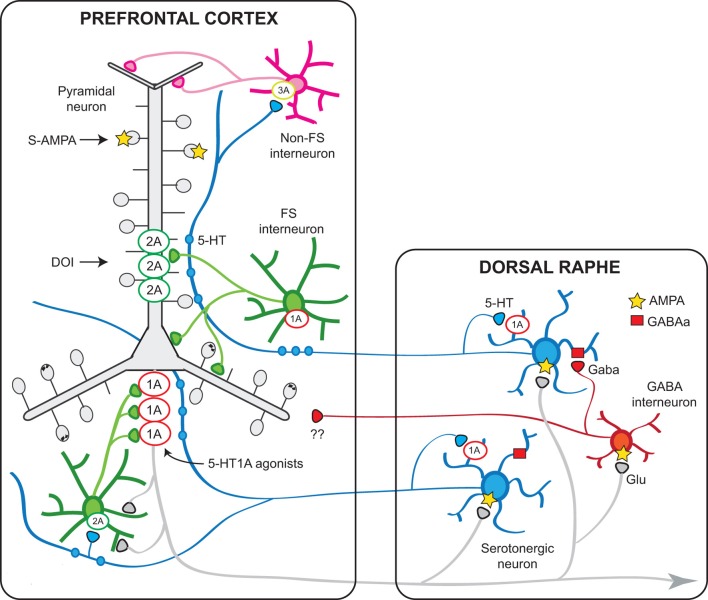
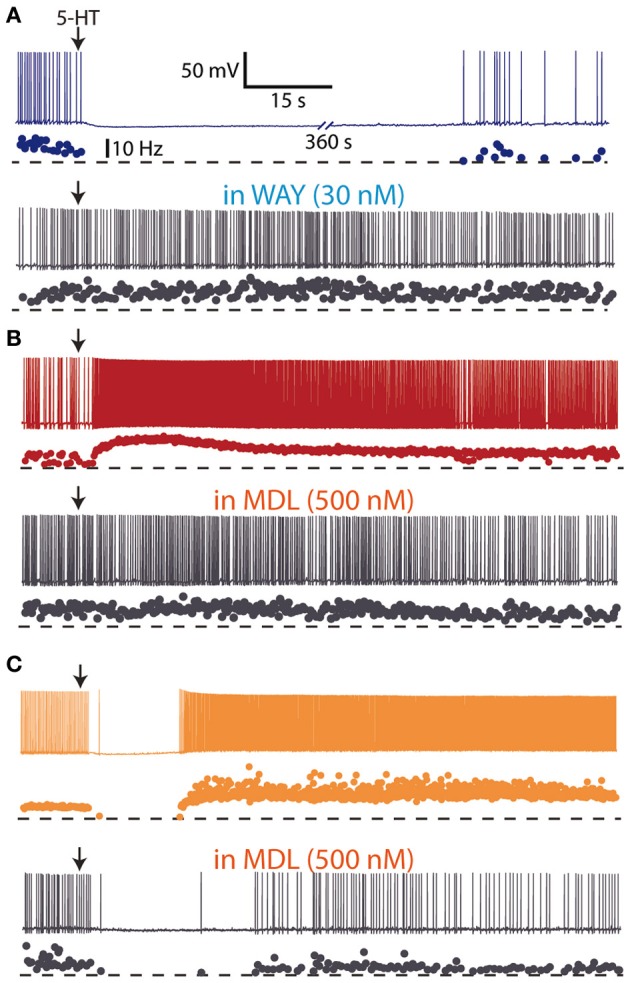
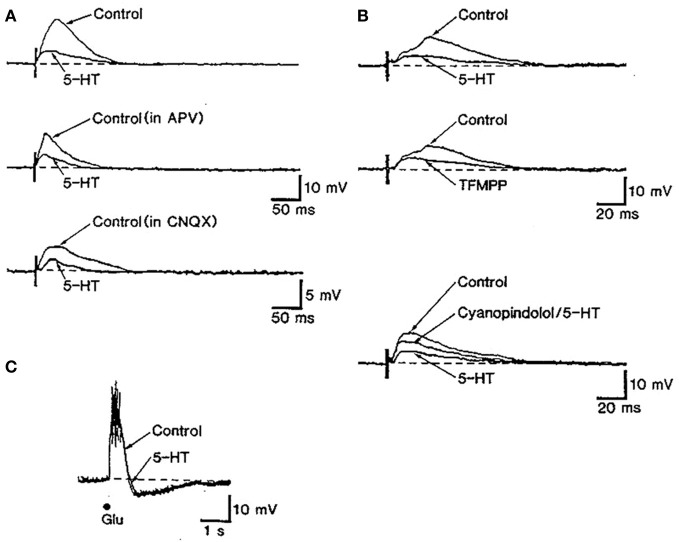
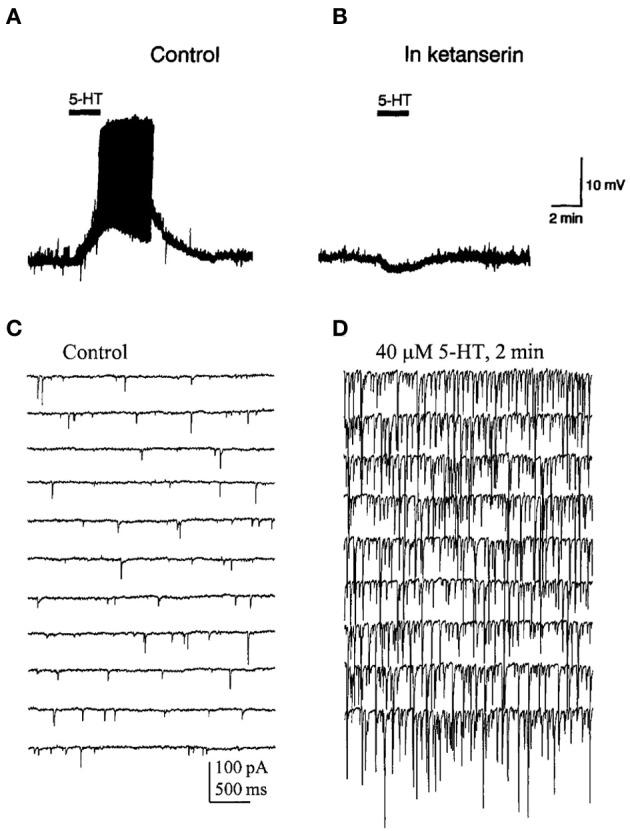
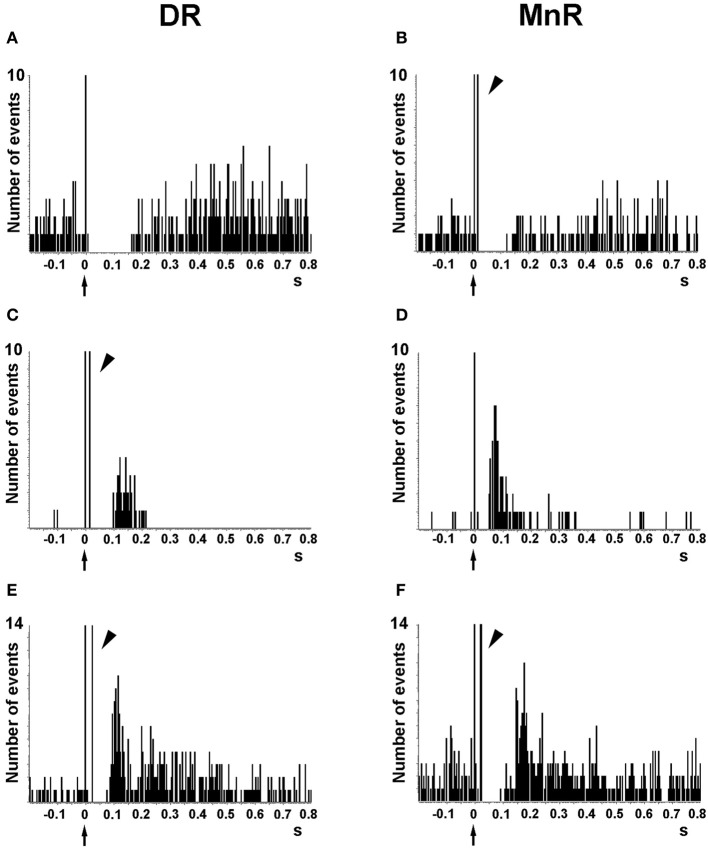
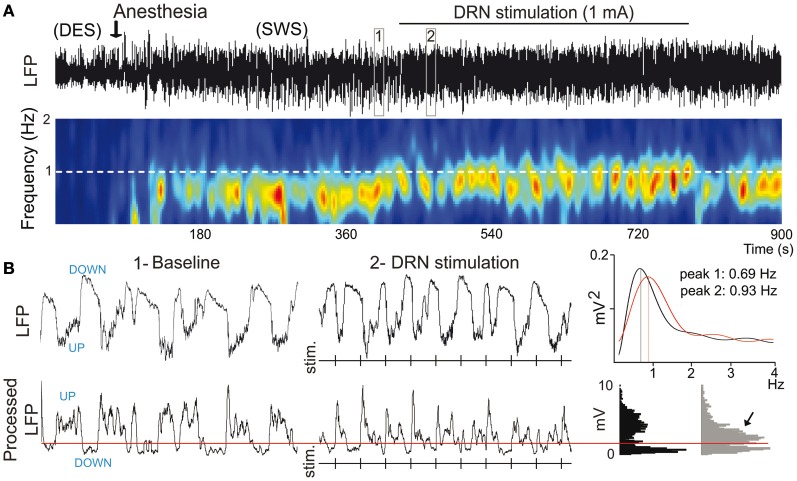
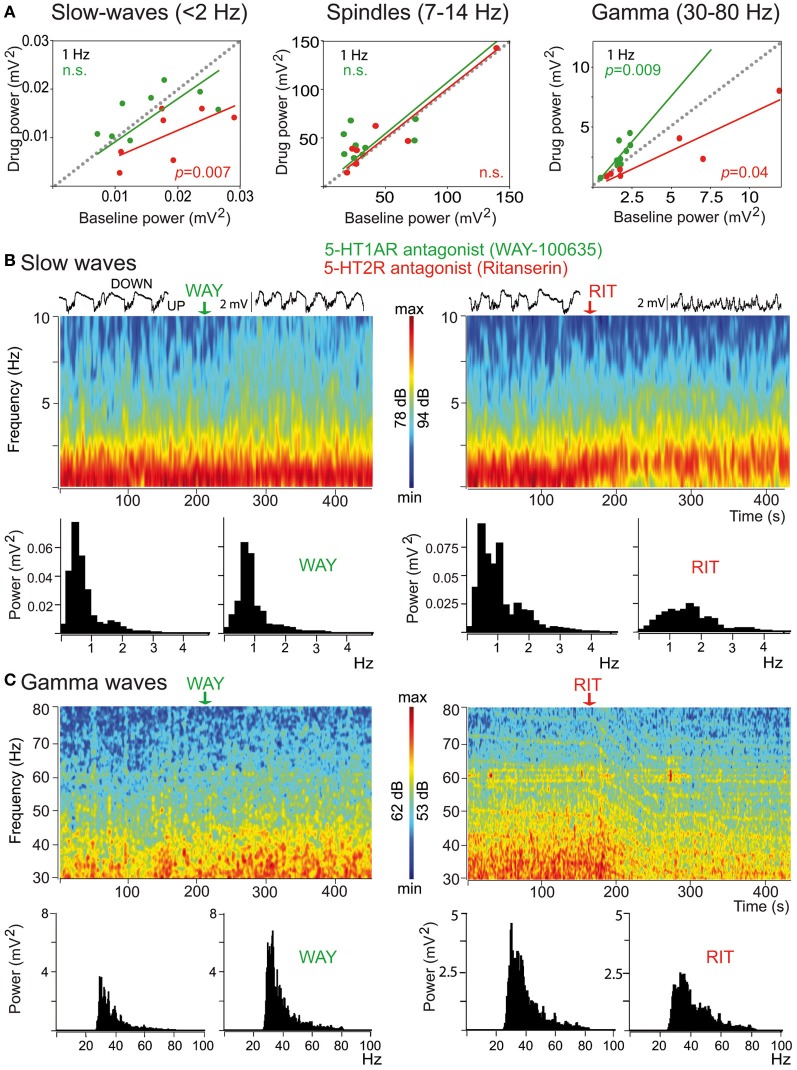
The serotonergic pathways originating in the dorsal and median raphe nuclei (DR and MnR, respectively) are critically involved in cortical function. Serotonin (5-HT), acting on postsynaptic and presynaptic receptors, is involved in cognition, mood, impulse control and motor functions by (1) modulating the activity of different neuronal types, and (2) varying the release of other neurotransmitters, such as glutamate, GABA, acetylcholine and dopamine. Also, 5-HT seems to play an important role in cortical development. Of all cortical regions, the frontal lobe is the area most enriched in serotonergic axons and 5-HT receptors. 5-HT and selective receptor agonists modulate the excitability of cortical neurons and their discharge rate through the activation of several receptor subtypes, of which the 5-HT1A, 5-HT1B, 5-HT2A, and 5-HT3 subtypes play a major role. Little is known, however, on the role of other excitatory receptors moderately expressed in cortical areas, such as 5-HT2C, 5-HT4, 5-HT6, and 5-HT7. In vitro and in vivo studies suggest that 5-HT1A and 5-HT2A receptors are key players and exert opposite effects on the activity of pyramidal neurons in the medial prefrontal cortex (mPFC). The activation of 5-HT1A receptors in mPFC hyperpolarizes pyramidal neurons whereas that of 5-HT2A receptors results in neuronal depolarization, reduction of the afterhyperpolarization and increase of excitatory postsynaptic currents (EPSCs) and of discharge rate. 5-HT can also stimulate excitatory (5-HT2A and 5-HT3) and inhibitory (5-HT1A) receptors in GABA interneurons to modulate synaptic GABA inputs onto pyramidal neurons. Likewise, the pharmacological manipulation of various 5-HT receptors alters oscillatory activity in PFC, suggesting that 5-HT is also involved in the control of cortical network activity. A better understanding of the actions of 5-HT in PFC may help to develop treatments for mood and cognitive disorders associated with an abnormal function of the frontal lobe.
起源于中缝背核(DR)和中缝正中核(MnR)的 5-羟色胺能通路对皮质功能至关重要。5-羟色胺(5-HT)通过(1)调节不同神经元类型的活性,以及(2)改变其他神经递质,如谷氨酸、GABA、乙酰胆碱和多巴胺的释放,作用于突触后和突触前受体,参与认知、情绪、冲动控制和运动功能。此外,5-HT 似乎在皮质发育中发挥重要作用。在所有皮质区域中,额叶是富含 5-羟色胺能轴突和 5-HT 受体的区域。5-HT 和选择性受体激动剂通过激活几种受体亚型来调节皮质神经元的兴奋性和放电率,其中 5-HT1A、5-HT1B、5-HT2A 和 5-HT3 亚型起主要作用。然而,对于在皮质区域中度表达的其他兴奋性受体(如 5-HT2C、5-HT4、5-HT6 和 5-HT7)的作用知之甚少。体外和体内研究表明,5-HT1A 和 5-HT2A 受体是关键调节因子,对内侧前额叶皮质(mPFC)中的锥体神经元活动产生相反的影响。mPFC 中 5-HT1A 受体的激活使锥体神经元超极化,而 5-HT2A 受体的激活导致神经元去极化、后超极化减少以及兴奋性突触后电流(EPSC)和放电率增加。5-HT 还可以刺激 GABA 中间神经元的兴奋性(5-HT2A 和 5-HT3)和抑制性(5-HT1A)受体,从而调节 GABA 对锥体神经元的突触输入。同样,各种 5-HT 受体的药理学操纵改变了 PFC 的振荡活动,表明 5-HT 也参与了皮质网络活动的控制。更好地了解 5-HT 在 PFC 中的作用可能有助于开发治疗与额叶异常功能相关的情绪和认知障碍的方法。