Ghazi-Saidi Ladan, Ansaldo Ana Ines
Department of Communication Disorders, University of Nebraska at KearneyKearney, NE, United States.
School of Speech Therapy and Audiology, University of MontrealMontreal, QC, Canada.
Front Hum Neurosci. 2017 Sep 28;11:463. doi: 10.3389/fnhum.2017.00463. eCollection 2017.
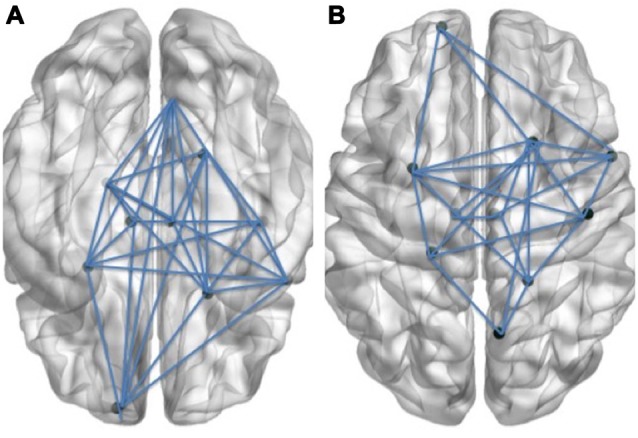
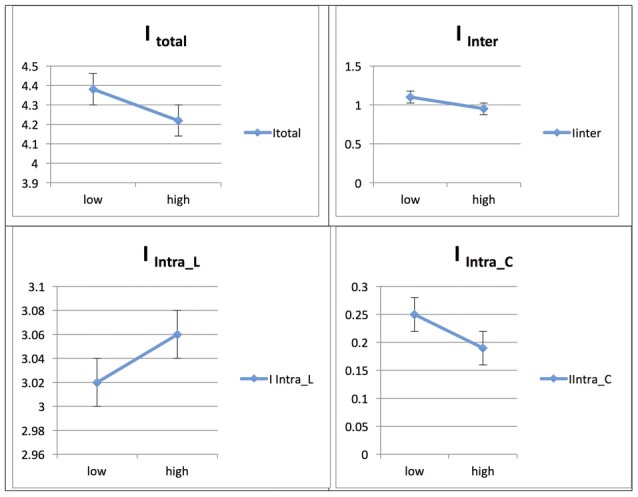
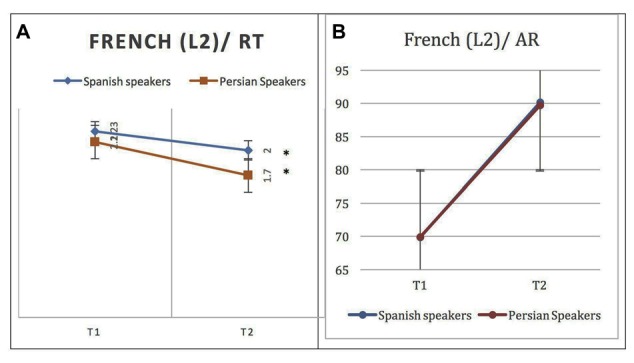
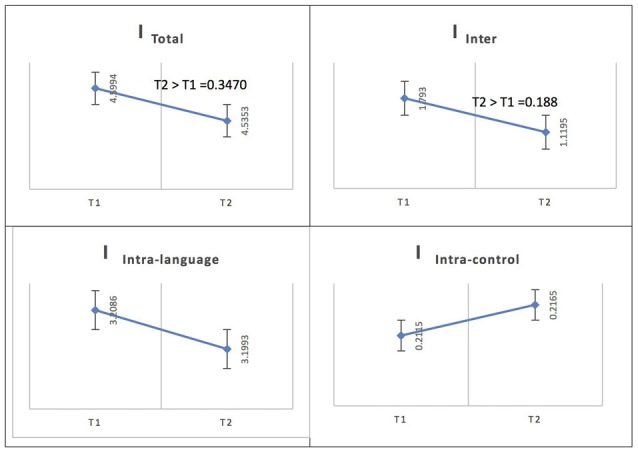
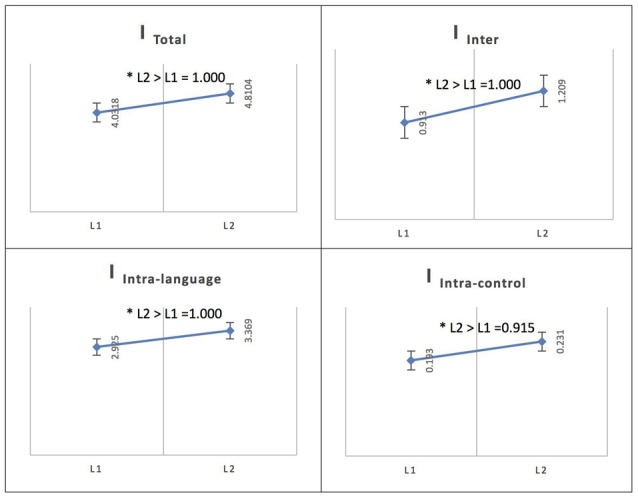
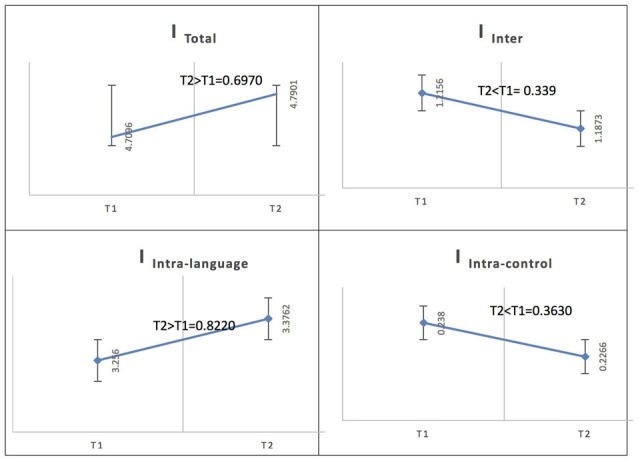
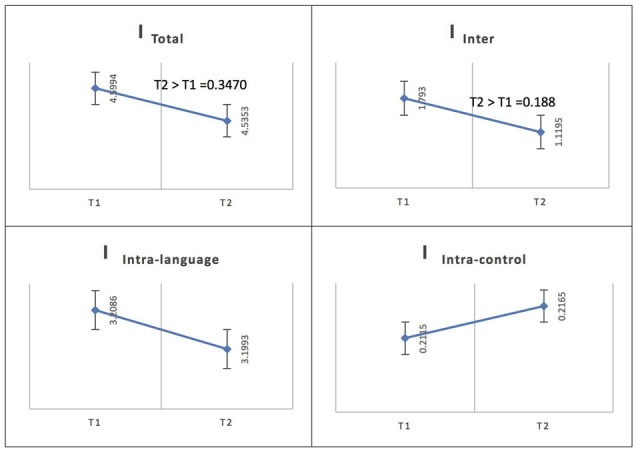
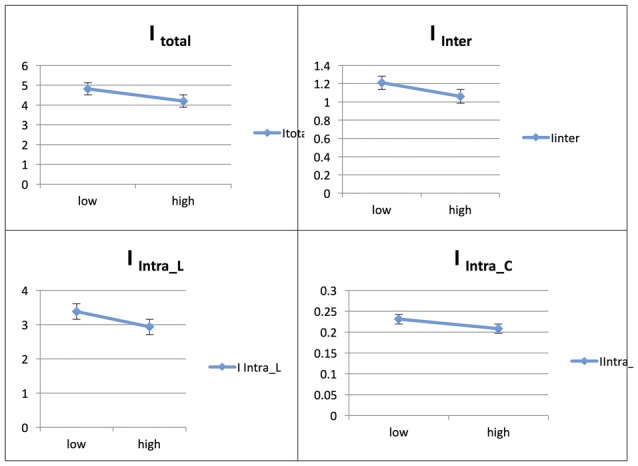
: Repetition and imitation are among the oldest second language (L2) teaching approaches and are frequently used in the context of L2 learning and language therapy, despite some heavy criticism. Current neuroimaging techniques allow the neural mechanisms underlying repetition and imitation to be examined. This fMRI study examines the influence of verbal repetition and imitation on network configuration. Integration changes within and between the cognitive control and language networks were studied, in a pair of linguistically close languages (Spanish and French), and compared to our previous work on a distant language pair (Ghazi-Saidi et al., 2013). : Twelve healthy native Spanish-speaking (L1) adults, and 12 healthy native Persian-speaking adults learned 130 new French (L2) words, through a computerized audiovisual repetition and imitation program. The program presented colored photos of objects. Participants were instructed to look at each photo and pronounce its name as closely as possible to the native template (imitate). Repetition was encouraged as many times as necessary to learn the object's name; phonological cues were provided if necessary. Participants practiced for 15 min, over 30 days, and were tested while naming the same items during fMRI scanning, at week 1 (shallow learning phase) and week 4 (consolidation phase) of training. To compare this set of data with our previous work on Persian speakers, a similar data analysis plan including accuracy rates (AR), response times (RT), and functional integration values for the language and cognitive control network at each measure point was included, with further L1-L2 direct comparisons across the two populations. : The evidence shows that learning L2 words through repetition induces neuroplasticity at the network level. Specifically, L2 word learners showed increased network integration after 3 weeks of training, with both close and distant language pairs. Moreover, higher network integration was observed in the learners with the close language pair, suggesting that repetition effects on network configuration vary as a function of task complexity.
重复和模仿是最古老的第二语言(L2)教学方法之一,尽管受到了一些严厉批评,但仍经常用于L2学习和语言治疗的背景中。当前的神经成像技术能够检测出重复和模仿背后的神经机制。这项功能磁共振成像(fMRI)研究考察了言语重复和模仿对网络结构的影响。我们研究了在一对语言关系密切的语言(西班牙语和法语)中,认知控制网络和语言网络内部及之间的整合变化,并将其与我们之前对一对语言关系较远的语言所做的研究进行比较(加齐-赛义迪等人,2013年)。
12名以西班牙语为母语的健康成年人,以及12名以波斯语为母语的健康成年人,通过一个计算机化的视听重复和模仿程序学习了130个新的法语(L2)单词。该程序展示了物体的彩色照片。参与者被要求看着每张照片,并尽可能按照母语模板发音说出其名称(模仿)。鼓励参与者根据需要多次重复,以学习物体的名称;如有必要,会提供语音线索。参与者在30天内练习了15分钟,并在训练的第1周(浅层学习阶段)和第4周(巩固阶段)进行fMRI扫描时对相同项目进行命名测试。为了将这组数据与我们之前对波斯语使用者的研究进行比较,我们纳入了一个类似的数据分析计划,包括每个测量点的准确率(AR)、反应时间(RT)以及语言和认知控制网络的功能整合值,并对两个人群进行了进一步的L1-L2直接比较。
证据表明,通过重复学习L2单词会在网络层面诱导神经可塑性。具体而言,L2单词学习者在训练3周后,无论是对于语言关系密切的语言对还是语言关系较远的语言对,都表现出网络整合增强。此外,在语言关系密切的语言对学习者中观察到了更高的网络整合,这表明重复对网络结构的影响会随着任务复杂性的变化而变化。