Hidalgo-Cantabrana Claudio, Crawley Alexandra B, Sanchez Borja, Barrangou Rodolphe
Department of Food, Bioprocessing and Nutrition Sciences, North Carolina State University, Raleigh, NC, United States.
Department of Microbiology and Biochemistry of Dairy Products, Dairy Research Institute of Asturias, IPLA-CSIC, Villaviciosa, Spain.
Front Microbiol. 2017 Sep 26;8:1851. doi: 10.3389/fmicb.2017.01851. eCollection 2017.
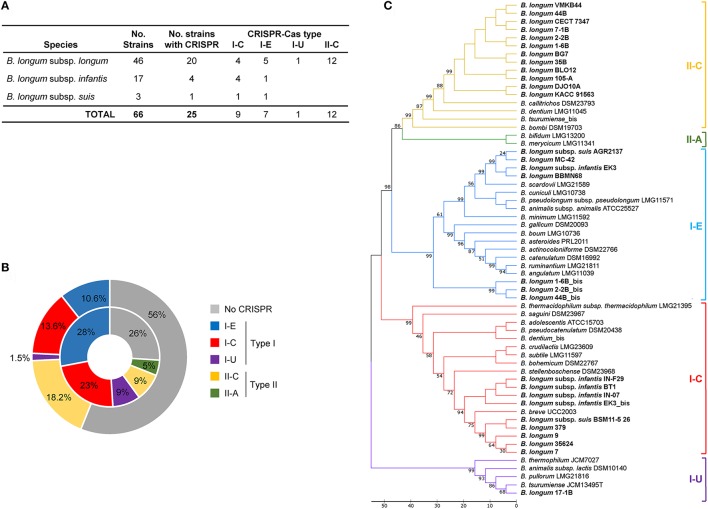
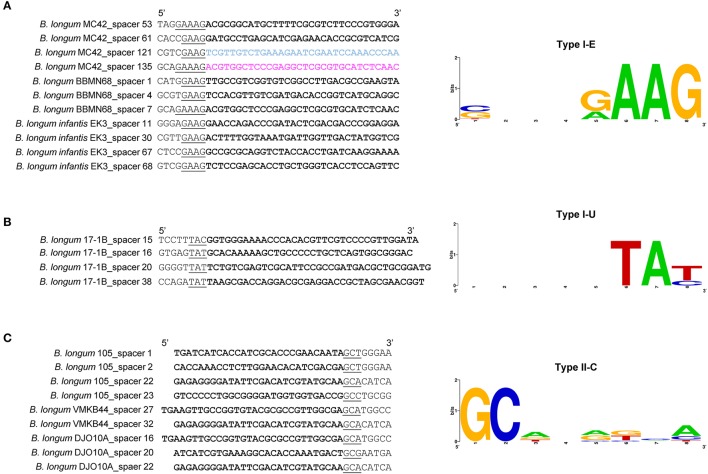
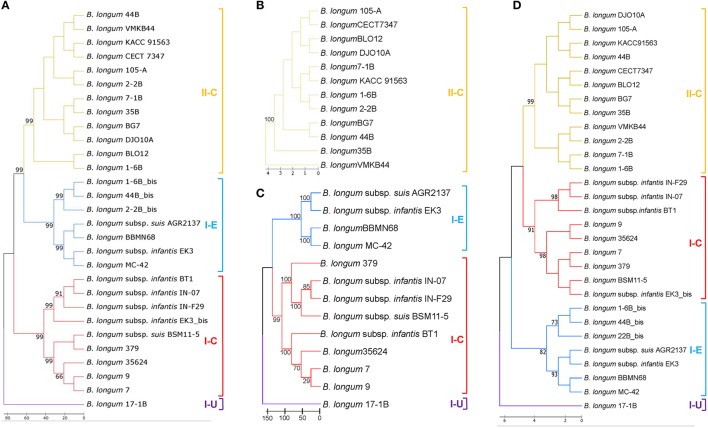
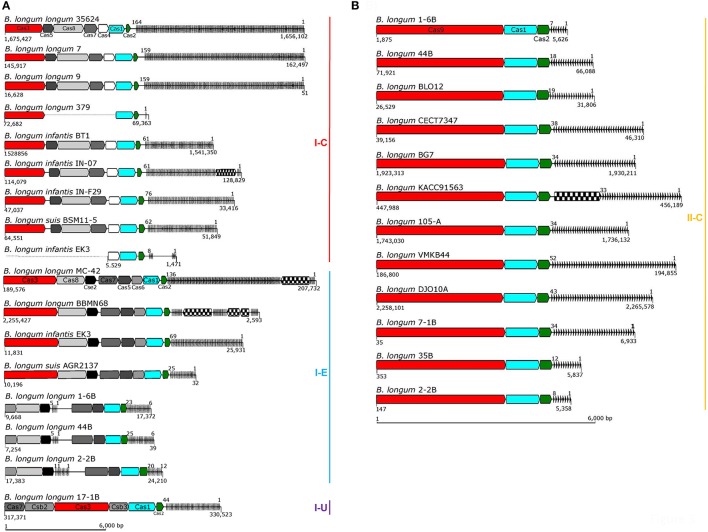
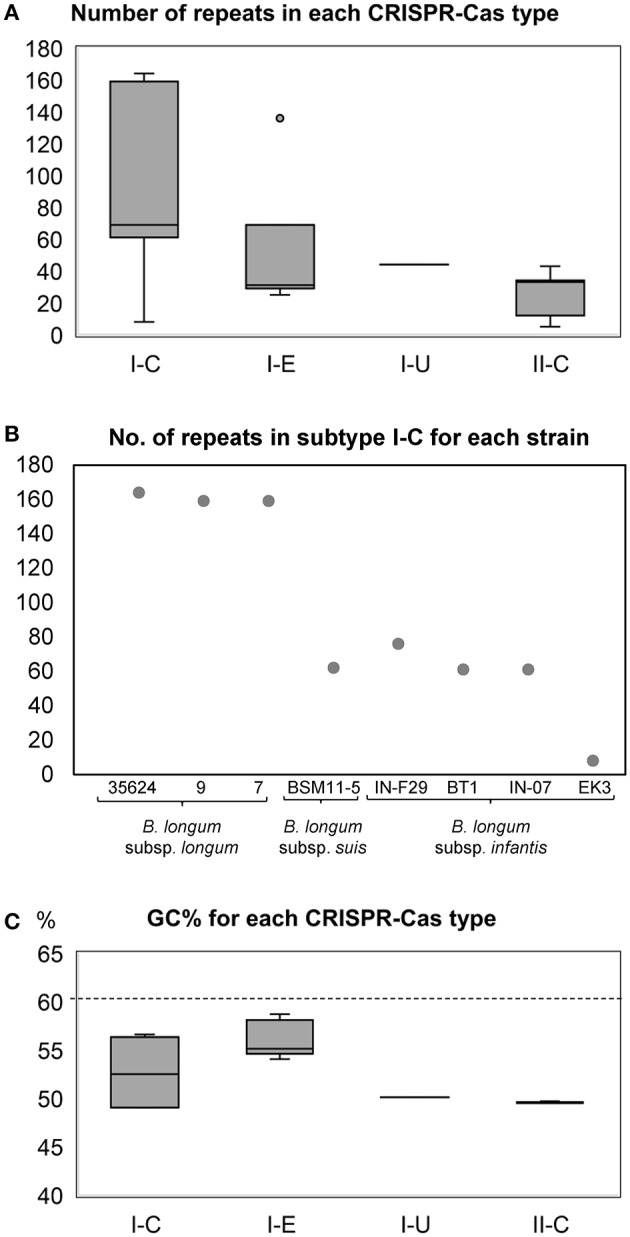
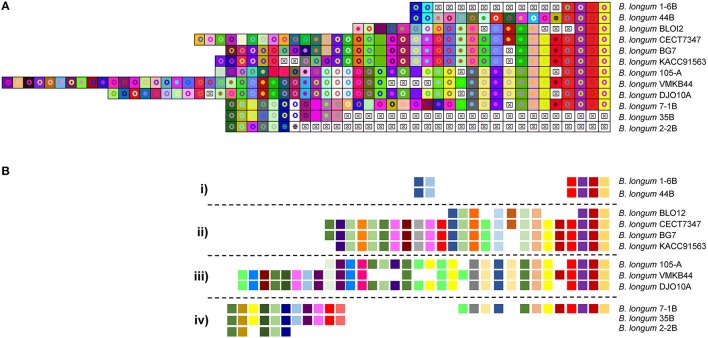
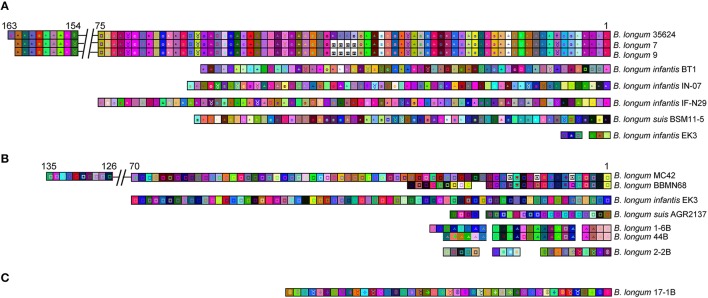
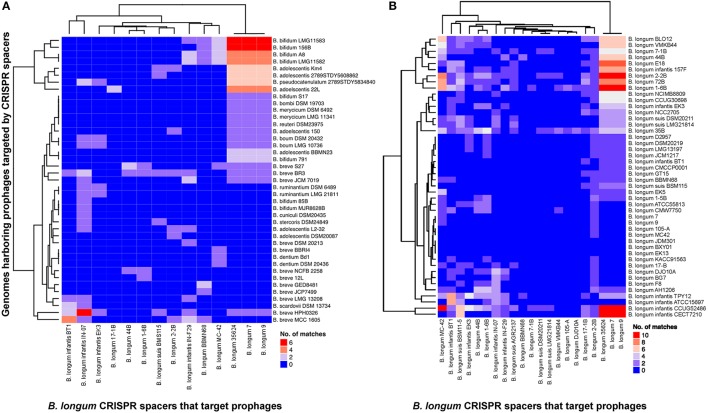
Diverse CRISPR-Cas systems provide adaptive immunity in many bacteria and most archaea, via a DNA-encoded, RNA-mediated, nucleic-acid targeting mechanism. Over time, CRISPR loci expand via iterative uptake of invasive DNA sequences into the CRISPR array during the adaptation process. These genetic vaccination cards thus provide insights into the exposure of strains to phages and plasmids in space and time, revealing the historical predatory exposure of a strain. These genetic loci thus constitute a unique basis for genotyping of strains, with potential of resolution at the strain-level. Here, we investigate the occurrence and diversity of CRISPR-Cas systems in the genomes of various strains across three sub-species. Specifically, we analyzed the genomic content of 66 genomes belonging to subsp. subsp. and subsp. , and identified 25 strains that carry 29 total CRISPR-Cas systems. We identify various Type I and Type II CRISPR-Cas systems that are widespread in this species, notably I-C, I-E, and II-C. Noteworthy, Type I-C systems showed extended CRISPR arrays, with extensive spacer diversity. We show how these hypervariable loci can be used to gain insights into strain origin, evolution and phylogeny, and can provide discriminatory sequences to distinguish even clonal isolates. By investigating CRISPR spacer sequences, we reveal their origin and implicate phages and prophages as drivers of CRISPR immunity expansion in this species, with redundant targeting of select prophages. Analysis of CRISPR spacer origin also revealed novel PAM sequences. Our results suggest that CRISPR-Cas immune systems are instrumental in mounting diversified viral resistance in , and show that these sequences are useful for typing across three subspecies.
多种CRISPR-Cas系统通过一种由DNA编码、RNA介导的核酸靶向机制,为许多细菌和大多数古生菌提供适应性免疫。随着时间的推移,CRISPR基因座在适应过程中通过将侵入性DNA序列反复摄取到CRISPR阵列中而得以扩展。因此,这些基因疫苗卡为了解菌株在空间和时间上对噬菌体和质粒的暴露情况提供了线索,揭示了菌株过去的捕食性暴露情况。这些基因座因此构成了菌株基因分型的独特基础,具有在菌株水平上进行分辨的潜力。在这里,我们研究了三个亚种中不同菌株基因组中CRISPR-Cas系统的发生情况和多样性。具体而言,我们分析了属于亚种、亚种和亚种的66个基因组的基因组内容,鉴定出25个携带总共29个CRISPR-Cas系统的菌株。我们识别出了在该物种中广泛存在的各种I型和II型CRISPR-Cas系统,特别是I-C、I-E和II-C。值得注意的是,I-C型系统显示出扩展的CRISPR阵列,具有广泛的间隔序列多样性。我们展示了这些高度可变的基因座如何能够用于深入了解菌株的起源、进化和系统发育,并且能够提供具有鉴别性的序列来区分甚至是克隆分离株。通过研究CRISPR间隔序列,我们揭示了它们的起源,并表明噬菌体和前噬菌体是该物种中CRISPR免疫扩展的驱动因素,对某些前噬菌体存在冗余靶向。对CRISPR间隔序列起源的分析还揭示了新的PAM序列。我们的结果表明,CRISPR-Cas免疫系统有助于在中产生多样化的病毒抗性,并且表明这些序列对于三个亚种的分型是有用的。