ICMR-National Institute of Pathology, Safdarjung Hospital Campus, New Delhi, India; Symbiosis School of Biomedical Sciences, Symbiosis International University, Pune, India.
ICMR-National Institute of Pathology, Safdarjung Hospital Campus, New Delhi, India.
Int J Parasitol Drugs Drug Resist. 2017 Dec;7(3):370-377. doi: 10.1016/j.ijpddr.2017.10.004. Epub 2017 Oct 10.
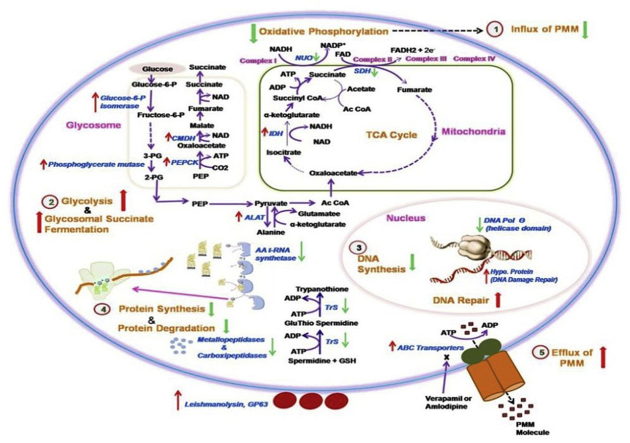
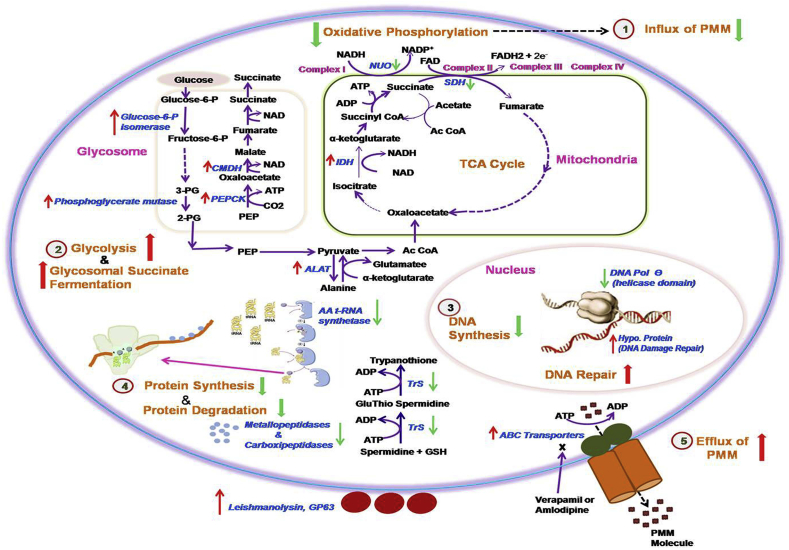
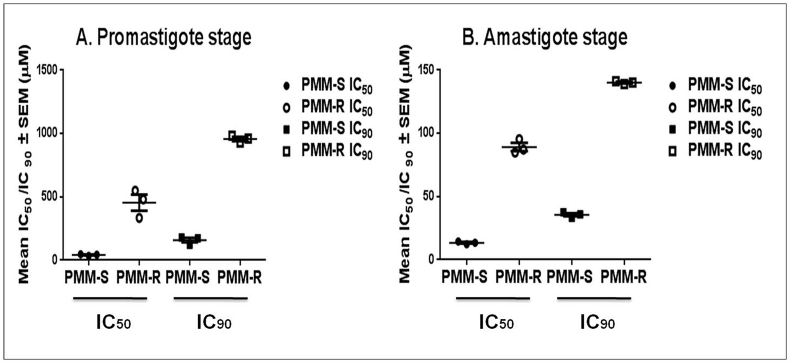
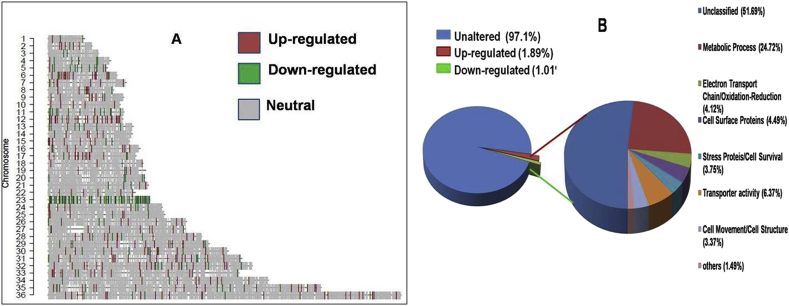
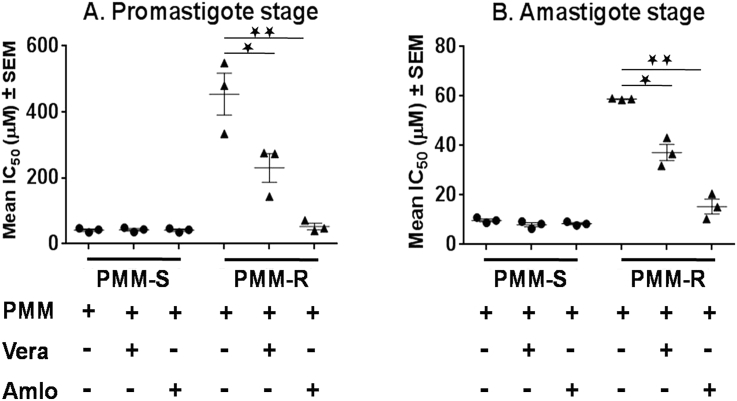
Widespread resistance towards antimony and reports of relapses following miltefosine treatment has severely affected the management of visceral leishmaniasis (VL) in the Indian subcontinent. Paromomycin (PMM), an aminoglycoside antibiotic, has been licensed for VL treatment in India in 2007. Although its use is still restricted in the field, unraveling the molecular mechanism of resistance towards PMM is the key to preserve the drug. In this study, PMM resistant lines were selected up to 100 μM of PMM in three distinct field isolates of Leishmania donovani at promastigote stage. The resistance induced at promastigote level was also evident in amastigotes which showed 6 fold decreases in PMM susceptibility. Comparative transcriptome profiling of PMM resistant (PMM-R) and the corresponding PMM sensitive (PMM-S) parasites revealed modulated expression of 500 genes (1.5 fold cut off) in PMM-R parasites. Selected genes were validated for their modulated expression by quantitative real-time PCR. Functional classification and pathway analysis of modulated genes indicated probable adaptations in drug resistant lines which included a) reduced oxidative phosphorylation; b) increased glycosomal succinate fermentation and substrate level phosphorylation; c) dependency on lipids and amino acids for energy generation; d) reduced DNA synthesis and increased DNA damage repair and e) decreased protein synthesis and degradation. Interestingly, PMM-R parasites showed a marked increase in PMM susceptibility in presence of verapamil and amlodipine, antagonists of Ca channel that are also modulators of ABC transporters. Moreover, infection of macrophages by PMM-R parasites led to modulated nitric oxide (NO) levels while reactive oxygen species (ROS) level remained unaltered. The present study highlights the putative mechanisms of PMM resistance in Leishmania.
抗锑药物广泛耐药以及米替福新治疗后复发的报道严重影响了印度次大陆内脏利什曼病(VL)的治疗。帕莫霉素(PMM)是一种氨基糖苷类抗生素,2007 年在印度获得 VL 治疗许可。尽管其在临床上的应用仍然受到限制,但阐明 PMM 耐药的分子机制是保留该药物的关键。在这项研究中,在三个不同的利什曼原虫 Donovan 分离株的前鞭毛体阶段,用高达 100μM 的 PMM 选择 PMM 耐药株。在无鞭毛体中也可以观察到在鞭毛体阶段诱导的耐药性,PMM 敏感性降低了 6 倍。PMM 耐药(PMM-R)和相应的 PMM 敏感(PMM-S)寄生虫的比较转录组分析显示,PMM-R 寄生虫中有 500 个基因(1.5 倍截止值)的表达发生了调节。通过定量实时 PCR 验证了选定基因的调节表达。调节基因的功能分类和途径分析表明,耐药株可能发生了以下适应:a)氧化磷酸化减少;b)糖基体琥珀酸发酵和底物水平磷酸化增加;c)依赖脂质和氨基酸产生能量;d)DNA 合成减少,DNA 损伤修复增加;e)蛋白质合成和降解减少。有趣的是,PMM-R 寄生虫在维拉帕米和氨氯地平存在的情况下对 PMM 的敏感性显著增加,维拉帕米和氨氯地平是钙通道拮抗剂,也是 ABC 转运蛋白的调节剂。此外,PMM-R 寄生虫感染巨噬细胞导致一氧化氮(NO)水平发生调节,而活性氧(ROS)水平保持不变。本研究强调了利什曼原虫中 PMM 耐药的潜在机制。