Turchick Audrey, Hegan Denise C, Jensen Ryan B, Glazer Peter M
Department of Genetics, Yale University School of Medicine, New Haven, CT 06510, USA.
Department of Therapeutic Radiology, Yale University School of Medicine, New Haven, CT 06510, USA.
Nucleic Acids Res. 2017 Nov 16;45(20):11782-11799. doi: 10.1093/nar/gkx871.
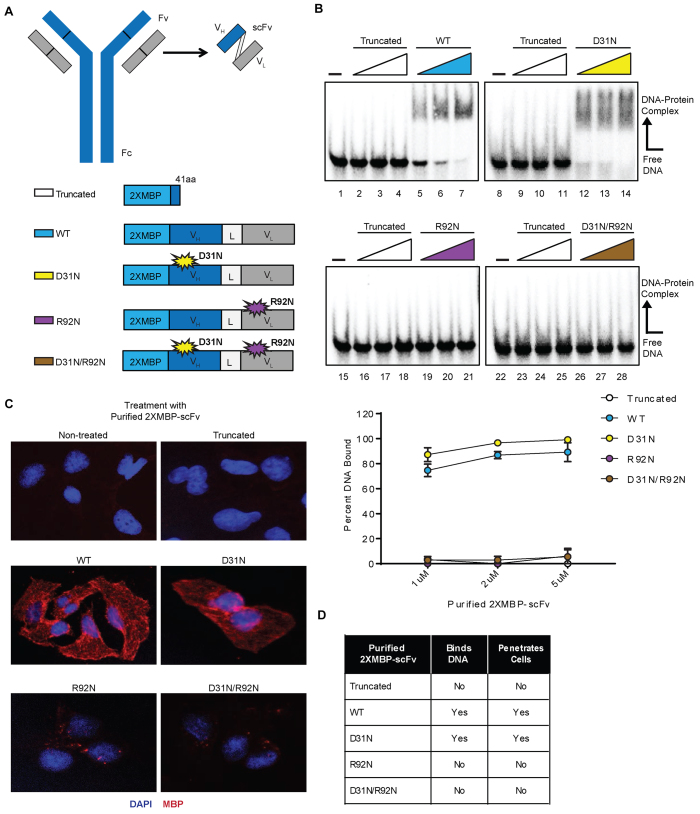
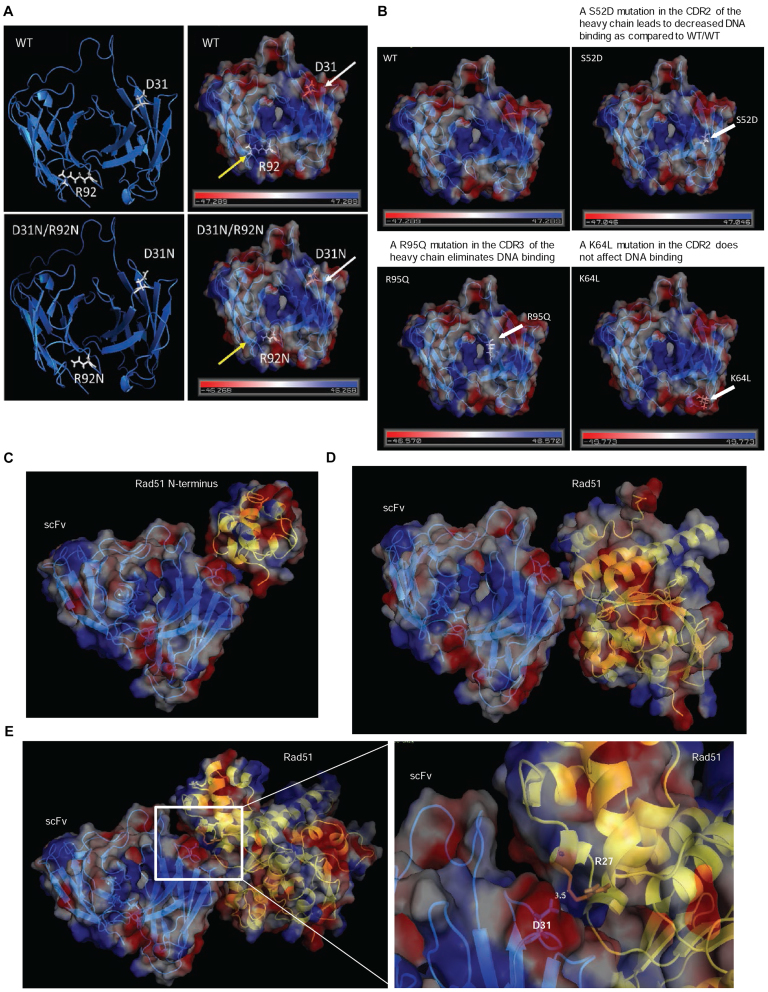
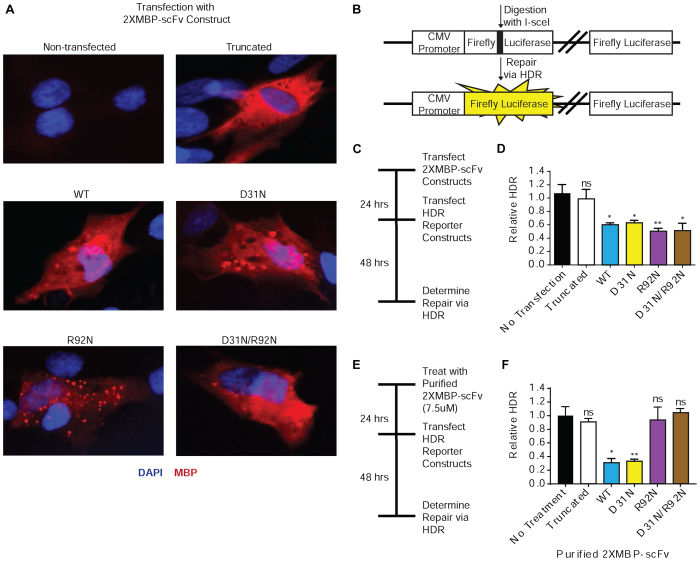
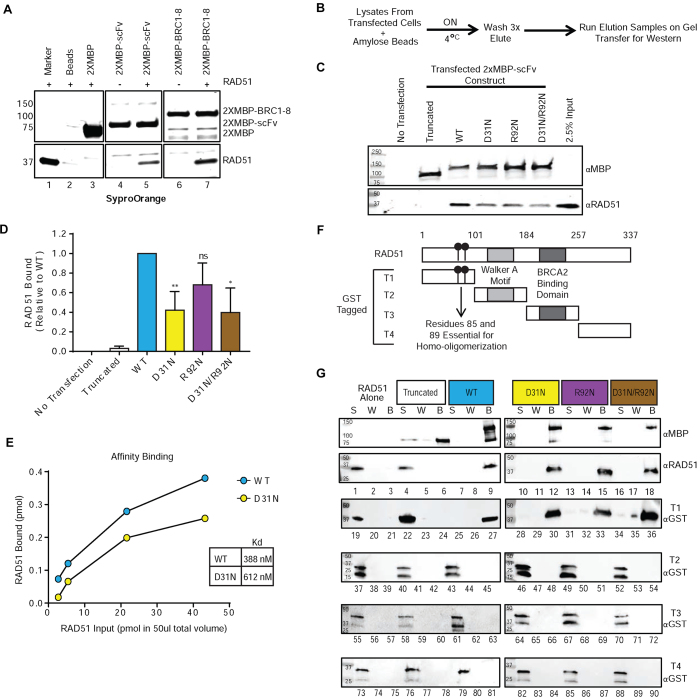
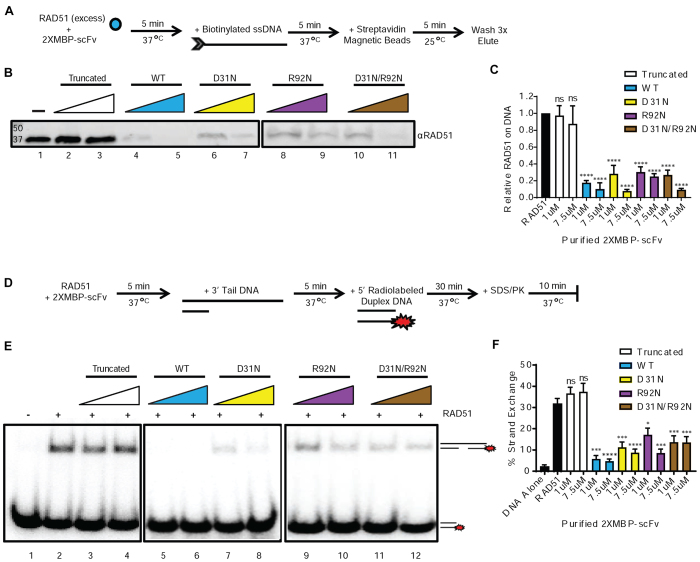
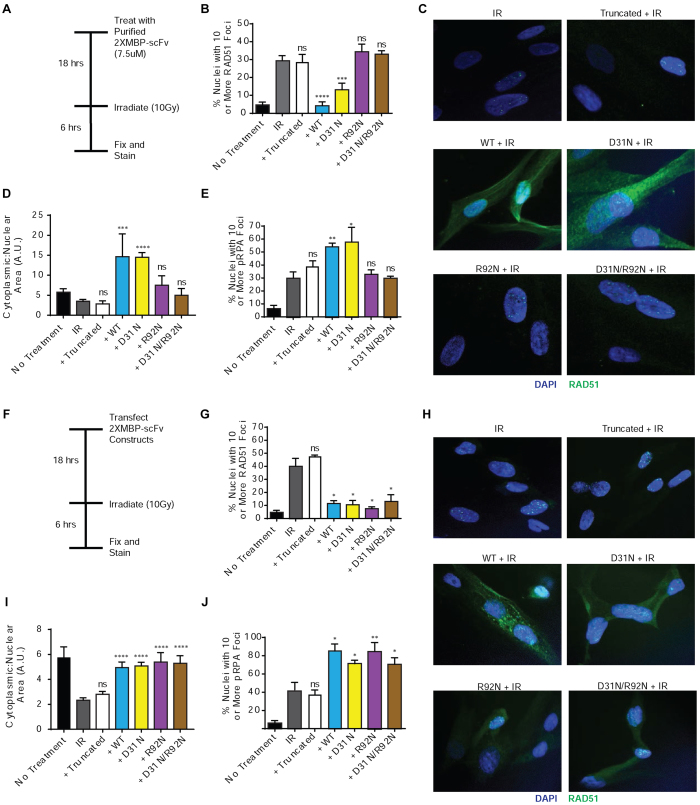
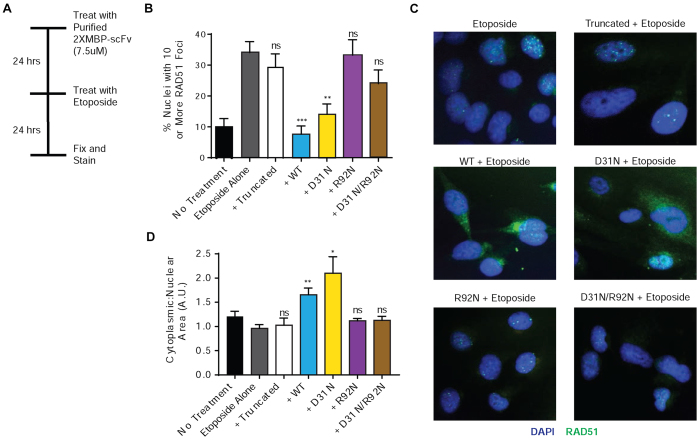
RAD51, a key factor in homology-directed repair (HDR), has long been considered an attractive target for cancer therapy, but few specific inhibitors have been found. A cell-penetrating, anti-DNA, lupus autoantibody, 3E10, was previously shown to inhibit HDR, sensitize tumors to radiation, and mediate synthetic lethal killing of BRCA2-deficient cancer cells, effects that were initially attributed to its affinity for DNA. However, as the molecular basis for its ability to inhibit DNA repair, we report that 3E10 directly binds to the N-terminus of RAD51, sequesters RAD51 in the cytoplasm, and impedes RAD51 binding to DNA. Further, we generate separation-of-function mutations in the complementarity-determining regions of 3E10 revealing that inhibition of HDR tracks with binding to RAD51 but not to DNA, whereas cell penetration is linked to DNA binding. The consequences of these mutations on putative 3E10 interactions with RAD51 and DNA are correlated with in silico molecular modeling. Taken together, the results identify 3E10 as a novel inhibitor of RAD51 by direct binding, accounting for its ability to suppress HDR and providing the molecular basis to guide pre-clinical development of 3E10 as an anti-cancer agent.
RAD51是同源定向修复(HDR)中的关键因子,长期以来一直被认为是癌症治疗的一个有吸引力的靶点,但目前发现的特异性抑制剂很少。一种细胞穿透性抗DNA狼疮自身抗体3E10,先前已被证明可抑制HDR,使肿瘤对辐射敏感,并介导对BRCA2缺陷癌细胞的合成致死杀伤,这些作用最初归因于其对DNA的亲和力。然而,作为其抑制DNA修复能力的分子基础,我们报告3E10直接与RAD51的N端结合,将RAD51隔离在细胞质中,并阻碍RAD51与DNA结合。此外,我们在3E10的互补决定区产生功能分离突变,结果表明对HDR的抑制与结合RAD51而非DNA有关,而细胞穿透性与DNA结合有关。这些突变对3E10与RAD51和DNA假定相互作用的影响与计算机分子建模相关。综上所述,这些结果确定3E10是一种通过直接结合的新型RAD51抑制剂,解释了其抑制HDR的能力,并为指导3E10作为抗癌药物的临床前开发提供了分子基础。