Department of Pathology and Lab Medicine, University of Saskatchewan, Saskatoon, Canada.
Advanced Diagnostics Research Lab, Saskatchewan Cancer Agency, Saskatoon, Canada.
Sci Rep. 2019 Aug 2;9(1):11227. doi: 10.1038/s41598-019-47600-y.
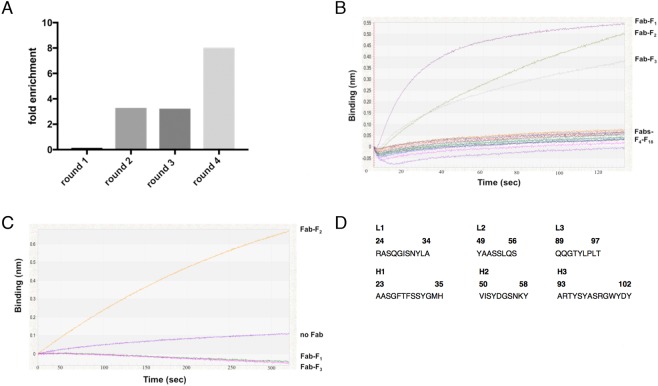
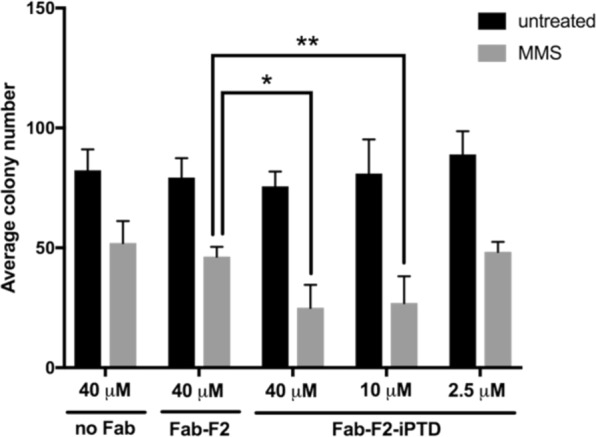
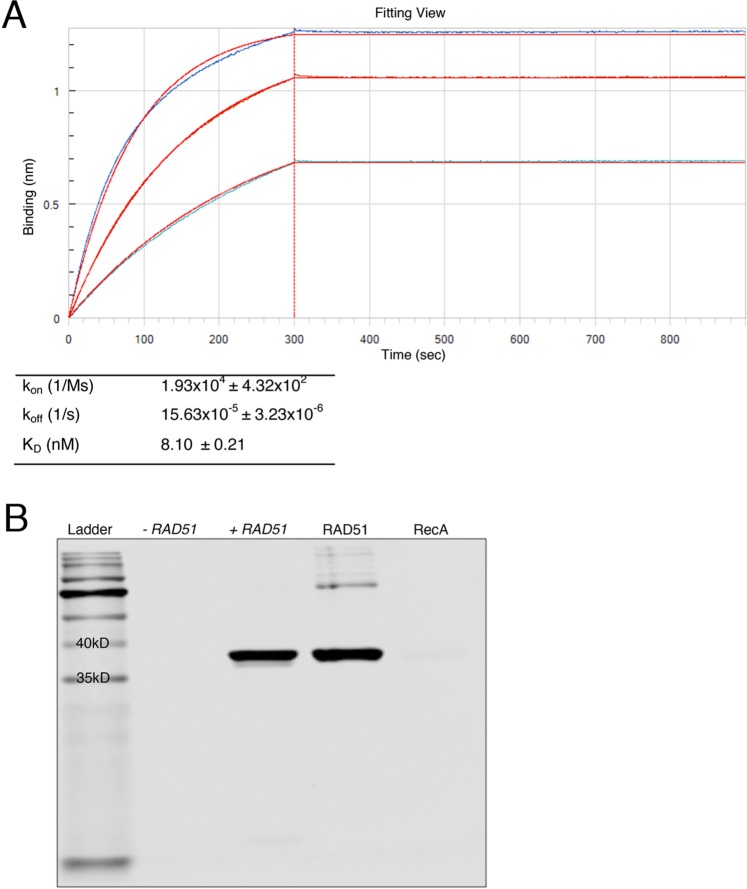
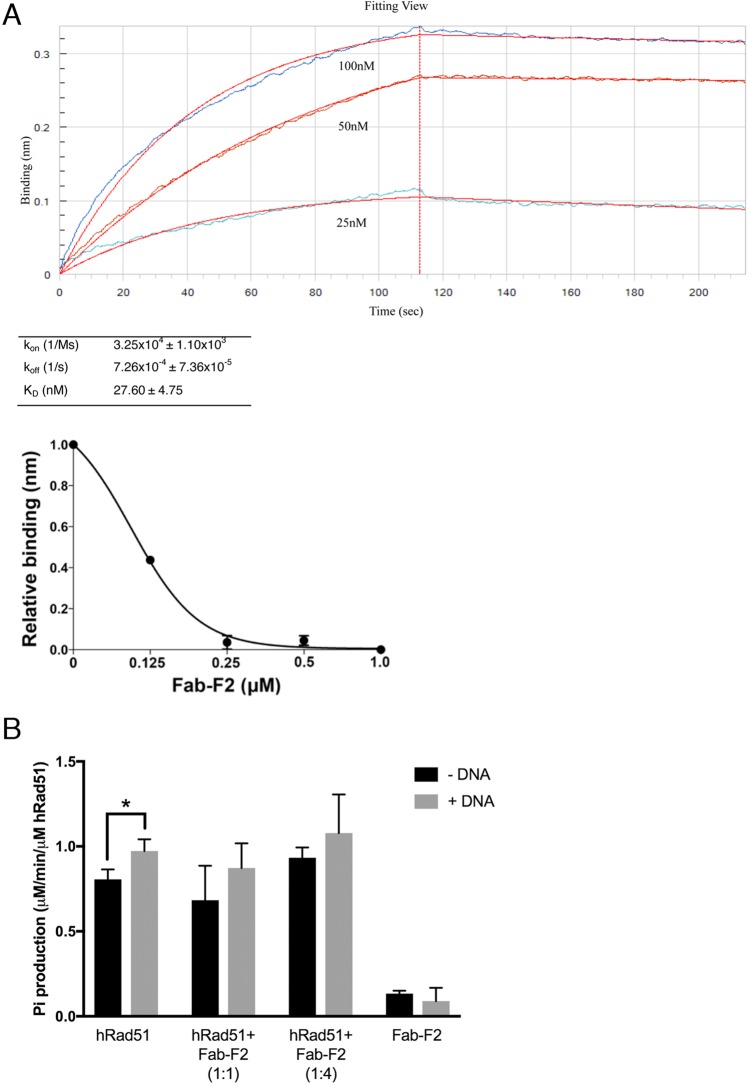
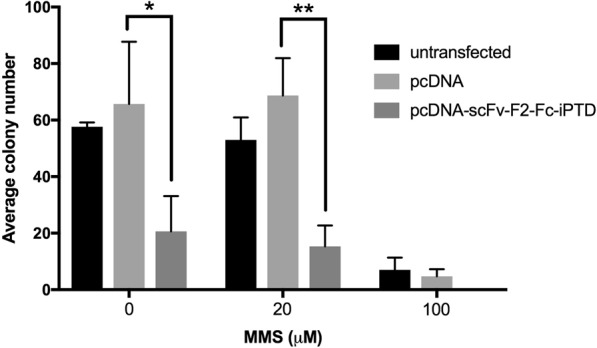
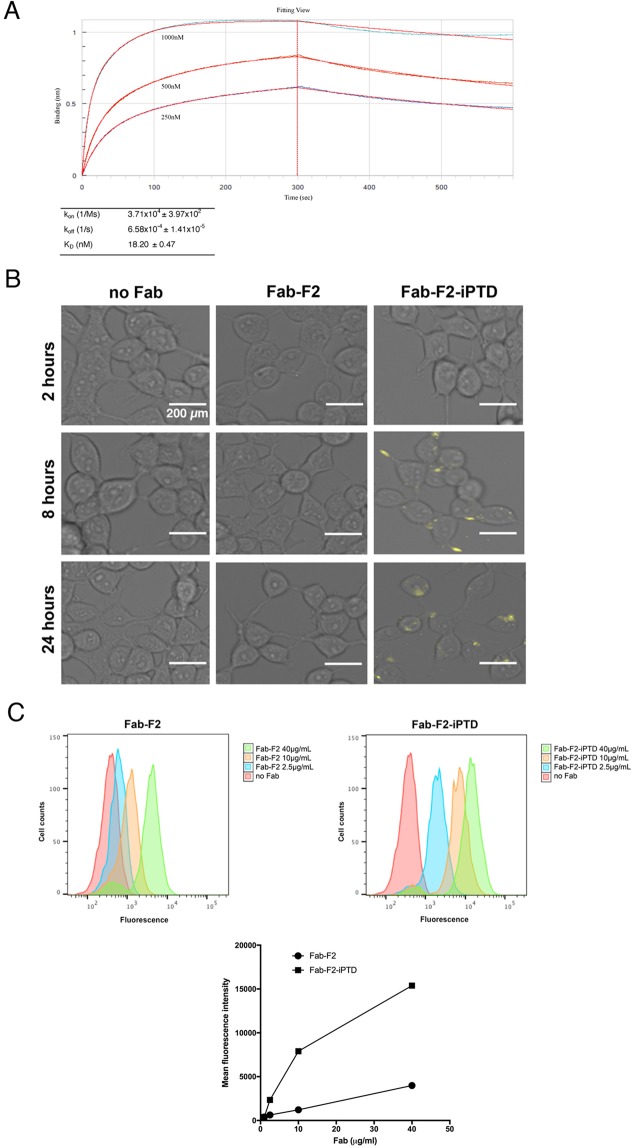
DNA damaging chemotherapies are successful in cancer therapy, however, the damage can be reversed by DNA repair mechanisms that may be up-regulated in cancer cells. We hypothesized that inhibiting RAD51, a protein involved in homologous recombination DNA repair, would block DNA repair and restore the effectiveness of DNA damaging chemotherapy. We used phage-display to generate a novel synthetic antibody fragment that bound human RAD51 with high affinity (K = 8.1 nM) and inhibited RAD51 ssDNA binding in vitro. As RAD51 is an intracellular target, we created a corresponding intrabody fragment that caused a strong growth inhibitory phenotype on human cells in culture. We then used a novel cell-penetrating peptide "iPTD" fusion to generate a therapeutically relevant antibody fragment that effectively entered living cells and enhanced the cell-killing effect of a DNA alkylating agent. The iPTD may be similarly useful as a cell-penetrating peptide for other antibody fragments and open the door to numerous intracellular targets previously off-limits in living cells.
DNA 损伤化疗在癌症治疗中取得了成功,然而,这种损伤可以被 DNA 修复机制逆转,而这些机制在癌细胞中可能被上调。我们假设抑制 RAD51,一种参与同源重组 DNA 修复的蛋白质,将阻断 DNA 修复并恢复 DNA 损伤化疗的有效性。我们使用噬菌体展示技术生成了一种新型的合成抗体片段,该片段与人 RAD51 具有高亲和力(Kd=8.1 nM),并在体外抑制 RAD51 ssDNA 结合。由于 RAD51 是一种细胞内靶标,我们创建了相应的内体片段,在培养的人类细胞中引起强烈的生长抑制表型。然后,我们使用一种新型的穿透细胞肽“iPTD”融合来生成一种治疗相关的抗体片段,该片段有效地进入活细胞,并增强了 DNA 烷化剂的细胞杀伤作用。iPTD 可能作为其他抗体片段的穿透细胞肽同样有用,并为以前在活细胞中无法触及的众多细胞内靶标打开了大门。