Bull Hazel, Casao M Cristina, Zwirek Monika, Flavell Andrew J, Thomas William T B, Guo Wenbin, Zhang Runxuan, Rapazote-Flores Paulo, Kyriakidis Stylianos, Russell Joanne, Druka Arnis, McKim Sarah M, Waugh Robbie
James Hutton Limited, The James Hutton Institute, Invergowrie, Dundee, DD2 5DA, Scotland.
Cell and Molecular Sciences, The James Hutton Institute, Invergowrie, Dundee, DD2 5DA, Scotland.
Nat Commun. 2017 Oct 16;8(1):936. doi: 10.1038/s41467-017-00940-7.
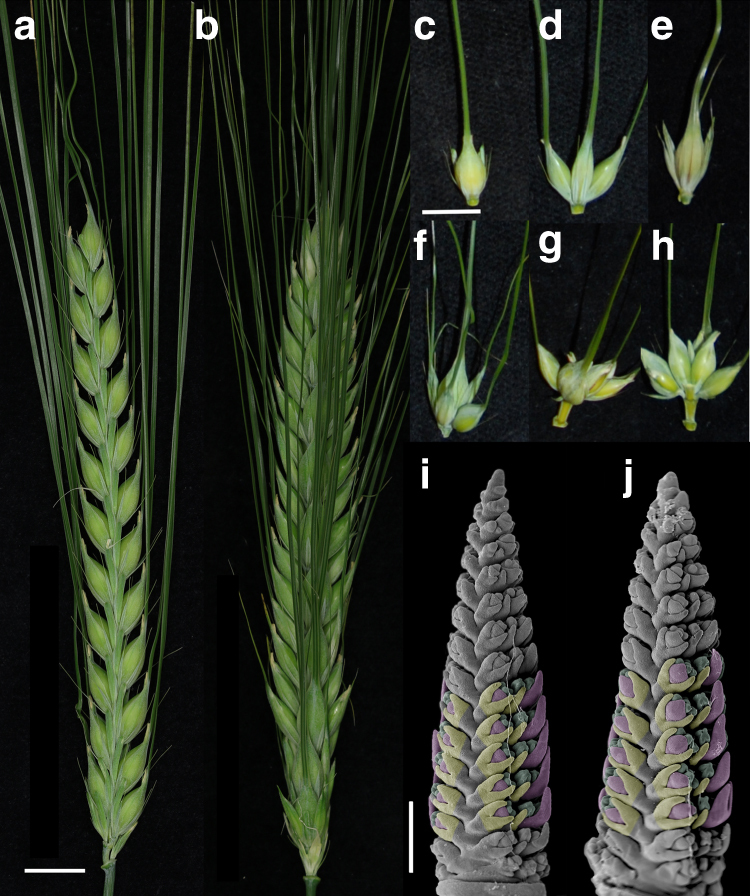
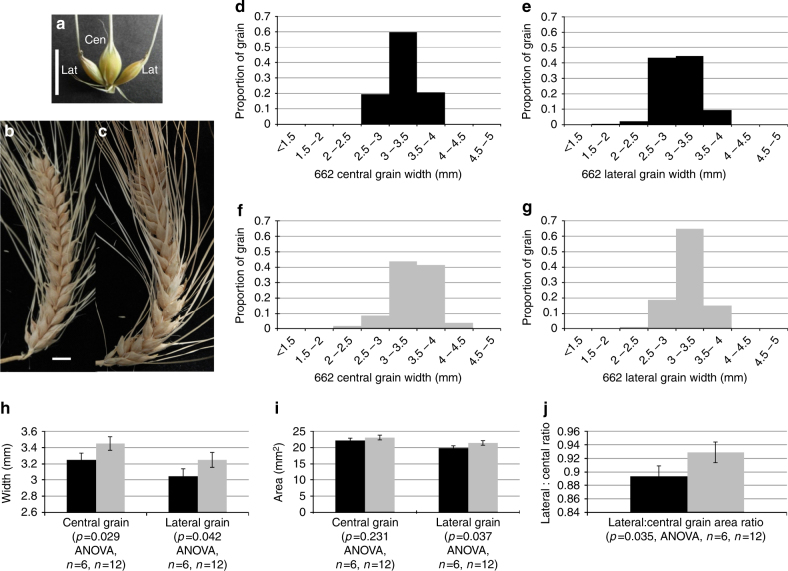
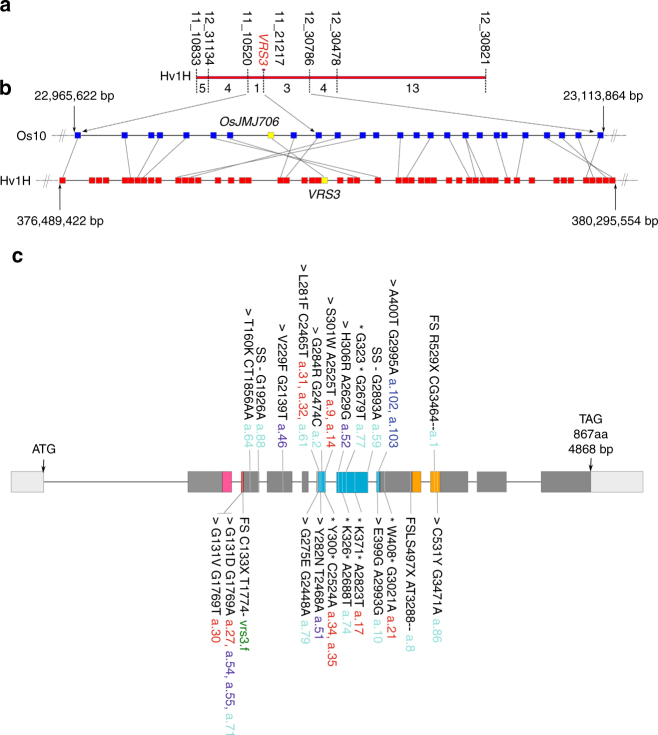
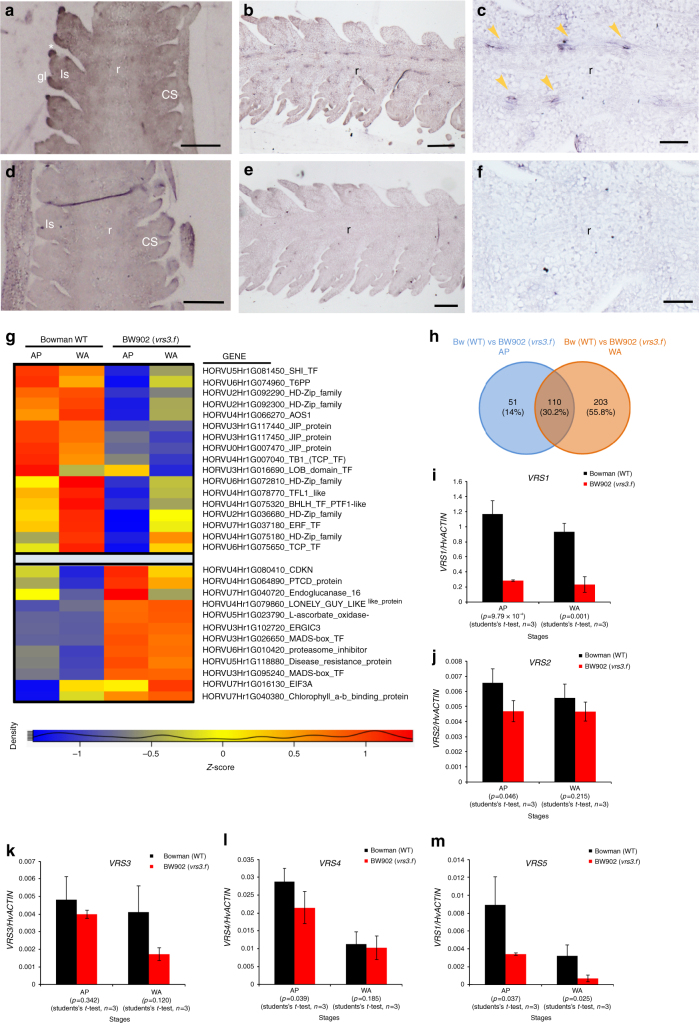
The barley inflorescence (spike) comprises a multi-noded central stalk (rachis) with tri-partite clusters of uni-floretted spikelets attached alternately along its length. Relative fertility of lateral spikelets within each cluster leads to spikes with two or six rows of grain, or an intermediate morphology. Understanding the mechanisms controlling this key developmental step could provide novel solutions to enhanced grain yield. Classical genetic studies identified five major SIX-ROWED SPIKE (VRS) genes, with four now known to encode transcription factors. Here we identify and characterise the remaining major VRS gene, VRS3, as encoding a putative Jumonji C-type H3K9me2/me3 demethylase, a regulator of chromatin state. Exploring the expression network modulated by VRS3 reveals specific interactions, both with other VRS genes and genes involved in stress, hormone and sugar metabolism. We show that combining a vrs3 mutant allele with natural six-rowed alleles of VRS1 and VRS5 leads to increased lateral grain size and greater grain uniformity.The VRS genes of barley control the fertility of the lateral spikelets on the barley inflorescence. Here, Bull et al. show that VRS3 encodes a putative Jumonji C-type histone demethylase that regulates expression of other VRS genes, and genes involved in stress, hormone and sugar metabolism.
大麦花序(穗)由一个多节的中央茎轴(穗轴)组成,沿着其长度交替附着着单花小穗的三联簇。每个簇内侧生小穗的相对育性导致穗上有两排或六排籽粒,或呈现中间形态。了解控制这一关键发育步骤的机制可为提高谷物产量提供新的解决方案。经典遗传学研究确定了五个主要的六行穗(VRS)基因,目前已知其中四个编码转录因子。在这里,我们鉴定并表征了剩余的主要VRS基因VRS3,它编码一种假定的Jumonji C型H3K9me2/me3去甲基化酶,是染色质状态的调节剂。探索由VRS3调节的表达网络揭示了与其他VRS基因以及参与胁迫、激素和糖代谢的基因之间的特定相互作用。我们表明,将vrs3突变等位基因与VRS1和VRS5的天然六行等位基因结合,可导致侧生籽粒大小增加和籽粒均匀度提高。大麦的VRS基因控制着大麦花序上侧生小穗的育性。在这里,布尔等人表明,VRS3编码一种假定的Jumonji C型组蛋白去甲基化酶,它调节其他VRS基因以及参与胁迫、激素和糖代谢的基因的表达。