Department of Microbiology and Immunology, Tohoku University Graduate School of Medicine, 2-1 Seiryo-machi, Aoba-ku, Sendai, 980-8575, Japan.
Department of Molecular Pathology, Tohoku University Graduate School of Medicine, 2-1 Seiryo-machi, Aoba-ku, Sendai, 980-8575, Japan.
Sci Rep. 2017 Oct 16;7(1):13202. doi: 10.1038/s41598-017-13402-3.
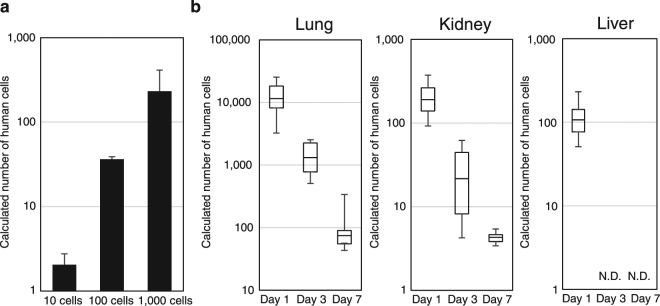
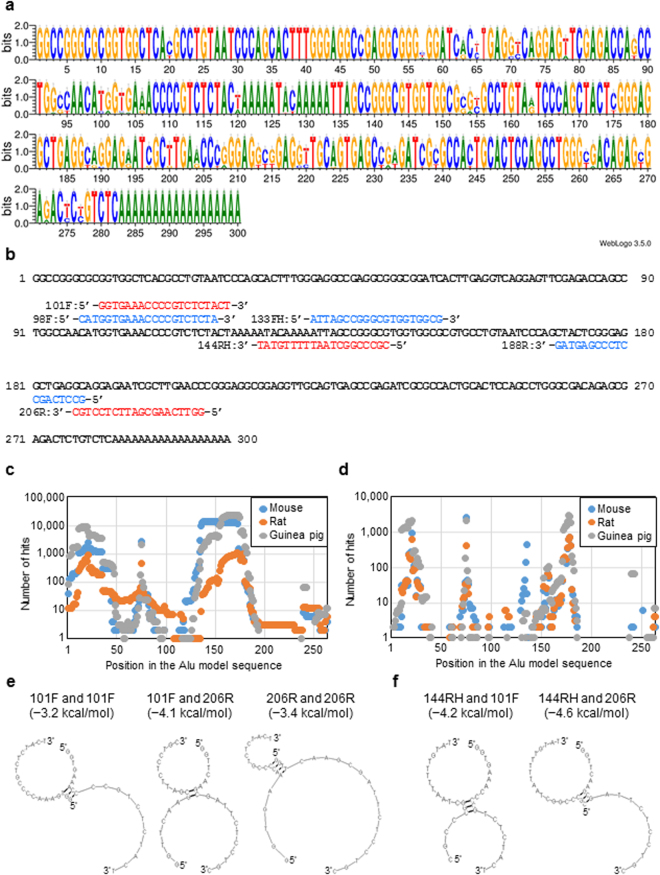
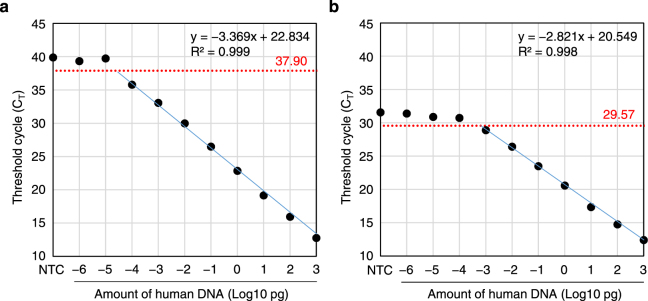
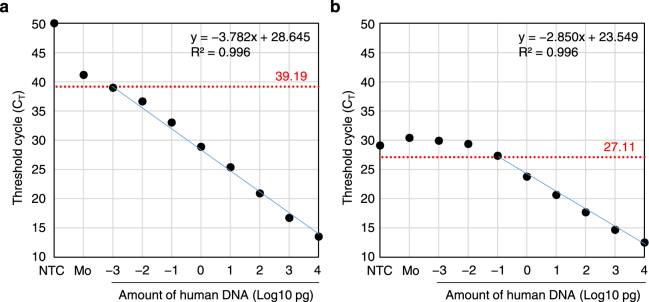
Alu elements are primate-specific short interspersed elements (SINEs), over 1 million copies of which are present in the human genome; thus, Alu elements are useful targets for detecting human cells. However, previous Alu-based techniques for detecting human genomic DNA do not reach the theoretical limits of sensitivity and specificity. In this study, we developed a highly sensitive and specific Alu-based real-time PCR method for discriminating human cells from rodent cells, using a primer and probe set carefully designed to avoid possible cross-reactions with rodent genomes. From 100 ng of mixed human and rodent genomes, 1 fg of human genome, equivalent to 1 human cell in 100 million rodent cells, was detectable. Furthermore, in vivo mouse subrenal capsule xenotransplantation assays revealed that 10 human cells per mouse organ were detectable. In addition, after intravenous injection of human mesenchymal stem cells into NOD/SCID mice via tail vein, the biodistribution of human cells was trackable in the mouse lungs and kidneys for at least 1 week. Our findings indicate that our primer and probe set is applicable for the quantitative detection of tiny amounts of human cells, such as xenotransplanted human cancer or stem cells, in rodents.
Alu 元件是灵长类动物特异性的短散在元件 (SINEs),人类基因组中存在超过 100 万个 Alu 元件;因此,Alu 元件是检测人类细胞的有用靶标。然而,以前基于 Alu 的检测人类基因组 DNA 的技术在灵敏度和特异性方面并未达到理论极限。在这项研究中,我们开发了一种基于 Alu 的高灵敏度和特异性实时 PCR 方法,用于区分人类细胞和啮齿动物细胞,使用精心设计的引物和探针组,以避免与啮齿动物基因组发生可能的交叉反应。从 100ng 混合的人类和啮齿动物基因组中,可以检测到 1fg 的人类基因组,相当于 1000 万个啮齿动物细胞中的 1 个人类细胞。此外,在体内小鼠肾包膜下异种移植实验中,可检测到每个小鼠器官中存在 10 个人类细胞。此外,通过尾静脉静脉内注射人骨髓间充质干细胞进入 NOD/SCID 小鼠后,可在小鼠肺部和肾脏中至少 1 周内追踪人细胞的生物分布。我们的研究结果表明,我们的引物和探针组适用于定量检测啮齿动物中微量的人类细胞,如异种移植的人类癌症或干细胞。