Meng Qing-Tao, Chen Rong, Chen Cheng, Su Ke, Li Wei, Tang Ling-Hua, Liu Hui-Min, Xue Rui, Sun Qian, Leng Yan, Hou Jia-Bao, Wu Yang, Xia Zhong-Yuan
Department of Anesthesiology, Renmin Hospital of Wuhan University, Wuhan, Hubei 430060, P.R. China.
Department of Nephrology, Renmin Hospital of Wuhan University, Wuhan, Hubei 430060, P.R. China.
Int J Mol Med. 2017 Dec;40(6):1731-1740. doi: 10.3892/ijmm.2017.3170. Epub 2017 Oct 2.
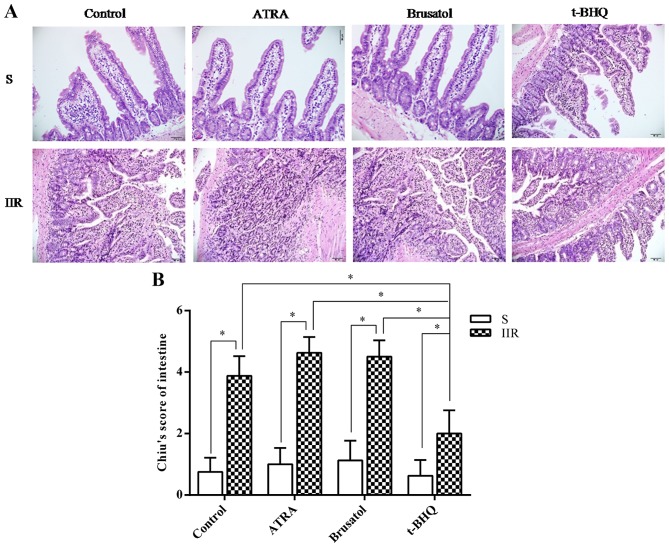
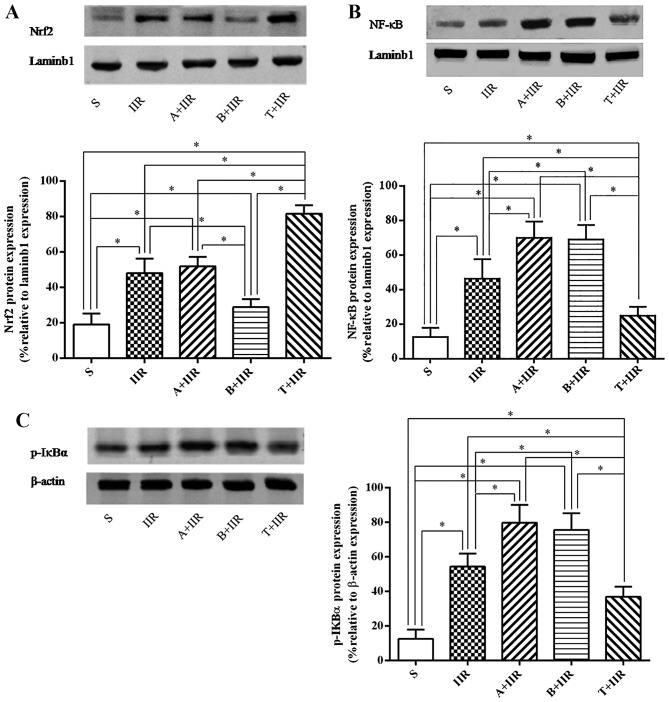
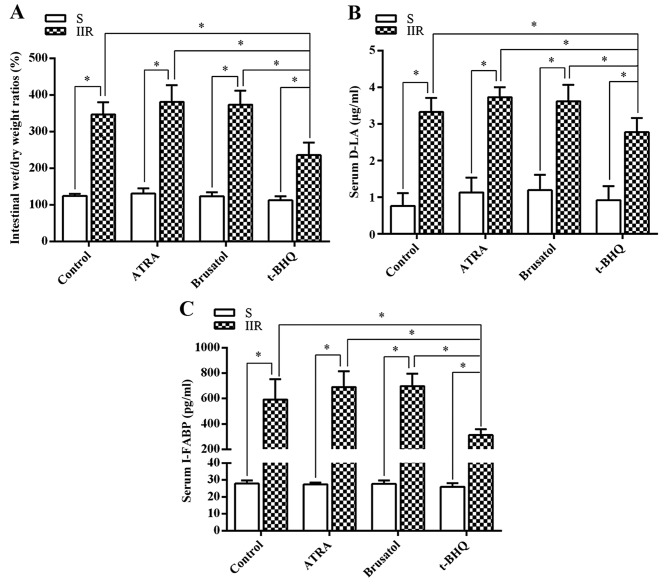
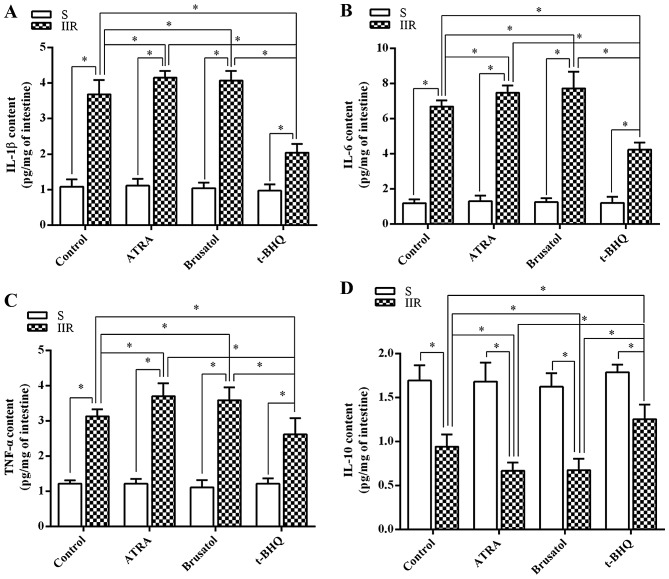
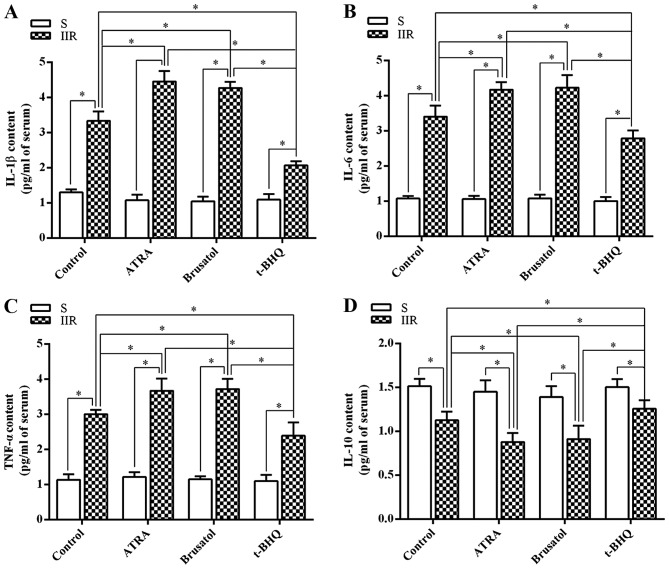
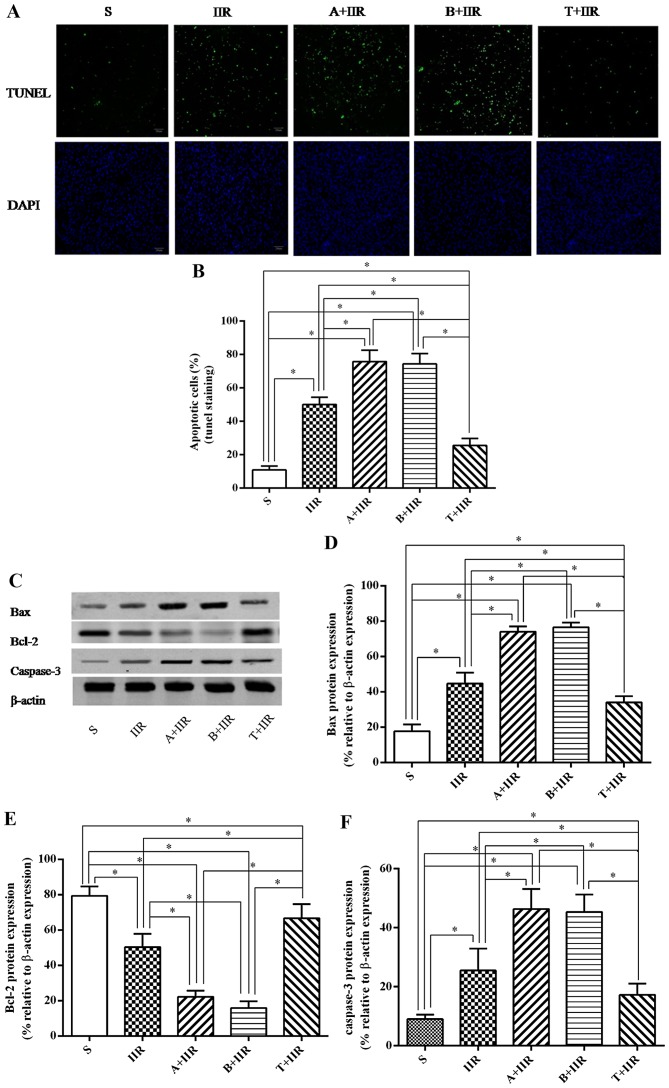
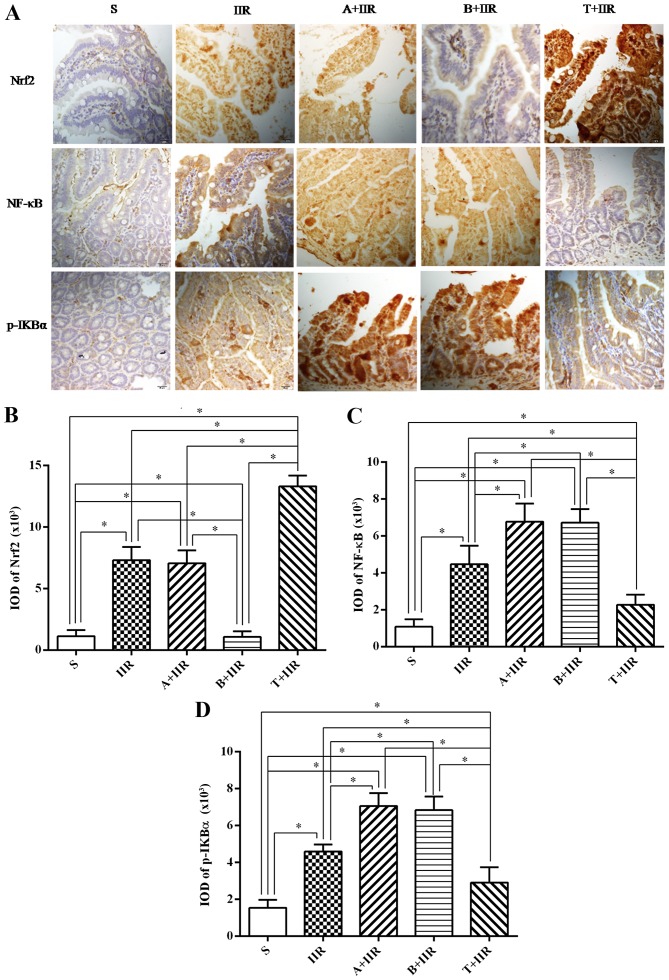
Intestinal ischemia/reperfusion (IIR) is a common pathological event associated with intestinal injury and apoptosis with high mortality. Nuclear factor (NF)-E2-related factor-2 (Nrf2) is a key transcription factor that interacts with NF-κB and has a vital anti-inflammatory effect. However, whether Nrf2 has a role in IIR-induced apoptosis and the possible underlining mechanisms, such as modulation of the inflammation regulation pathway, have remained to be fully elucidated. In the present study, IIR was identified to cause significant intestinal injury and apoptosis, with high expression levels of inflammatory cytokines, as well as the apoptotic proteins B-cell lymphoma 2 (Bcl-2)-associated X protein (Bax) and caspase-3, while simultaneously decreasing the protein levels of Bcl-2. The effect was more pronounced after pretreatment of the animals with all-trans retinoic acid or brusatol, potent inhibitors of Nrf2. t-Butylhydroquinone, an Nrf2 activator, significantly attenuated IIR-induced intestinal injury and apoptosis, with inhibition of the overexpression of the inflammatory cytokines, Bax and caspase-3 protein and partial restoration of Bcl-2 protein expression. Taken together, these results indicated that increased Nrf2 expression reduced IIR-induced intestinal apoptosis and that the protective function of Nrf2 may be based on its anti-inflammatory effects through the inhibition of the NF-κB pathway.
肠道缺血/再灌注(IIR)是一种常见的病理事件,与肠道损伤和细胞凋亡相关,死亡率很高。核因子(NF)-E2相关因子-2(Nrf2)是一种关键的转录因子,它与NF-κB相互作用,具有重要的抗炎作用。然而,Nrf2是否在IIR诱导的细胞凋亡中发挥作用以及可能的潜在机制,如炎症调节途径的调节,仍有待充分阐明。在本研究中,IIR被确定会导致严重的肠道损伤和细胞凋亡,炎症细胞因子以及凋亡蛋白B细胞淋巴瘤2(Bcl-2)相关X蛋白(Bax)和半胱天冬酶-3的表达水平升高,同时Bcl-2的蛋白水平降低。在用全反式维甲酸或布沙替尼(Nrf2的有效抑制剂)对动物进行预处理后,这种效应更为明显。叔丁基对苯二酚(一种Nrf2激活剂)显著减轻了IIR诱导的肠道损伤和细胞凋亡,抑制了炎症细胞因子、Bax和半胱天冬酶-3蛋白的过度表达,并部分恢复了Bcl-2蛋白的表达。综上所述,这些结果表明,Nrf2表达增加可减少IIR诱导的肠道细胞凋亡,并且Nrf2的保护功能可能基于其通过抑制NF-κB途径产生的抗炎作用。