Li Pishun, Wang Li, Bennett Brian D, Wang Jiajia, Li Jialun, Qin Yufeng, Takaku Motoki, Wade Paul A, Wong Jiemin, Hu Guang
Epigenetics and Stem Cell Biology Laboratory, National Institute of Environmental Health Sciences, RTP, NC 27709, USA.
State Key Laboratory of Cardiovascular Disease, Fuwai Hospital, National Center for Cardiovascular Diseases, Chinese Academy of Medical Sciences and Peking Union Medical College, Beijing 100037, China.
Nucleic Acids Res. 2017 Dec 15;45(22):12723-12738. doi: 10.1093/nar/gkx884.
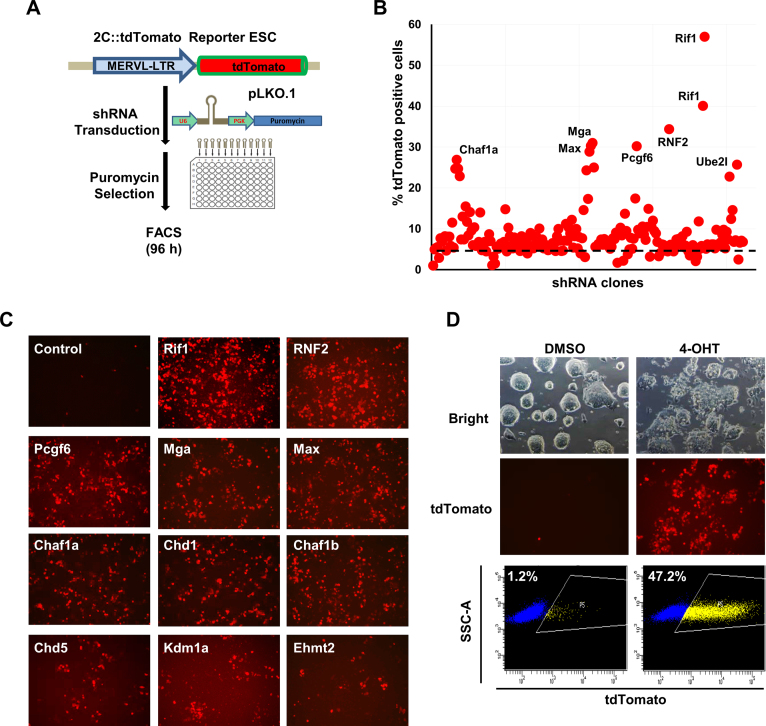
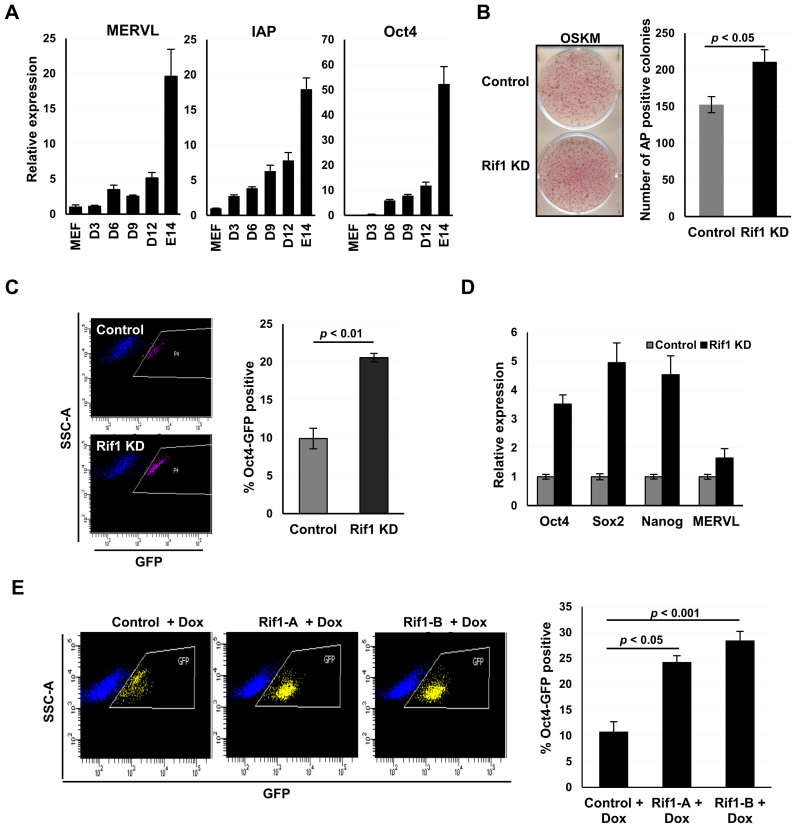
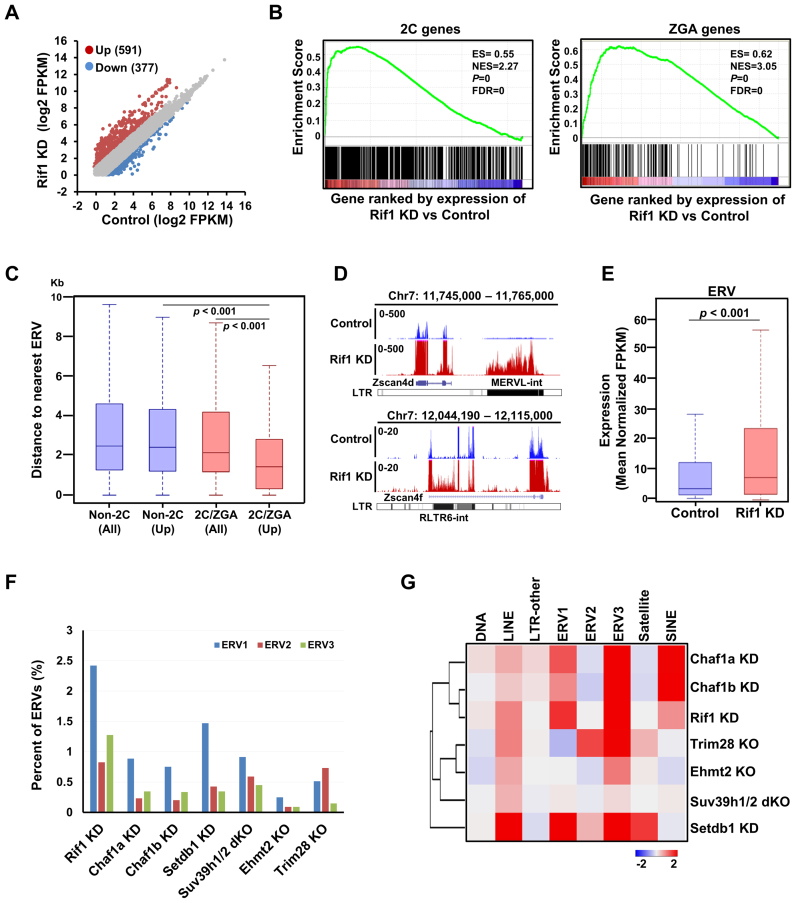
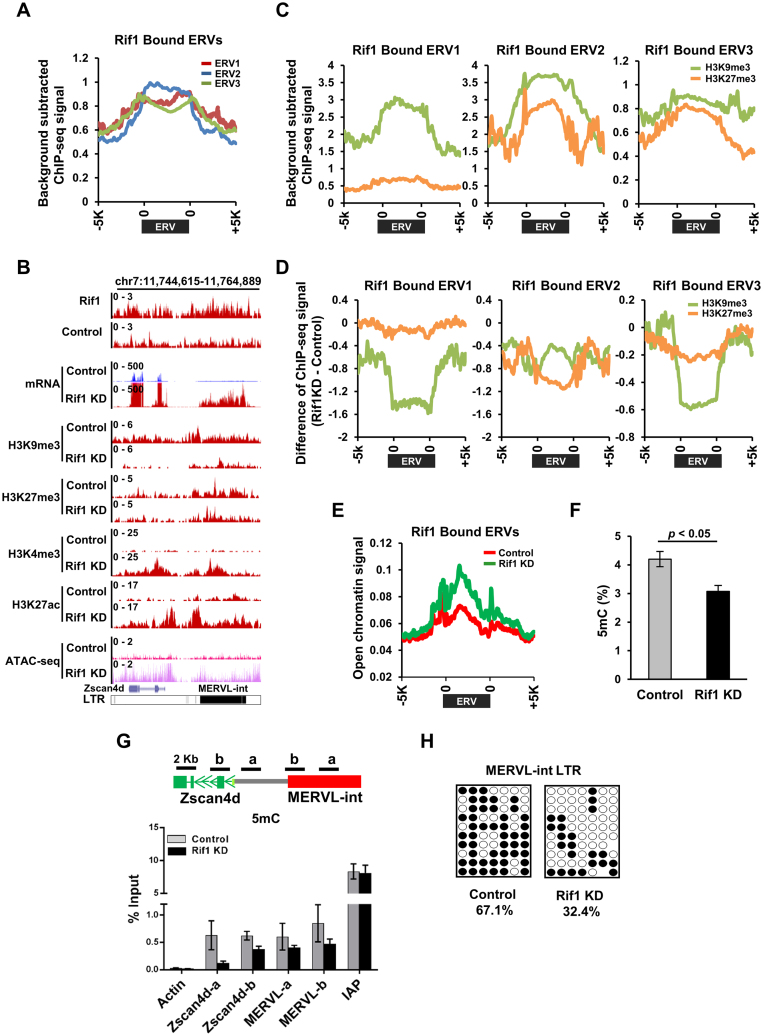
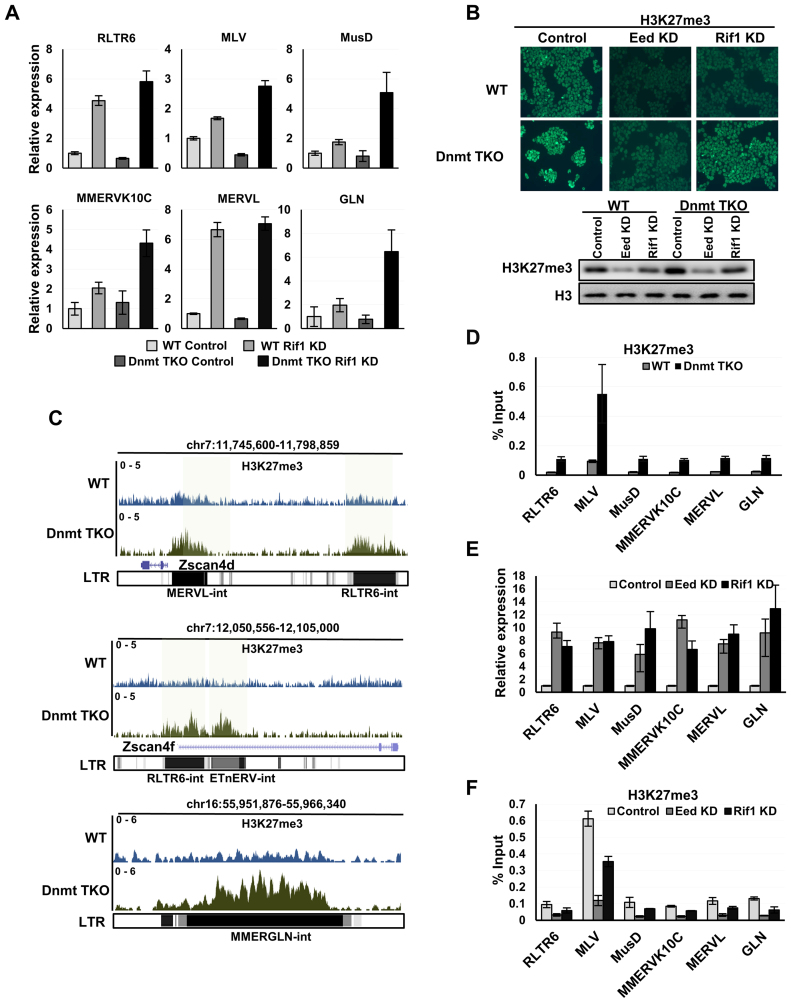
Transposable elements, including endogenous retroviruses (ERVs), constitute a large fraction of the mammalian genome. They are transcriptionally silenced during early development to protect genome integrity and aberrant transcription. However, the mechanisms that control their repression are not fully understood. To systematically study ERV repression, we carried out an RNAi screen in mouse embryonic stem cells (ESCs) and identified a list of novel regulators. Among them, Rif1 displays the strongest effect. Rif1 depletion by RNAi or gene deletion led to increased transcription and increased chromatin accessibility at ERV regions and their neighboring genes. This transcriptional de-repression becomes more severe when DNA methylation is lost. On the mechanistic level, Rif1 directly occupies ERVs and is required for repressive histone mark H3K9me3 and H3K27me3 assembly and DNA methylation. It interacts with histone methyltransferases and facilitates their recruitment to ERV regions. Importantly, Rif1 represses ERVs in human ESCs as well, and the evolutionally-conserved HEAT-like domain is essential for its function. Finally, Rif1 acts as a barrier during somatic cell reprogramming, and its depletion significantly enhances reprogramming efficiency. Together, our study uncovered many previously uncharacterized repressors of ERVs, and defined an essential role of Rif1 in the epigenetic defense against ERV activation.
包括内源性逆转录病毒(ERVs)在内的转座元件构成了哺乳动物基因组的很大一部分。它们在早期发育过程中被转录沉默,以保护基因组完整性和异常转录。然而,控制它们抑制的机制尚未完全了解。为了系统地研究ERV抑制,我们在小鼠胚胎干细胞(ESCs)中进行了RNAi筛选,并确定了一系列新的调节因子。其中,Rif1显示出最强的作用。通过RNAi或基因缺失使Rif1缺失导致ERV区域及其邻近基因的转录增加和染色质可及性增加。当DNA甲基化缺失时,这种转录去抑制变得更加严重。在机制层面上,Rif1直接占据ERVs,是抑制性组蛋白标记H3K9me3和H3K27me3组装以及DNA甲基化所必需 的。它与组蛋白甲基转移酶相互作用,并促进它们被招募到ERV区域。重要的是,Rif1在人类ESCs中也抑制ERVs,并且进化保守的HEAT样结构域对其功能至关重要。最后,Rif1在体细胞重编程过程中起屏障作用,其缺失显著提高了重编程效率。总之,我们的研究发现了许多以前未被表征的ERV抑制因子,并确定了Rif1在表观遗传防御ERV激活中的重要作用。