Quejada Jose R, Park Seon-Hye E, Awari Daniel W, Shi Fan, Yamamoto Hannah E, Kawano Fuun, Jung Juergen C, Yazawa Masayuki
Columbia Stem Cell Initiative, Columbia University, New York, NY 10032, USA.
Department of Rehabilitation and Regenerative Medicine, Columbia University, New York, NY 10032, USA.
Nucleic Acids Res. 2017 Nov 16;45(20):e172. doi: 10.1093/nar/gkx804.
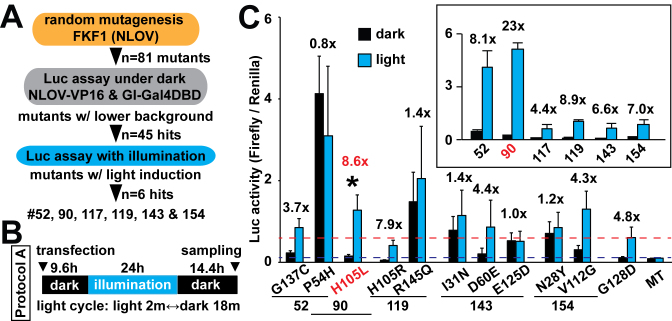
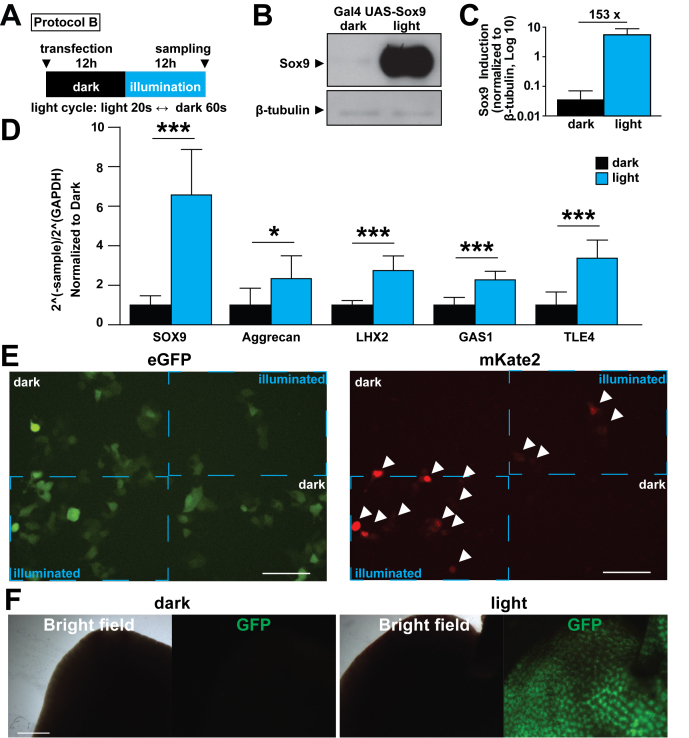
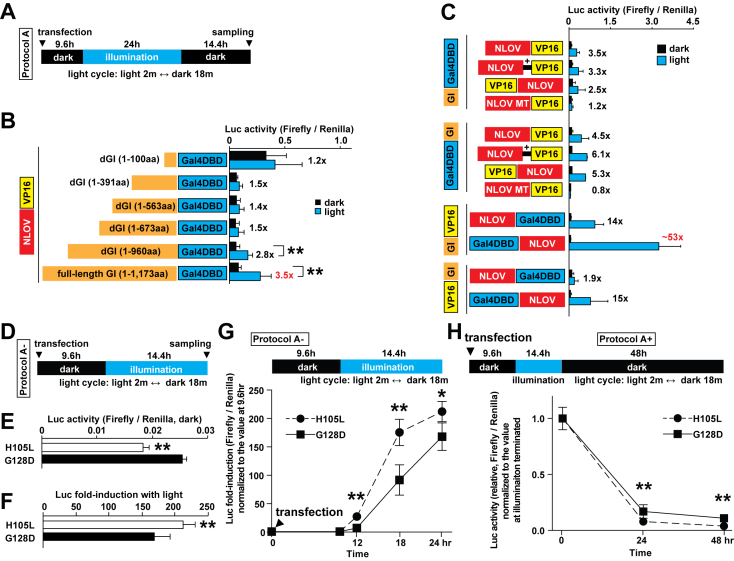
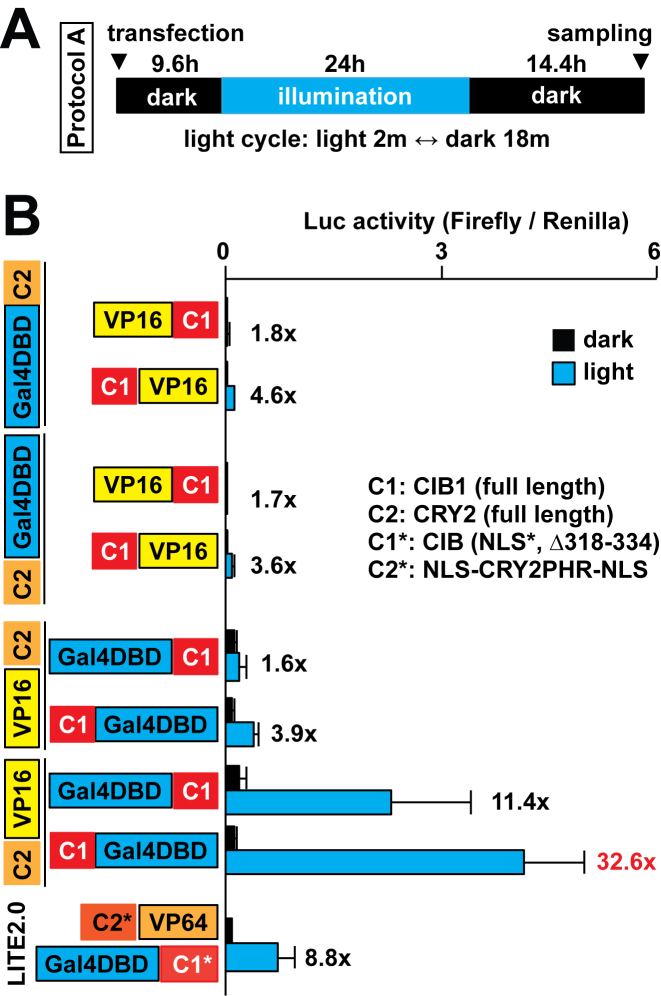
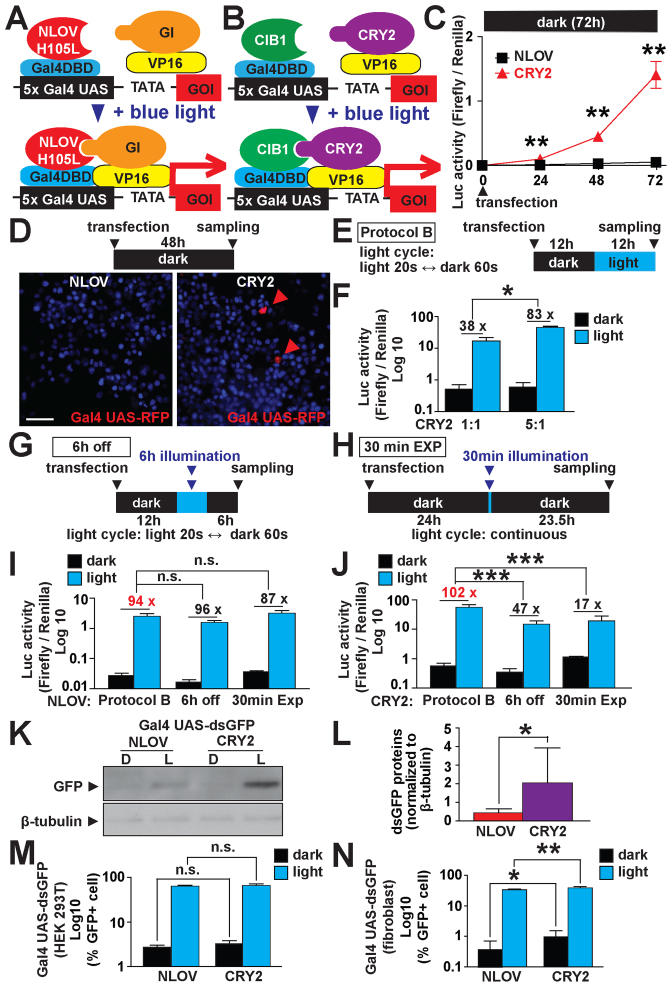
Light-inducible systems allow spatiotemporal control of a variety of biological activities. Here, we report newly optimized optogenetic tools to induce transcription with light in mammalian cells, using the Arabidopsis photoreceptor Flavin Kelch-repeat F-box 1 (FKF1) and its binding partner GIGANTEA (GI) as well as CRY2/CIB1. By combining the mutagenesis of FKF1 with the optimization of a split FKF1/GI dimerized Gal4-VP16 transcriptional system, we identified constructs enabling significantly improved light-triggered transcriptional induction. In addition, we have improved the CRY2/CIB1-based light-inducible transcription with split construct optimization. The improvements regarding the FKF1/GI- and CRY2/CIB1-based systems will be widely applicable for the light-dependent control of transcription in mammalian cells.
光诱导系统能够对多种生物活性进行时空控制。在此,我们报告了新优化的光遗传学工具,该工具利用拟南芥光感受器黄素 Kelch 重复 F 盒 1(FKF1)及其结合伴侣巨大蛋白(GI)以及隐花色素 2/相互作用蛋白 1(CRY2/CIB1),在哺乳动物细胞中通过光诱导转录。通过将 FKF1 的诱变与优化的分裂 FKF1/GI 二聚化 Gal4-VP16 转录系统相结合,我们鉴定出了能够显著改善光触发转录诱导的构建体。此外,我们通过优化分裂构建体改进了基于 CRY2/CIB1 的光诱导转录。基于 FKF1/GI 和 CRY2/CIB1 系统的这些改进将广泛应用于哺乳动物细胞中转录的光依赖性控制。